Home » Posts tagged 'historiography'
Tag Archives: historiography
The Interview with Professor Marian Wesoły Available with English Subtitles
We are very glad to announce that finally, after two years, the interview with Professor Marian Wesoły is available online with English subtitles on the website of the project Oral History and the Classics, here. We have already reported on shooting this interview here.
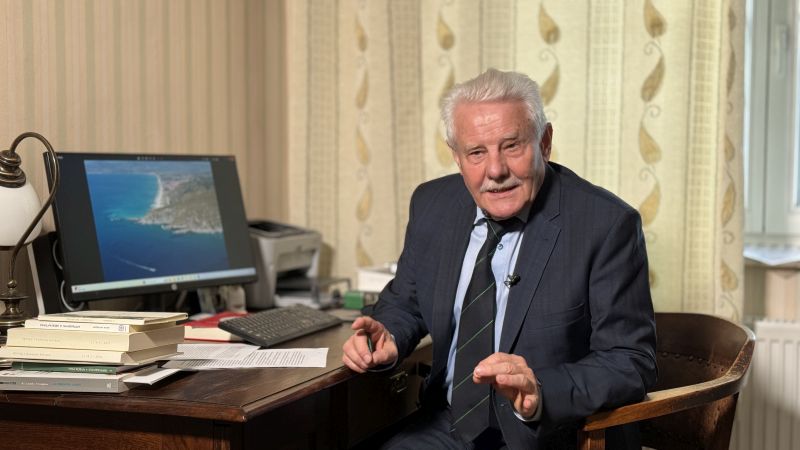
Professor Wesoły, at his desk at home, talked about his intellectual biography, his teachers, collaborators, colleagues, correspondents, about his academic adventures at research centres in Germany (Tübingen) and Italy (Naples), books and editions, and many other fascinating issues. Moreover, he shared his views on prospective developments of research in the field of ancient philosophy.
We want to encourage you, once again, to click here and watch the video.
The First Doctoral Degree by a Member of AΦR Team
On June 24th, 2025, a public defense of Mariam Sargsyan’s (Մարիամ Սարգսյան) doctoral thesis took place in the Institute of Philosophy, University of Zielona Góra (UZ). The title of her dissertation was Henryk Jakubanis (1879–1949) as a Researcher of Ancient Philosophy and Its Reception. The whole event was chaired by prof. Jacek Uglik and it proceeded in accordance with a regular schedule. At the start he curriculum of the candidate was presented by the supervisor, T. Mróz, who stressed the fact that M. Sargsyan was the first international student in the Doctoral School for Humanities and Social Sciences, and the only beneficiary of the research project NCN Preludium bis (with T. Mróz as a PI) and NAWA Preludium bis in the history of UZ.

Then M. Sargsyan took the floor and delineated the main points of her thesis which aimed at providing a synthetic study of H. Jakubanis as a researcher of ancient philosophy. Her study included a discussion of less-known aspects of H. Jakubanis’ life and work, in particular his academic positions in Kyiv; an analysis of his interpretations of selected Greek philosophers (Empedocles and Plato); and an examination of his methods etc.
A particular emphasis was put on the significance of his national sentiments and identity in motivating his decisions and shaping his career path; and on his contribution to the development of research in ancient philosophy and promotion of Polish culture in Kyiv in the early 20th century and subsequently in Lublin during the interwar period. The second part of the presentation was focused on H. Jakubanis scholarly achievements. His works were divided into three groups: 1) a monograph and translation of Empedocles (1906); 2) various studies on Plato and reception of Platonism, including an incomplete manuscript of his final university thesis (1900); 3) works promoting the value of ancient philosophy for general audiences, not only scholars, in the modern age.
One of the most significant results of Sargsyan’s dissertation was an identification three key influences in Jakubanis’ intellectual genealogy. They were: 1) his supervisor, Alexei Gilarov (1856-1938), whose role in forming Jakubanis’ biographical-genetic method and his interpretation of Plato was crucial; 2) Tadeusz Zieliński (1859-1944) and his conviction in the importance of the ancient legacy for modern culture; 3) the works by Eduard Zeller (1814-1908), which exerted impact on Jakubanis’ views on Empedocles and Plato.

On the whole, as Sargsyan’s dissertation demonstrates, Jakubanis was a historian of ancient thought, with a good background in classical languages, whose primary goal as a lecturer and scholar was to promote ancient thought. Contrary to his methods that can be considered today as outdated, his translation of Empedocles’ fragments still circulates in the Russian-speaking world and seems to be his lasting contribution to disseminating Greek philosophy.
The dissertation was assessed by three reviewers, they were prof. Zbigniew Nerczuk (Nicolaus Copernicus University in Toruń), prof. Steffen Huber (Jagiellonian University), and prof. Wiesława Sajdek (Jan Długosz University in Częstochowa). They all were present to read out loud their positive reviews and ask a couple of questions. They were particularly concerned with some ambiguities in Sargsyan’s account of Jakubanis’ career and academic titles he had obtained, since not all the documents have been preserved. Another key issue concerned some lacking points in broader historical and philosophical context of Jakubanis’ views, as Sargsyan preferred to focus on the direct impact exerted on him by the scholars he had referred to or collaborated with.

Finally, after hearing the reviews, questions and answers, the commission decided to award M. Sargsyan with a doctoral degree cum laude. Her dissertation has, no doubt, broadened and deepend the knowledge of the reception of ancient philosophy in Central and Eastern Europe in general, and of Henryk Jakubanis, a scholar writing on history of philosophy, who left his mark on the intellectual life in Poland, Ukraine and Russia, in particular.
After her successful doctoral defence M. Sargsyan returned to Armenia, her homeland, but we all hope here for further collaboration and for funding opportunities to publish her dissertation.
Dear Doctor Sargsyan!
Good luck with your research plans and see you back soon!
(Another) Erasmus+ Teaching Visit in Vilnius
In April, 15th-19th, 2024, Tomasz Mróz enjoyed his fourth Erasmus teaching visit in Faculty of Philosophy, Vilnius University.
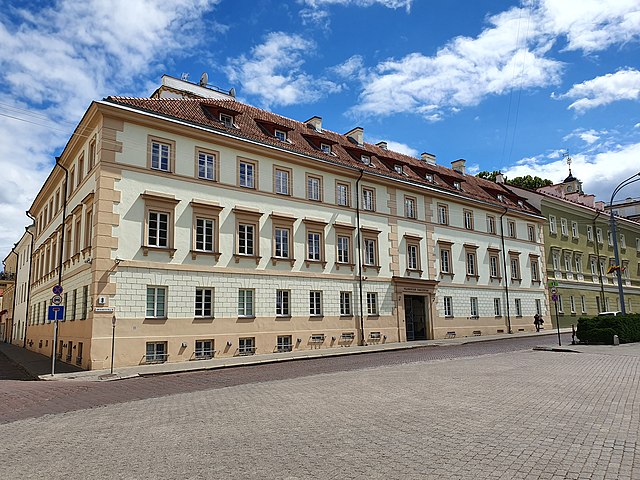
This year, some issues connected to the reception of ancient philosophy were addressed during the lecture on Władysław Tatarkiewicz (1886-1980) and his History of Philosophy. It was ancient philosophy as a subject of various problems in historiography of philosophy.
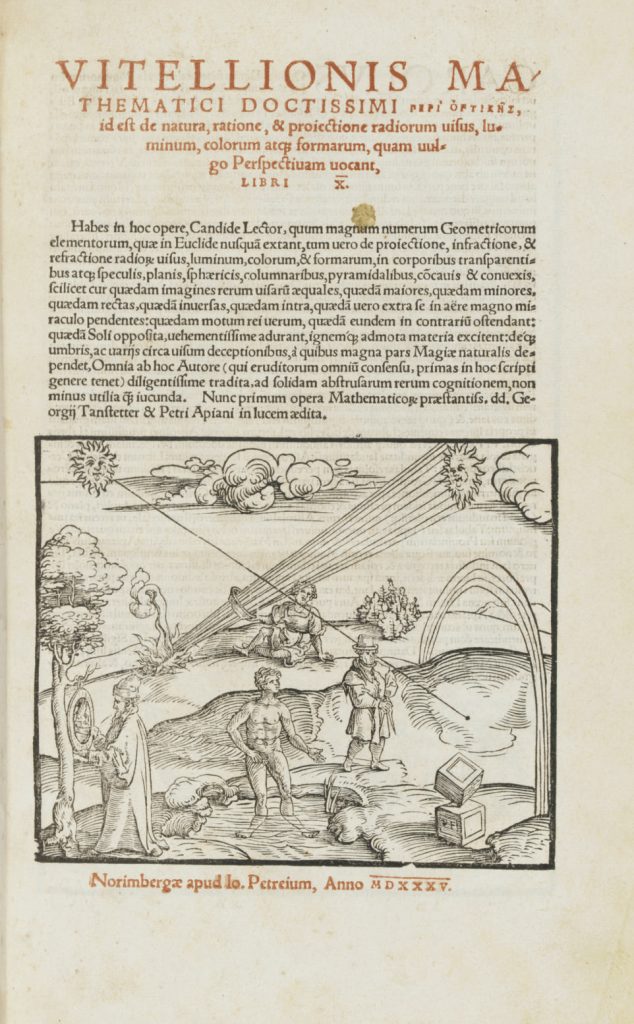
More important, however, was a talk devoted to Vitello (ca. 1230-1300) and his theoretical reflection on the nature of the daemons. Vitello’s demonology stemmed from his research in natural sciences and it employed neo-Platonic and Aristotelian elements, such as a belief in a mathematical structure of the universe, the theory of four elements and natural creatures. Vitello’s philosophical investigations were presented against the background of the 13th century developments in philosophy, especially the Averroist controversy.
Teaching duties were supplemented with meetings with the Faculty members and discussions with students extra universitatis muros. Hopefully, this was not the final chord in the co-operation between Vilnius University and the University of Zielona Góra.
“Oral History and the Classics” Team in Poznań
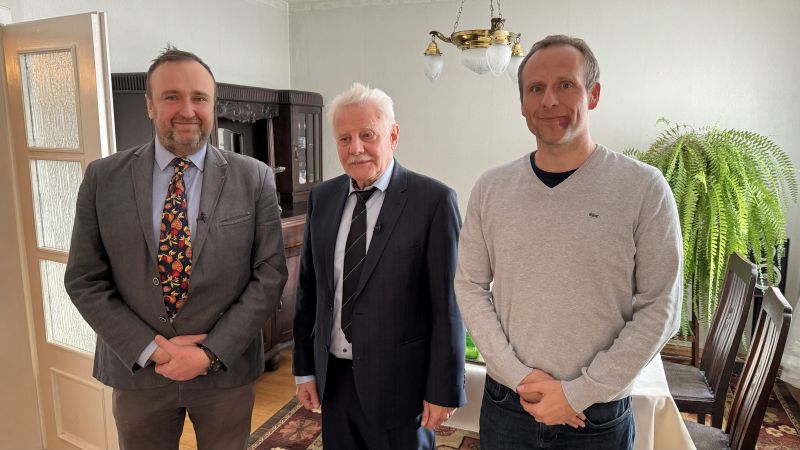
On Dec. 5th, 2023, Oral History and the Classics project team enjoyed the honour to visit Professor Marian Andrzej Wesoły at his home, in the vicinity of Poznań. Prof. Wesoły agreed to give an interview which will be included in the Oral History and the Classics collection on the website of the University of Hradec Králové.
Marian Wesoły is currently a professor emeritus of Adam Mickiewicz University in Poznań and lectures at the Jacob of Paradies Academia in Gorzów Wielkopolski. His entire academic career in Poland was connected to Poznań and Adam Mickiewicz University. His doctoral (1977) and postdoctoral (1992) dissertations were devoted to the history of Greek philosophy. In 2008 he received the title of a full professor. He was granted several foreign scholarships, e.g. in Italy (1980: University of Padova, 1983: Italian Institute for History in Naples, 1997: Villa I Tatti), Germany (1986/87: University of Tübingen), and Greece (1993, 2000, 2012: Academy of Athens). Prof. Wesoły is a co-founder of the „Peitho. Examina Antiqua” journal. For 20 years he has regularly participated in the Eleatica-Symposia, initiated by Prof. Livio Rossetti at the Alario Foundation in Ascea, close to the ruins of ancient Elea/Velia. Finally, we should mention that on the 100th anniversary of the Adam Mickiewicz University in Poznań (2019) he was awarded Knight’s Cross of the Order of Polonia Restituta.
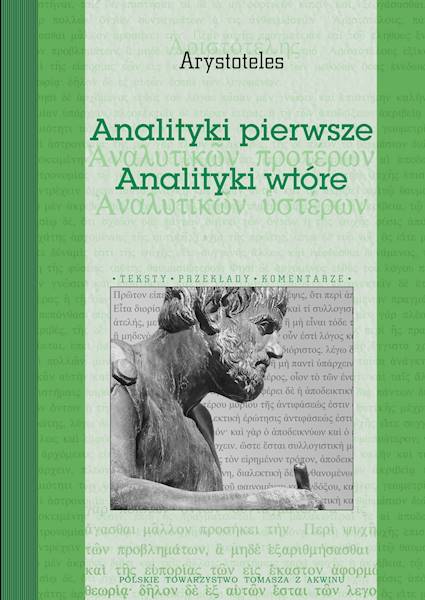
Prof. Wesoły is a specialist in Greco-Roman and Byzantine philosophies. In his numerous works he attempts to combine philological analyses with philosophical interpretation. Moreover, he is active as a translator and one of his most recent productions is a bilingual edition and commentary of Aristotle’s Analytica Priora et Posteriora (2020).
During the interview prof. Wesoły reflected on his academic and research curriculum, but also shared his views on perspectives of his discipline, on political constraints in researching ancient philosophy, recalled his memories of the great scholars whom had the opportunity to meet and with whom he collaborated etc. When the whole recording is edited and furnished with English subtitles, it will be make public and available on the project’s website.
The interview meeting with prof. Wesoły would not be possible without his kind consent and warm welcome of the team members by his family at their home. Those were Tomasz Mróz and Jaroslav Daneš who carried out the interview, while Jan Kadeřábek, a cinematographer and a cameraman, took care of all the technicalities.
Conference Annoucement!

As we have already informed, AΦR co-operates with the Faculty of Philosophy, University of Hradec Králové (FF UHK), in a project titled Oral History and the Classics.
One of the acitivities of the project team, led by prof. Jaroslav Daneš, Ph.D., is organising an international conference in Hradec Králové, which will be held on June 1st-3rd, 2024. The title of the conference is: Classics: the Past, the Present, and the Future. “Classics”, certainly, includes the history of research on ancient philosophy and its reception. Deadline for submissions is in March and the keynote speakers are professors Frisbee Sheffield, Neville Morley, Sophie Mills, Filip Karfík, and Cinzia Bearzot.
The most up to date information on the conference is available on the conference website: memoryclassics.eu
Late submissions will still be considered!!!
This post will be updated.
A Cooperation in a Research Project with the University of Hradec Králové
In January 2023 at the Faculty of Philosophy University of Hradec Králové (FF UHK) a new research project starts. It is one of the winners of the Internal Grant Competition of FF UHK for International Research Teams. The aim of this competition was to stimulate and develop international research collaboration of FF UHK scholars with partners abroad.
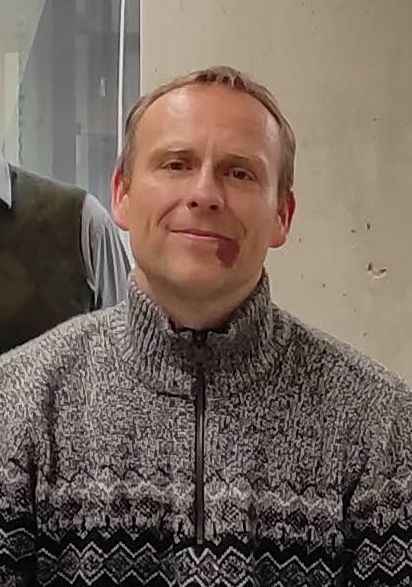
Principal investigator in the project is doc. Mgr. Jaroslav Daneš, Ph.D. who works as an associate professor in the Department of Philosophy and Social Sciences (FF UHK). His research interests include ancient Greek political theories, esp. theory of war in philosophy and tragedy, and related issues. Doc. Daneš has visited Institute of Philosophy, University of Zielona Góra, several times on various occasions (as Erasmus+ teacher, as a conference participant, and recently as a member of an academic committee of the International Workshop for Doctoral Students in Philosophy).
The title of doc. Daneš’ project is Oral History and Classics. In short, the project aims to record and collect individual histories of European classical scholars from various countries, including those who devoted their careers to researching ancient philosophy, and thus to uncover the history of this discipline in the experience of scholars. A database of interviews with distinguished scholars will be assembled and subsequently analysed to reveal the connections between personal histories and the history of the discipline, including historiography of ancient philosophy. A Polish collaborator of doc. Daneš in this project is Tomasz Mróz (UZ), whose share in project is estimated as 30%.
Ancient Philosophy in Academic Curriculum of Władysław Tatarkiewicz
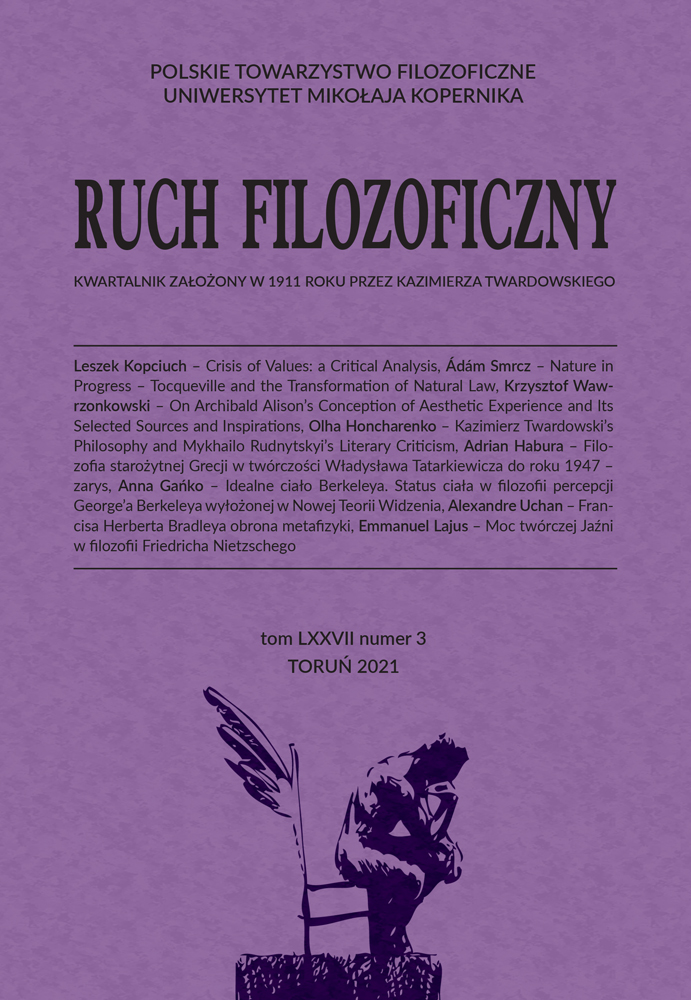
A paper by Adrian Habura, discussing Władysław Tatarkiewicz’s (1886-1980) works on ancient philosophy, which had been published by him by 1947, was published in “Ruch Filozoficzny” (vol. 77, 2021, iss. 3), the second oldest Polish philosophical journal. The paper is structured chronologically and presents results of careful sifting of all Tatarkiewicz’s works published before 1947.
Władysław Tatarkiewicz was a historian of philosophy and a philosopher, who studied ancient Greek philosophy throughout his entire research career. It is not surprising to say that he considered ancient philosophy to be the foundation of European philosophy. Furthermore, his original philosophical works indicate that the investigations of ancient Greeks were his major inspiration. The aim of this article is to provide an outline of those of Tatarkiewicz’s works in which Greek philosophy was explored by him as a topic of his historical research or used as the source of inspiration for his original philosophical reflection. The analysis of Tatarkiewicz’s works that were focused on Greek philosophy is related to Tatarkiewicz’s methodology. All this taken together allows to give a preliminary answer to the question of the significance of ancient Greek philosophy for his philosophical development and for philosophy in Poland in general.
Habura traces Tatarkiewicz’s academic biography back to his Ph.D. thesis from Marburg, which was devoted to Aristotle – and later reviewed by D. Ross – and Aristotelian inspirations in his subsequent paper on Weltansichten. One of the results of Tatarkiewicz’s stay in Marburg was his research on Plato, largely inspired by his Marburg teachers, Paul Natorp and Hermann Cohen. Later works by Tatarkiewicz in ethics, including his habilitation thesis, reveal his continuous direct and indirect references to Greek philosophers. In 1931 two volumes of his History of Philosophy saw the light of day, his opus magnum in historiography of philosophy, including, obviously, chapters on the Greeks, and in 1947 his treatise On Happiness appeared, with numerous references to ancient ethical systems.
This paper offers not only a mere report of Tatarkiewicz’s references to the ancients, but moreover, Habura succeeded in indicating connection between Tatarkiewicz’s historical interest in ancient philosophy and his own original research in philosophy and ethics.
Full paper in Polish is available on the journal’s website here.
Recent commentaries