Home » 2025 (Page 3)
Yearly Archives: 2025
A Biographical Sketch on Henryk Jakubanis
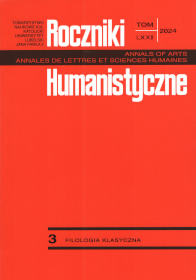
Mariam Sargsyan, an AΦR researcher focusing on the legacy of H. Jakubanis, has recently published a paper Henryk Jakubanis (1879–1949) – a Historian of Greek Philosophy Between Kyiv and Lublin, which aims at discussing the entire academic path of this researcher of ancient philosophy, presenting his work in both periods of his life, connected to Kyiv and Lublin. The paper was published in Polish and can be downloaded here.
It is not insignificant to remark that Sargsyan’s paper has been published in an issue devoted to classical philology of “Roczniki Humanistyczne” (“Annals of Arts”, Vol. 72 No. 3, 2024, pp. 79-97), a journal edited at the Catholic University of Lublin (KUL), where Jakubanis used to work for over two decades of his life.
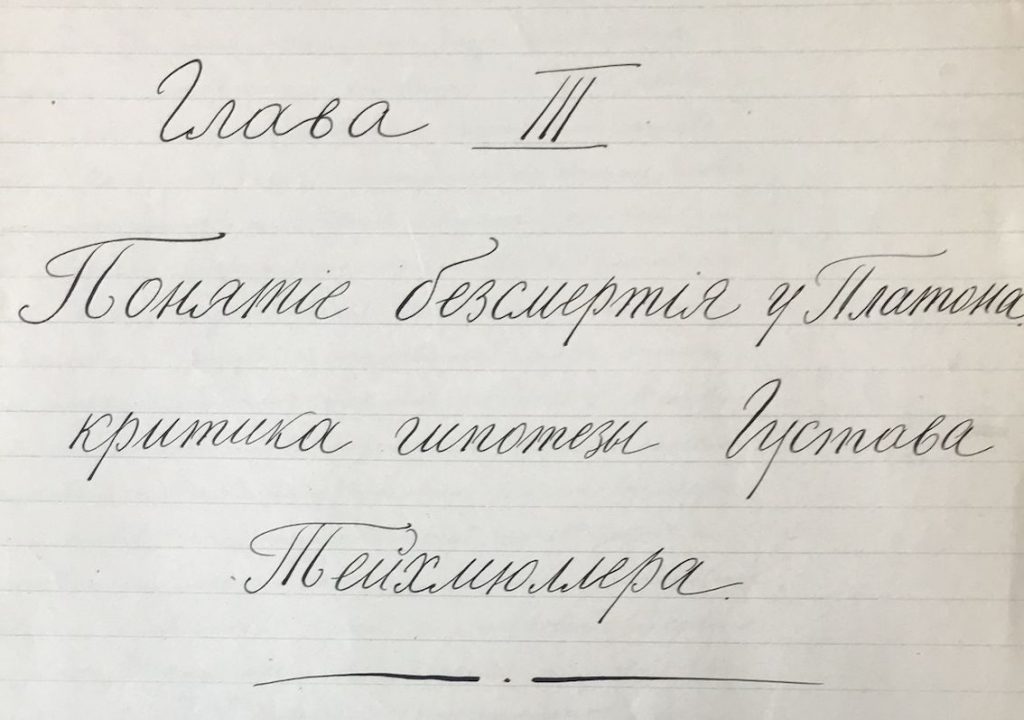
Jakubanis’ life began in the Russian Empire, and Sargsyan presents his family and his initial education it the gymnasium, with a focus on classical languages and humanities. Then the story proceeds to the Kyiv period of his life, including a brief sketch of the history of St Vladimir’s Imperial University of Kyiv and the researchers of the history of philosophy there, with an emphasis on Jakubanis’ academic supervisor, Alexei Gilarov (1856-1938). During his Kyiv period Jakubanis won a scholarship for a study visit in Germany, notably in Berlin, and was active as a university lecturer, teacher at various courses extra muros, and started to develop his academic and research career.
The Lublin period began in 1922 with Jakubanis’ repatriation from the then Soviet Ukraine to Lublin in the independent Republic of Poland. Thanks to the support of Tadeusz Zieliński (1859-1944), his former examiner in Kyiv, Jakubanis was hired at the University of Lublin. His lectures and seminars there, his life during the war, his works and impact are further discussed in the paper.
To sum up: Jakubanis spent 26 years of his life in Kyiv and 27 in Lublin where he died in 1949. These two periods were almost equal in terms of time, yet they were quite different. In Kyiv he composed most of his works and was formed as a researcher and teacher in classics in general and in the history of ancient philosophy in particular, while in Lublin he was rather occupied with university life and lecturing, and it did not allow him to focus on researching and publishing. For his entire life, however, he remained faithful to his interests in ancient philosophy and, according to his students, spared no energy to disseminate his knowledge and expierience in this field.
Platonism in Polish Romantic Poetry
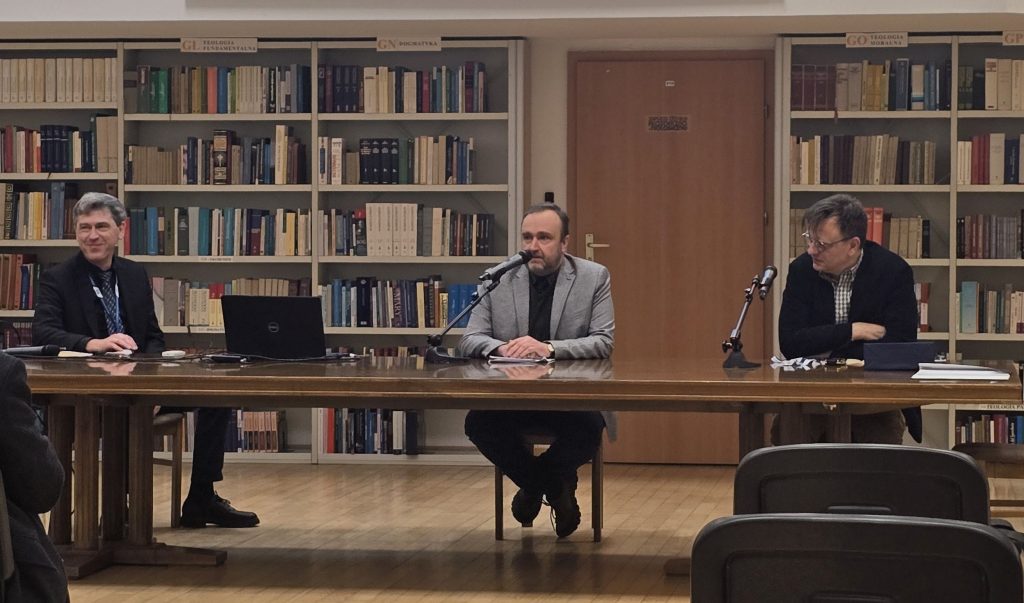
On November 18th-19th an interdisciplinary conference took place in the Catholic University of Lublin (KUL), with the University of Warsaw (UW) as a coorganising institution. The title of the event was: The Romantic Tradition. Poetry, Community, Sources. Most of the papers presented during the meeting were focused on Polish poetry and literature of the 19th century Romanticism, nevertheless papers on various philosophical aspects of the epoch constituted a significant contribution to the conference topic.
A member of AΦR research group, Tomasz Mróz, took part in the conference and delivered a talk titled Plato in the Works of Słowacki. Some Observations. Mróz discussed references to Plato in the works by Juliusz Słowacki (1809-1849), a major figure in the period of Polish Romanticism, one of the three poets considered as the National Bards.
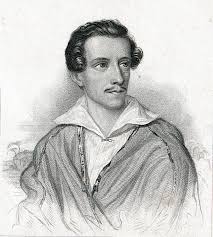
The speaker aimed to demonstrate that most of Słowacki’s references to Plato were incidental, that the poet mixed up Plato’s dialogues (the Phaedrus and the Phaedo) and his knowledge of Plato’s works was limited to their French translations or paraphrases. It was the idea of reincarnation that seemed appealing to Słowacki, but he could have learned it from other sources. The poet used and transformed, however, Plato’s myths and it was the myth of Er from the Republic that became the metaphysical foundation of Słowacki’s great poetic work The Spirit-King. The conclusion of the paper was that in spite of the fact that the name of Plato is present in Słowacki’s legacy, Platonism as a system of philosophical ideas is absent there.
Recent commentaries