Renaissance Platonism in Polish Debates at the symposium in Saint Louis, MO
In June (9th-11th) 2025, Saint Louis University (Saint Louis, Missouri) held the Twelfth Annual Symposium for Medieval and Renaissance Studies (SMRS). This year’s optional theme was Synthesis and Reconciliation.

Symposium gathered over a hundred of scholars debating on various aspects of mediaeval and Renaissance studies, but only a couple of papers were devoted to philosophy or historiographical discussions. A booklet including a plentiful schedule, all the sessions, papers etc. can be downloaded here. Tomasz Mróz’s paper was delivered during a session titled Studying Renaissance Literature and Philosophy Through New Eyes. Mróz’s attendance at the SMRS was funded through a “Small Grant” scheme from his home institution, University of Zielona Góra, and his presentation was devoted to Bohdan Kieszkowski: Florentine Platonism between Ideology and World War II: The Case of Bogdan Kieszkowski (1904-1997).
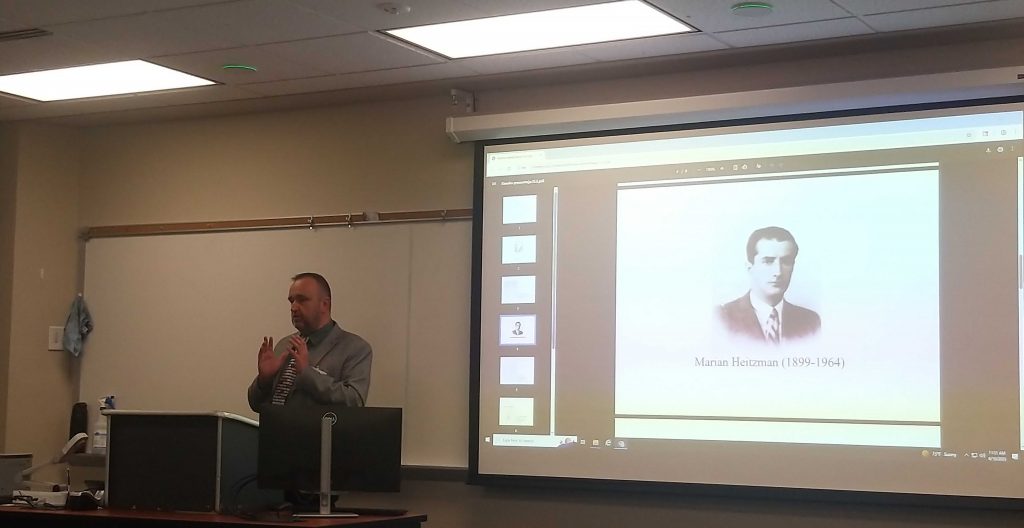
It was for the first time that Kieszkowski’s life and works were presented to international audience. Mróz discussed his biography, including successful beginnings of his academic career in interwar Poland and his later difficult life on the exile in Paris, as well as various hypotheses regarding undocumented period of his life directly following the war. Philosophical part of the paper focused on Kieszkowski’s dispute with Marian Heitzman (1899-1964), who accused him of underestimating the influences of mediaeval neoplatonism on Ficino and it was the role of mediaeval philosophy in forming Renaissance Platonism that turned them against each other. After the war, in 1973, Kieszkowski managed to publish the edition of Pico della Mirandola’s Conclusiones (Geneve 1973). This book was based on the materials he had been able to collect and study in various European libraries before the war and thus his work was far from perfection. Reviews of this book emphasised insufficient accuracy in editing the original Pico’s text, yet his scholarship and experience in Renaissance philosophy were assessed as indisputable. The most eminent and meticulous critic of this late Kieszkowski’s work was a Portuguese scholar, José Vitorino de Pina Martins (1920-2010).
A dozen of scholars attended the session and the questions from the audience were concerned both with biographical and philosophical parts of the paper, that is, with Kieszkowski’s later life on exile as a possible consequence of a PTSD resulting from his serious bullet wounds and subsequent disabilities, and with the connection between the developments of neo-Scholasticism in Poland and Europe and resulting appreciation of the role of mediaeval culture and philosophy.
Recent commentaries