Ancient Φilosophy Reception at the 12th Seminar of Historians of Polish Philosophy

Seminar of Historians of Polish Philosophy (SHPPh) is a cyclical academic event held at various universities in Poland since its first edition in Warsaw in 2006. In 2025 (May 19th-20th), it was for the first time at the University of Zielona Góra (UZ) where Polish researchers of their native philosophical traditions gathered. Central topic of this edition of SHPPh was the problem of classical thinkers and epigons in the development of Polish thought. Detailed programme of the whole event can be downloaded here.
The seminar was also an opportunity to celebrate the second edition of the book Classics of Polish Philosophy by Ryszard Palacz, an essential figure for historians of philosophy at UZ, and a researcher of reception of Greek philosophy in medieaval thought, about whose passing we have informed in the autumn of 2024. Full program of the event can be downloaded here and a brief report (in Polish) on the UZ’s website can be found here (with a photo gallery). The seminar was accompanied by an exhibition devoted to Professor Palacz and many speakers referred to his work and his understanding of classical Polish philosophers.

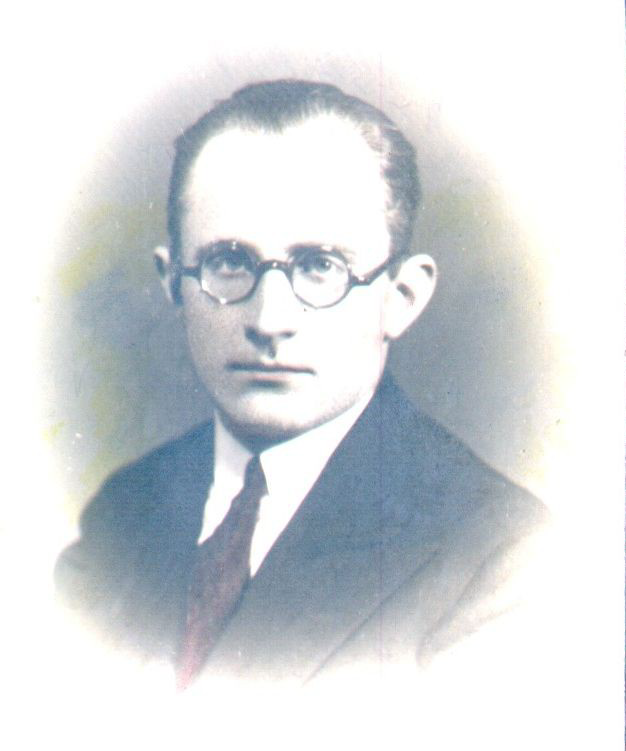
Two AΦR group members delivered their papers during the SHPPh. Tomasz Mróz talked about Bohdan Kieszkowski (1903-1997) and about Polish and international disputes on his works on Florentine Platonism.
In the thirties in Poland Kieszkowski was engaged in a dispute with Marian Heitzman (1899-1964), who accused him of underestimating the influences of medieval neoplatonism on Ficino. Heitzman and Kieszkowski, two scholars of one generation, two researchers of Renaissance Platonism, represented two different academic centres, conservative Cracow and more progressive Warsaw, and their polemical texts were published separately in philosophical journals in Cracow (Heitzman) and Warsaw (Kieszkowski). Kieszkowski, naturally, considered Heitzman’s position to be an overestimation of medieval influences on Renaissance’s thought and labelled it as ‘medievalism’. On international niveau a polemic against Kieszkowski’s work came from a Portuguese scholar, José Vitorino de Pina Martins (1920-2010), who praised Kieszkowski’s scholarship, yet spared no words of criticism against Kieszkowski’s edition of Pico della Mirandola’s Conclusiones (Geneve 1973).
Adrian Habura’s talk smoothly concluded the whole conference focusing, on the one hand, on a paper titled Four Understandings of Classicism by Władysław Tatarkiewicz (1886-1980), and on the other hand, on Palacz’s (1935-2024) arguments for including Tatarkiewicz among the classics of Polish philosophy.
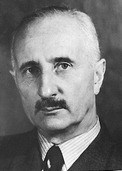
Habura analysed Tatarkiewicz’s notion of classicism and supplemented Palacz’s arguments for including Tatarkiewicz among the classics, demonstrating that not only his History of Philosophy, History of Aesthetics, and History of Six Ideas, that is, basically historical studies, but also his Analysis of Happiness, the original philosophical work by Tatarkiewicz, bears the mark of classic. Ethical considerations in the Analysis of Happiness, noticeably influenced by Aristotle, not to mention Tatarkiewicz’s doctoral degree from Marburg on a thesis devoted to Aristotle, allowed Habura to highlight an additional aspect of Tatarkiewicz as a classic, for he was not only a classic among Polish philosophers, but also a classic in another understanding: as a follower or – to use the term proposed by Juliusz Domański – a user of Aristotelian philosophy. And it was Aristotle whom Tatarkiewicz himself regarded as the most classical among all the classical philosophers of ancient Greece.
Recent commentaries