Home » Posts tagged 'Vilnius' (Page 2)
Tag Archives: Vilnius
Ancient Wisdom in a Lithuanian Interpretation
Connections between Ancient Φilosophy Reception research group at the University of Zielona Góra and the scholars of Vilnius University have been many times documented on this website. This time we want to report on an Erasmus+ teaching visit of a Lithuanian scholar, Mindaugas Stoškus from Vilnius, in the Institute of Philosophy (UZ). He was our guest between 10th and 14th of April.
Among dr Stoškus’ teaching acitivities, there was a lecture titled:
What Can We Learn from the Ancient Concept of Wisdom?
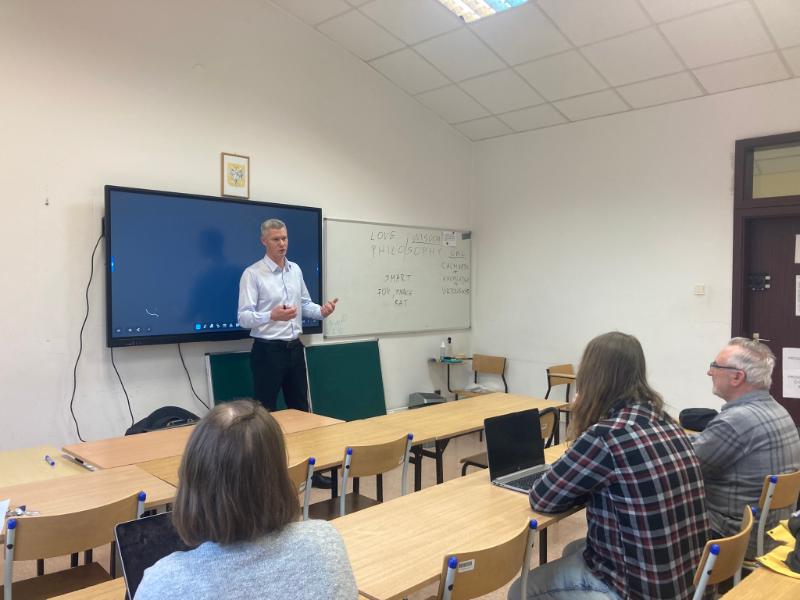
This lecture was delivered twice, during the classes of Philosophical Counselling (above on the photo by A. Habura) and on the course of the History of Ancient Philosophy. At the beginning of his lecture, Dr. Stoškus discussed etymological issues, focusing on the very notion of wisdom. The he took an attempt to enumerate the attributes of the wise man, as the Greeks saw them. They included, for example, knowledge, experience, ability to justify judgments, and desire to disseminate wisdom. Dr. Stoškus discerned philosophical wisdom from its sophistic version and, in conclusion, emphasised the essential connection between theory and practice of wisdom.
Greek philosophy still fares well!
A Guest from Vilnius University
In the last week of November Institute of Philosophy hosted an Erasmus+ visitor from Vilnius University, prof. Jonas Čiurlionis, a long-time collaborator of Ancient Φilosophy Reception research group. It was his second visit in Zielona Góra. One of the tasks of our guest was to consult conclusions of the dissertation by Adrian Habura, the topic of which is a multifaceted reception of Aristotle in Władysław Tatarkiewicz’s oeuvre. It is sufficient to add that prof. J. Čiurlionis is Habura’s auxiliary supervisor.
The most important, however, were Čiurlionis’ lectures and talks for students of philosophy and related fields of study. During the first of them he discussed Aristotle’s Physics. He focused not only on the most significant problems of this work, as, for example, the theory of four elements, but also presented the broader context of Stagirite’s reflection, his fundamental premises and his general view of the world. At the end of the lecture, prof. Čiurlionis referred to Carlo Rovelli, a theoretical physicist, who considers Aristotelian physics to be still topical and not outdated.
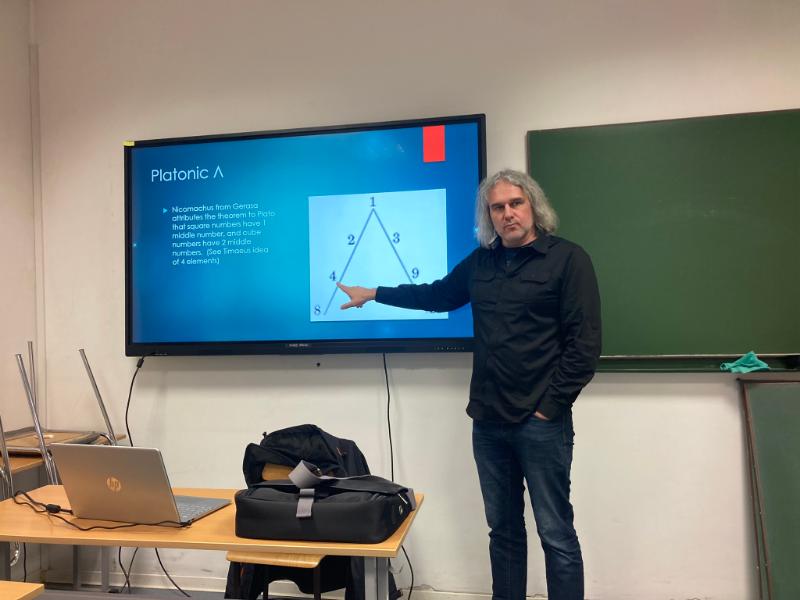
The second lecture on ancient philosophy was devoted to the subject of harmony, broadly considered. Starting with Pythagorean and Platonic concepts, prof. Čiurlionis moved on to other authors dealing with this issue and demonstrated how harmony manifested itself in various aspects of ancient Greek philosophy and, more broadly, in Greek culture, and in subsequent centuries, in music and astrology.
(Another) Erasmus+ Teaching Visit in Vilnius
In April, 15th-19th, 2024, Tomasz Mróz enjoyed his fourth Erasmus teaching visit in Faculty of Philosophy, Vilnius University.
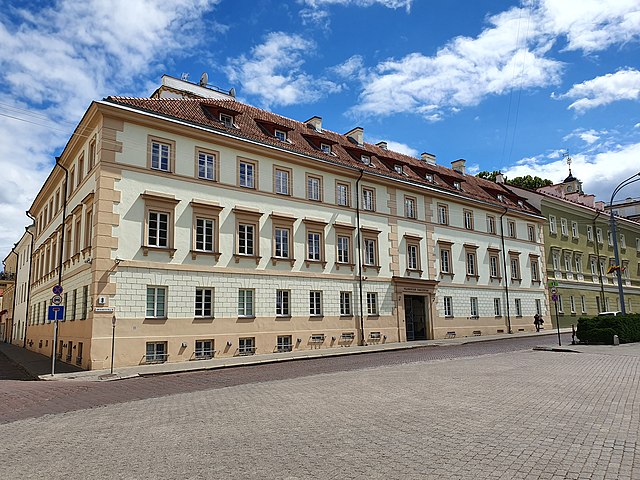
This year, some issues connected to the reception of ancient philosophy were addressed during the lecture on Władysław Tatarkiewicz (1886-1980) and his History of Philosophy. It was ancient philosophy as a subject of various problems in historiography of philosophy.
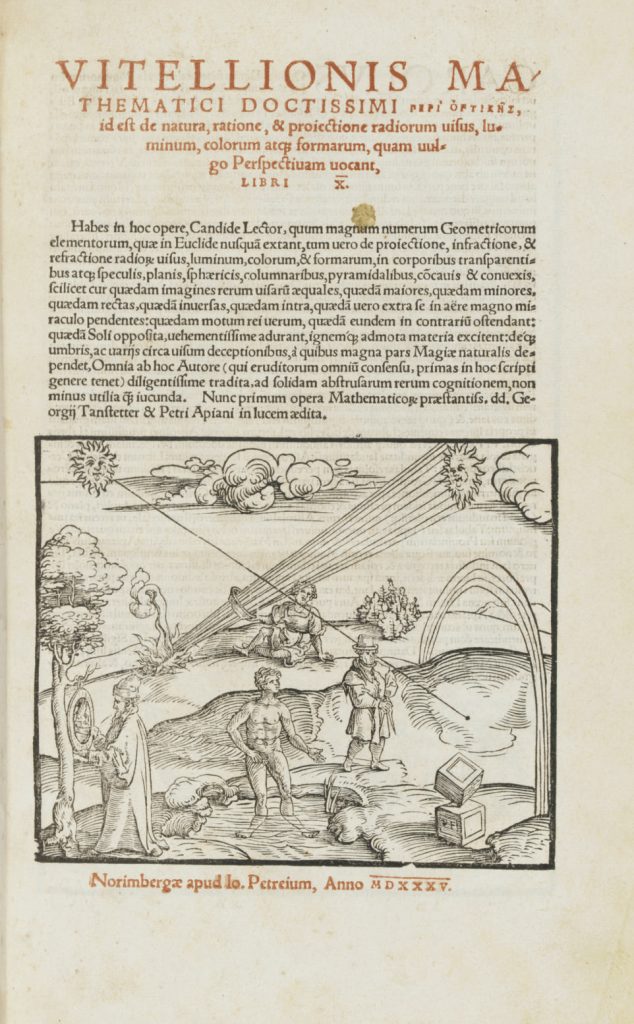
More important, however, was a talk devoted to Vitello (ca. 1230-1300) and his theoretical reflection on the nature of the daemons. Vitello’s demonology stemmed from his research in natural sciences and it employed neo-Platonic and Aristotelian elements, such as a belief in a mathematical structure of the universe, the theory of four elements and natural creatures. Vitello’s philosophical investigations were presented against the background of the 13th century developments in philosophy, especially the Averroist controversy.
Teaching duties were supplemented with meetings with the Faculty members and discussions with students extra universitatis muros. Hopefully, this was not the final chord in the co-operation between Vilnius University and the University of Zielona Góra.
A Visitor from Vilnius and Plato as a Teaching Subject
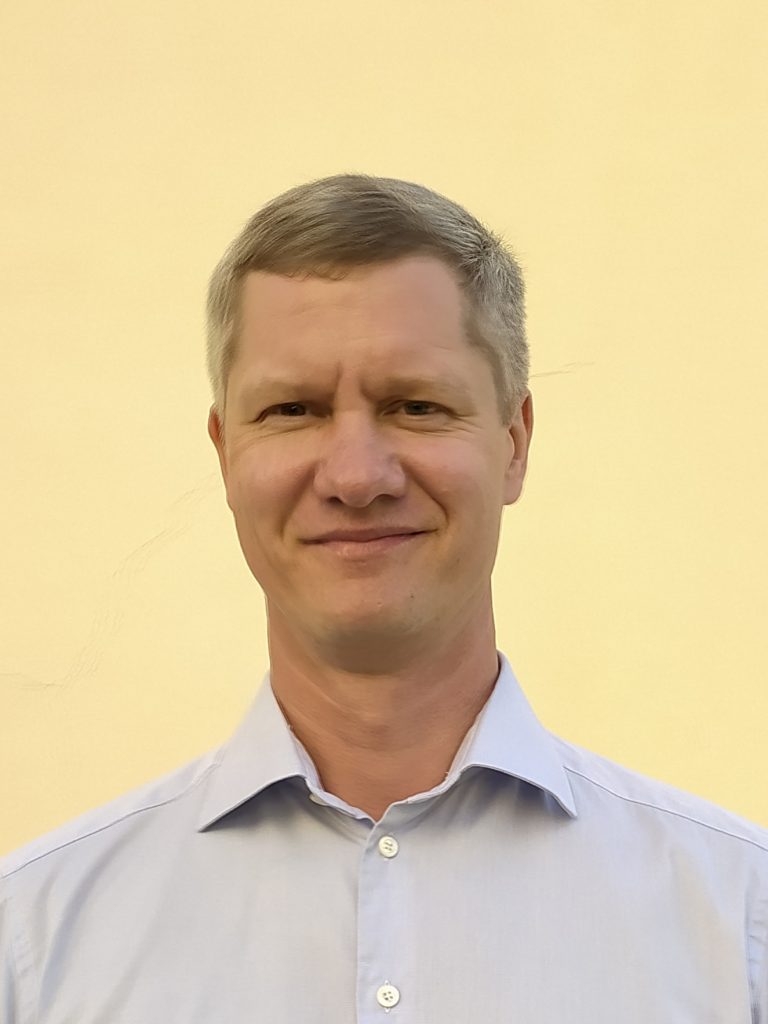
In March 4th-8th an Erasmus exchange visitor from Vilnius University stayed at the University of Zielona Góra and delivered some talks here. Our guest was dr. Mindaugas Stoškus who is an assistant professor at the Department of Theoretical Philosophy and Philosophy of Science, Faculty of Philosophy, VU.
Among M. Stoškus’ presentations there was one on the methods of teaching ancient philosophy, as a part the reception of ancient philosophy, and it was delivered to the students in the Doctoral School of Humanities and Social Sciences and to invited guests. The central topic of his lecture was Plato’s Republic and Plato’s political project which, resulting from Stoškus’ interactive co-operation with the audience, turned out to be a tricky and problematic issue. The lecturer demonstrated to the audience, consisting mostly of non-philosophers, how superficial reading of Plato’s opus magnum may lead to misunderstanding of the true nature of his political aims, one of which was disjoining wealth and personal success from political power and responsibility.
We hope that M. Stoškus’ visit at UZ is not the final chord of the co-operation between our two partner institutions and that our mutual collaboration will develop.
Vilnius and Ancient Philosophy
Institute of Philosophy, University of Zielona Góra (UZ), has for many years developed co-operation with Vilnius University (VU) in the framework of Erasmus+ programme. UZ philosophers, members of the faculty or students, visit Vilnius, and VU philosophers visit Zielona Góra almost every academic year, as we have recently reported here and here.
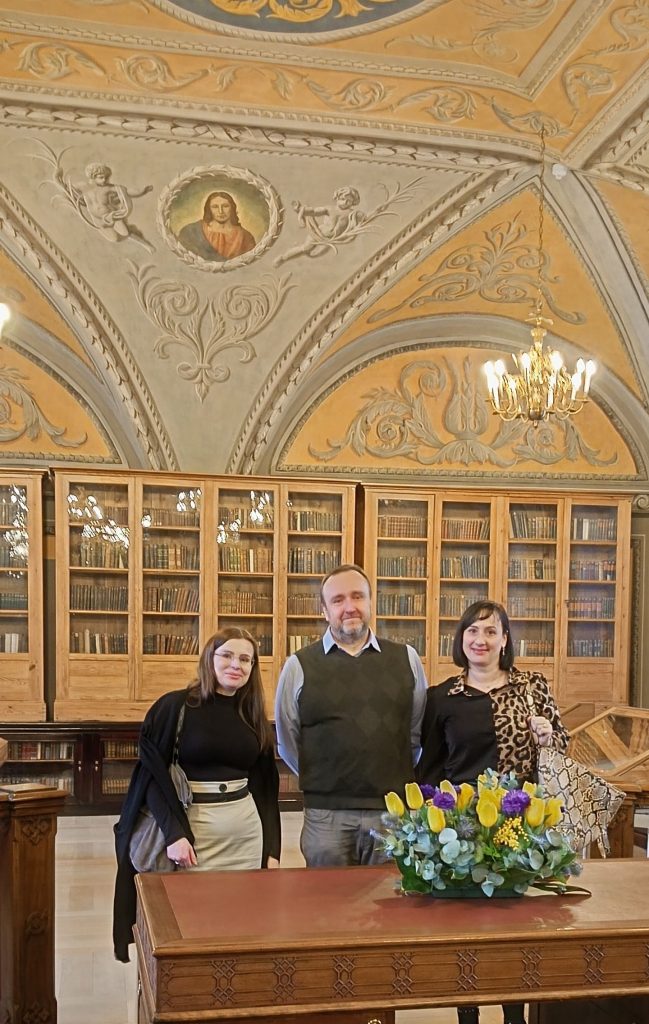
On Feb. 6-7th representatives of AΦR (Tomasz Mróz) and academic staff of the Institute (Justyna Kroczak, Joanna Zegzuła-Nowak) paid a working visit to Vilnius philosophers to discuss possibilities of expanding future research co-operation on the topics related to the reception of ancient philosophy.
Visiting group was given a tour of the old library of VU. The visit was an opportunity for UZ scholars to investigate possibilitites of a library query in special collections of VU and to learn the library regulations and new restrictions for readers who research manuscripts and old prints.
On the photo: J. Kroczak, T. Mróz, J. Zegzuła-Nowak in the historic Franciszek Smuglewicz Hall, VU, the old library.
The trip to Vilnius was funded from the “Small Grant” allocated last year to T. Mróz by the Deputy Rector of the University of Zielona Góra.
“Small Grant” from the University of Zielona Góra

Prof. Marcin Mrugalski, the Deputy Rector for Science and International Cooperationof of the University of Zielona Góra (UZ), home institution of the AΦR, awarded Tomasz Mróz with a “Small Grant” of a maximum possible value. These internal grants are distributed by the Rector annually among those researchers of UZ, who had submitted their proposals to the National Science Centre (NCN), received positive assessements from the experts, yet finally had not been granted funding. Aim of the “Small Grants” is to increase the chances of the researches in future granting competitions.
“Small Grant” funds for AΦR will be spent on developing and strenghtening a co-operation between AΦR members and the Institute of Philosophy (UZ) with colleagues from the Faculty of Philosophy, Vilnius University (VU), on the topic of the history of research on ancient philosophy in VU during its complex history.
Erasmus Teaching Visit in Vilnius University
In April, 18th-22nd, 2023, Tomasz Mróz enjoyed his third Erasmus teaching visit in Faculty of Philosophy, Vilnius University.
Vilnius University is a unique research and teaching institution in Central-Eastern Europe. It has a long and sometimes turbulent Polish-Lithuanian history. Some of the lectures delivered by T. Mróz to philosophy students in Vilnius concerned a part of this history and, naturally, reception of ancient philosophy.
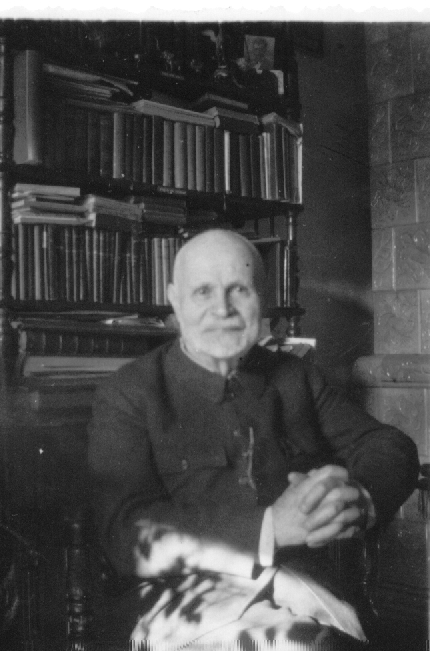
One of the lectures discussing the issues of ancient philosophy reception had Wincenty Lutosławski (1863-1954) as its topic. The focus was on his Vilnius period and his vision of a philosophical development of Plato from idealism to spiritualism. Since Lutosławski considered Polish Romantic Messianism to be founded on spiritualism, consequently he could consider this unique tradition to be rooted in Plato, who was presented by Lutosławski as an ancient philosophical predecessor of Polish 19th century literary and philosophical tendency.
Another lecture in which ancient philosophy reception appeared was devoted to Vitello (ca. 1230-1300?) and his theoretical reflection on the nature of the daemons. Vitello’s demonology stemmed from his research in natural sciences and it employed neo-Platonic and Aristotelian elements, such as a belief in a mathematical structure of the universe and the theory of four elements. Vitello’s philosophical investigations were presented against the background of the 13th century developments in philosophy.
Teaching duties were supplemented with meetings with the Faculty members and discussions on the plans of a future co-operation activities between philosophers of Vilnius University and University of Zielona Góra.
Recent commentaries