Home » Posts tagged 'Warsaw' (Page 2)
Tag Archives: Warsaw
On W. Tatarkiewicz’s (Mis)fortunes
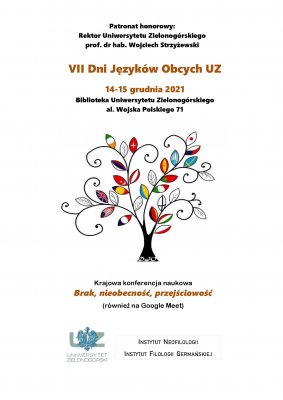
The Days of Foreign Languages took place again at the University of Zielona Góra, and it was their VIIth edition. Their general topic this year, that is, lack, absence, deficiency, violence, exclusion etc., did not come as a surprise in current circumstances.
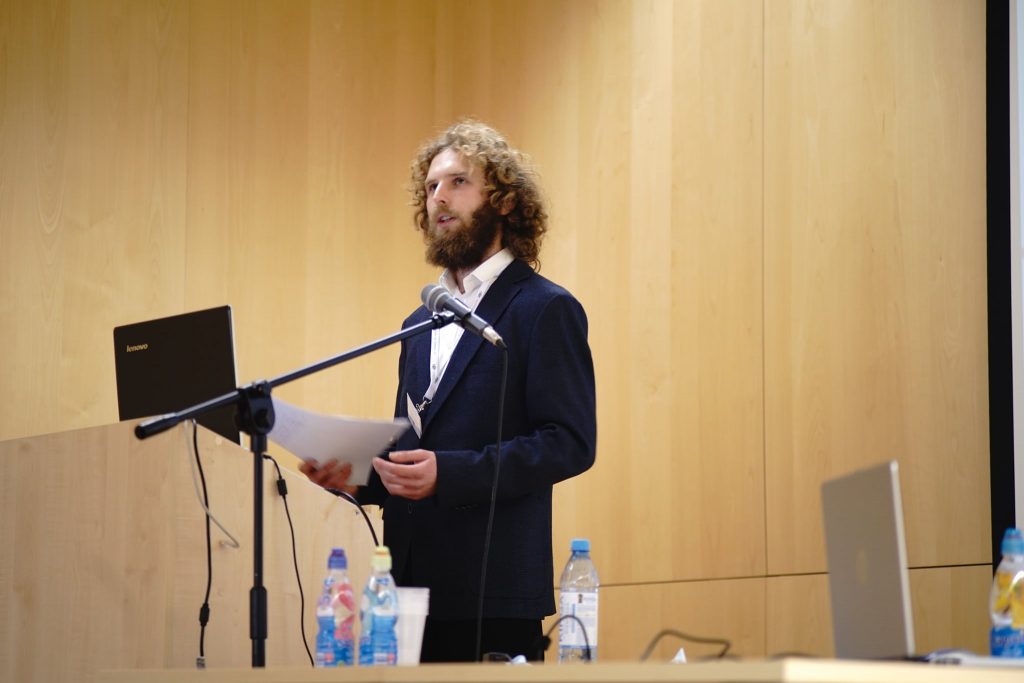
Two members of AΦR group took part in this event. Mariam Sargsyan delivered a paper in Russian on various metaphors with which the notion of “consciousness” is described, but it was Adrian Habura whose presentation was devoted to the reception of ancient philosophy.
His paper discussed the problem of happiness and well-being in Władysław Tatarkiewicz’s (1886-1880) life and his autobiographical notes, esp. the chapter titled Beneficial misfortunes (Korzystne niepowodzenia). Habura confronted it with Tatarkiewicz’s treatise Analysis of Happiness and some other of his ethical writings. He attempted to demonstrate that Tatarkiewicz, almost like a Homeric hero, many times in his life turned his misfortunes into success, and how Aristotle’s philosophy and Tatarkiewicz’s own research on Aristotle – from his Ph.D. thesis in Marburg to mature works in Warsaw – helped him develop his attitude to the problems of human life in general, and how his theory of happiness was rooted in Greek philosophy, above all in Aristotle.
A View of Plato’s Paths in Poland

A lengthy, 480 pages, monograph book by T. Mróz was published in Academia Verlag’s series “Academia Philosophical Studies” as vol. 75. The title of the book is Plato in Poland 1800-1950. Types of Reception – Authors – Problems.
Some material from the book, including table of contents, is available on publisher’s website. The book attempts to make Polish Plato reception available to non-Polish readers. The years 1800-1950 cover essential phaenomena in modern Polish philosophy, for they encompass periods of reception of Western philosophical trends and the development of the Lvov-Warsaw school, neo-Messianism and neo-Scholasticism. The book discusses how each of these phaenomena contributed to interpreting Plato. The material is divided into three main parts focused on various types of reception.
The book is a final outcome of a project sponsored by Polish government within the National Programme for the Development of Humanities funding scheme. An essential collaborator in this project was Una Maclean-Hańćkowiak, who patiently edited the author’s style.
Wojciech Dzieduszycki as a Greek-Style Sage

Another paper from AΦR group was included in previously presented volume of “Civitas”. In her paper Anna Droś presented “A Conservative Thinker and a Greek-Style Sage”, a professor of Lvov University and a politician, count Wojciech Dzieduszycki (1848-1909), who was compared by his contemporaries to Socrates and who actually followed Socrates’ eccentric ways of behaviour, and especially his negligence for clothing.
Socrates was an ideal of a philosopher and a conservative for Dzieduszycki. In Socrates he saw a political thinker, a devoted citizen, and interpreted his views as a cure for deficiencies of modern world.
Full paper, in Polish, can be downloaded here.
Recent commentaries