Home » Posts tagged 'T. Mróz' (Page 5)
Tag Archives: T. Mróz
“Oral History and the Classics” Team in Warsaw
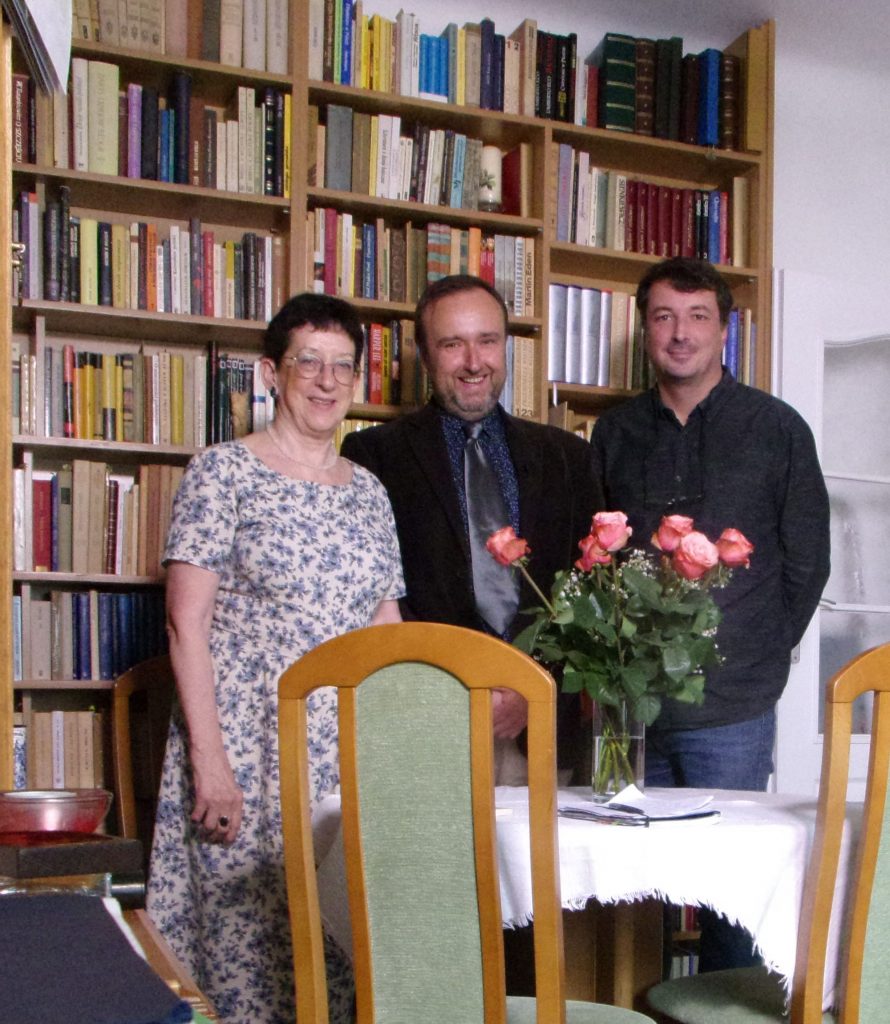
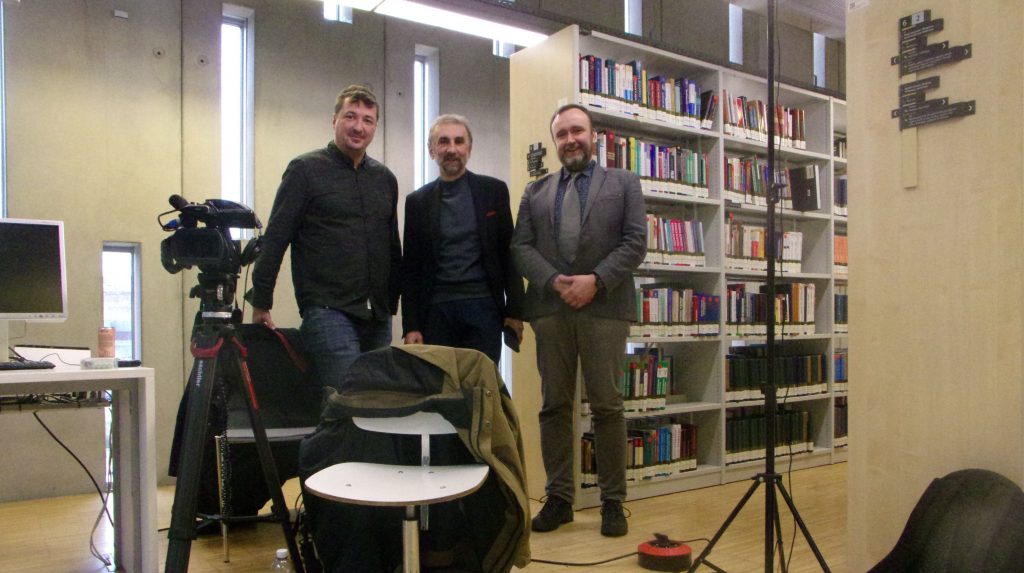
On May 22th, 2024, Oral History and the Classics project team was honoured to pay a visit to Doctor Barbara Brzuska, who kindly agreed to be interviewed in her apartment in Warsaw. Dr Brzuska is another Polish scholar who gave her consent to answer our questions. She is a specialist in Latin, Latin literature, and – most importantly for AΦR – has published numerous works on the history of reception of antiquity in modern times and on the history of teaching classical topics in the 19th and 20th centuries, researching a variety of phaenomena of classical receptions among writers, poets, and philosophers. Let us add that we have previously managed to interview two Polish specialists in ancient philosophy, namely prof. Bogdan Dembiński in February 2024 in Katowice and prof. Andrzej Wesoły in December 2023 in Poznań. These two meetings have already been announced here and here. All these Polish interviews, plus Czech and Italian ones, furnished with English subtitles, will be included in the Oral History and the Classics collection on the website of the University of Hradec Králové.
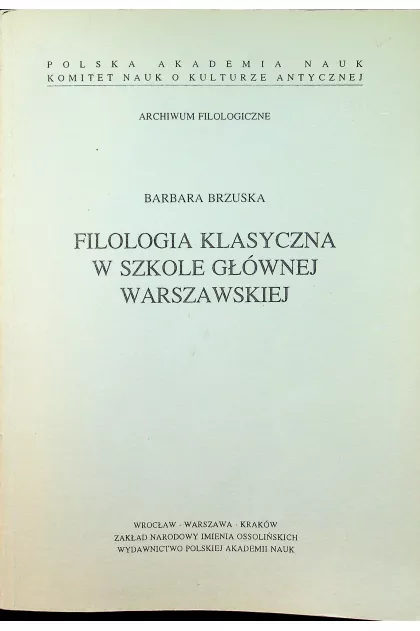
Dr B. Brzuska is now a retired lecturer of classical culture and instructor of Latin language. Her entire academic career was related to the University of Warsaw. One of her most important works was a study of the history of classical languages and culture in the Main School of Warsaw, a university that was working for a very limited time of a few years in Warsaw under Russian rule. This study, apart from a comprehensive investigation of its topic, offers much more to the readers, for it includes the background of the school and its later influences.
During the interview Dr Brzuska emphasised the role of popular works for wider audiences in instilling the interest in classics. It was also her case, for those were the books by Jan Parandowski (1895-1978) that attracted her to the classical world and subsequently inspired to learn classical languages. She recalled her memories of her university years and outstanding professors, with Kazimierz Kumaniecki (1905-1977) in the first place. Dr Brzuska, as a teacher of Latin with decades long experience, shared her views on the evolution of teaching methods and on the contemporary digital aids for learning, which can be of great help and a trap at the same time.
The interview was carried out by T. Mróz, while Jan Kadeřábek, a cinematographer and a cameraman, took care of all the technicalities. Both were very thankful for the casual and friendly atmosphere which was created by their kind and warm host and interviewee.
On the photo:
Dr B. Brzuska, T. Mróz and J. Kadeřábek
Philosophy and Poetry in Gorzów Wielkopolski
On May 13th-14th 2024 the Jacob of Paradies Academy in Gorzów Wielkopolski held an international conference Poesis Philosophorum – Philosophia Poetarum. The head, heart and the soul of this symposium was professor Marian Wesoły with whom Oral history team, including AΦR member, had conducted an interview in December 2023, as it was announced here.
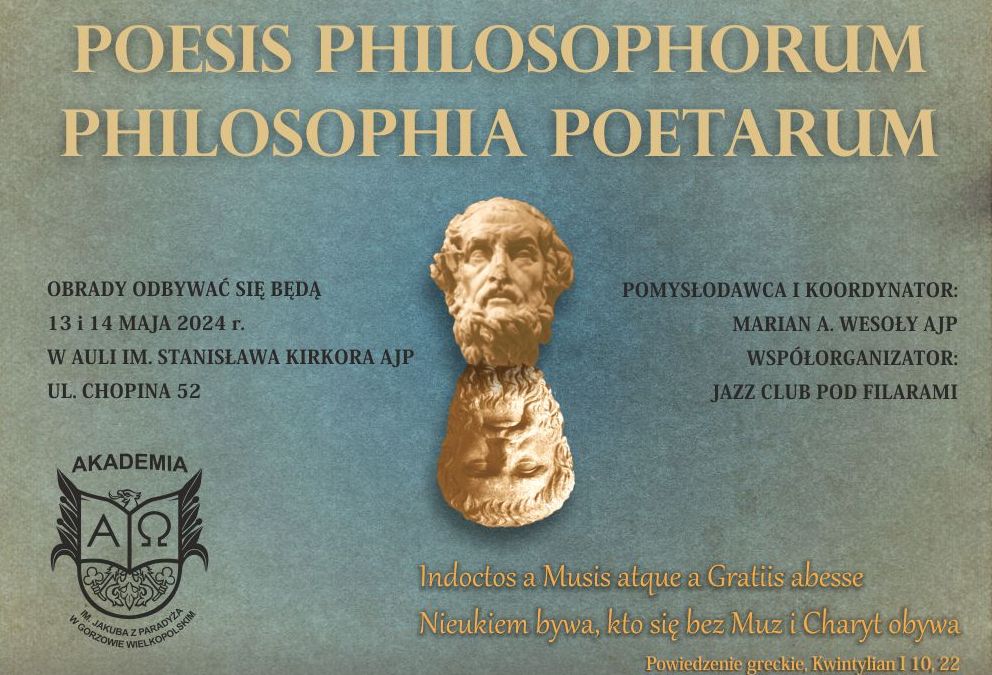
Detailed program of the conference can be downloaded here. Tomasz Mróz was one of the speakers on the first day of the conference. In his presentation he took an attempt to demonstrate how Polish poets referred to philosophers, or how philosophers used poetry to explain philosophy.

T. Mróz discussed both ancient and modern philosophers, whose ideas had been referred to by poetic means. Apart from various verses on Copernicus or Jarosław Iwaszkiewicz’s poem on Immanuel Kant, T. Mróz presented Ignacy Krasicki’s (1735-1801) satire on Plato and Stanisław Lisiecki’s (1872-1960) use of a church anthem to explain the predominant character of the Good in Plato’s philosophy.
Krasicki was a leading representative of the Enlightenment literature in Poland. The aim of his poem was to ridicule Plato’s philosophy and the figure of an ancient sage in general: Plato, pompously speaking to his disciples as a possessor of wisdom, is ultimately bitten by a flea who in this way declares its possession over Plato. No philosopher, then, can escape nature!
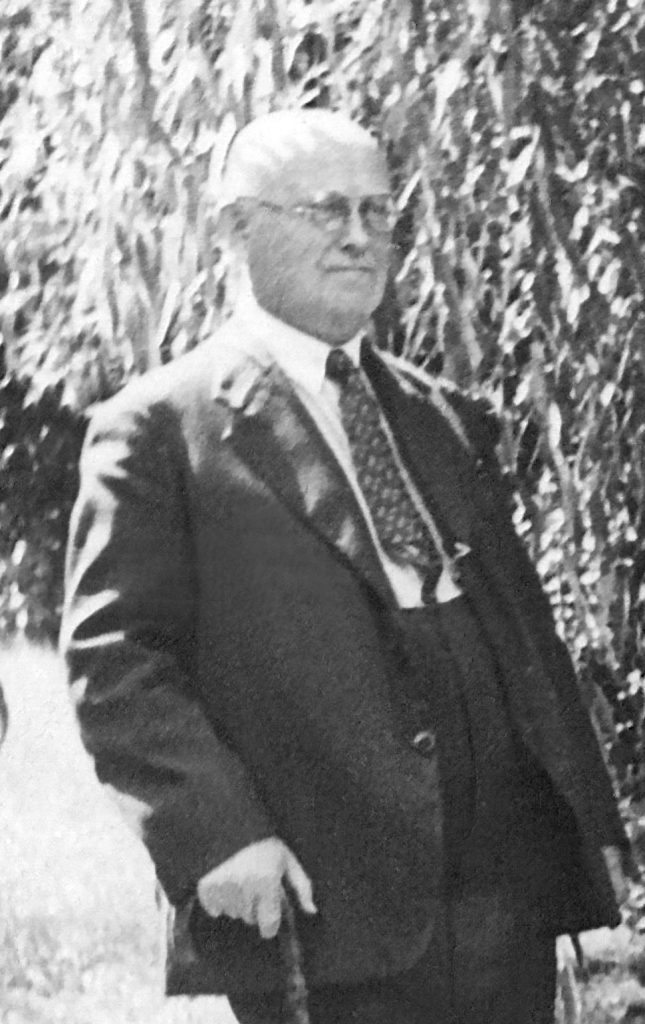
Lisiecki was not a poet, but over a century later classics scholar and translator of Greek philosophy into Polish. He used the lyrics of a church song, praising inexhaustibility, inexplicability and God’s predominance over the created world. His intention was to demonstrate Polish audience that Plato’s highest Good had a similar character to Christian God, the highest being, and could be easily comprehended by means of analogy.
This paper contributed to the variety of topics discussed during the conference, presenting various relations between philosophy and poetry. The conference in general demonstrated that even smaller academic institutions can gather international participants, organise significant academic events and thus contribute to philosophical life, granted that there is some spiritus movens behind them.
(Another) Erasmus+ Teaching Visit in Vilnius
In April, 15th-19th, 2024, Tomasz Mróz enjoyed his fourth Erasmus teaching visit in Faculty of Philosophy, Vilnius University.
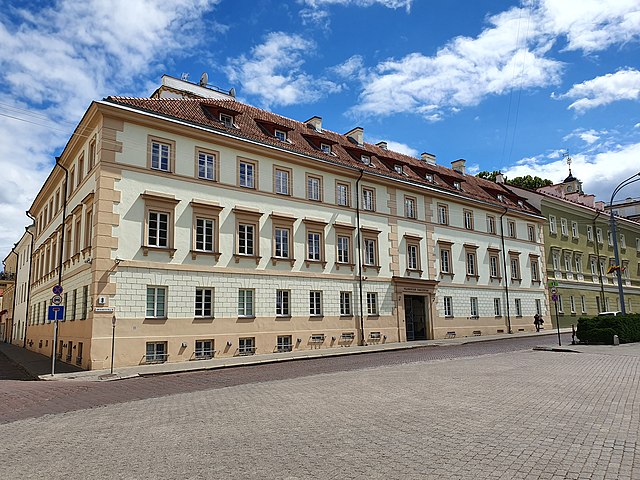
This year, some issues connected to the reception of ancient philosophy were addressed during the lecture on Władysław Tatarkiewicz (1886-1980) and his History of Philosophy. It was ancient philosophy as a subject of various problems in historiography of philosophy.
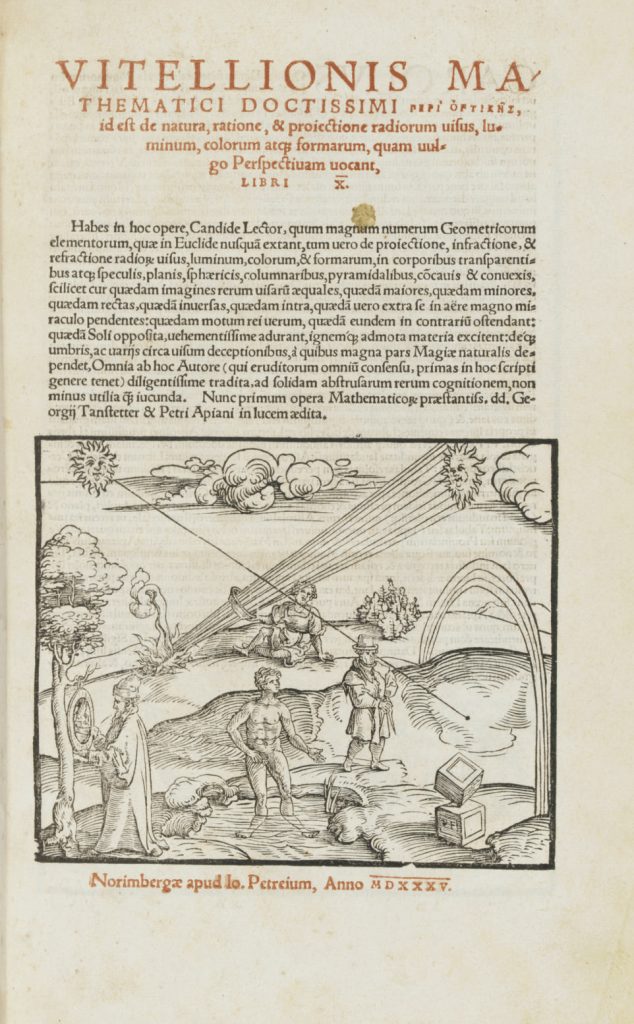
More important, however, was a talk devoted to Vitello (ca. 1230-1300) and his theoretical reflection on the nature of the daemons. Vitello’s demonology stemmed from his research in natural sciences and it employed neo-Platonic and Aristotelian elements, such as a belief in a mathematical structure of the universe, the theory of four elements and natural creatures. Vitello’s philosophical investigations were presented against the background of the 13th century developments in philosophy, especially the Averroist controversy.
Teaching duties were supplemented with meetings with the Faculty members and discussions with students extra universitatis muros. Hopefully, this was not the final chord in the co-operation between Vilnius University and the University of Zielona Góra.
“Oral History and the Classics” Team in Katowice
On Feb. 27th, 2024, Oral History and the Classics project team enjoyed the honour to visit Professor Bogdan Dembiński in the Library of The University of Silesia (Uniwersytet Śląski, UŚ) in Katowice. Professor Dembiński is another Polish specialist in Greek philosophy who has agreed to give an interview which will be included in the Oral History and the Classics collection on the website of the University of Hradec Králové. In December 2023, as we have already announced, a similar interview was shot with prof. Andrzej Wesoły in Poznań.
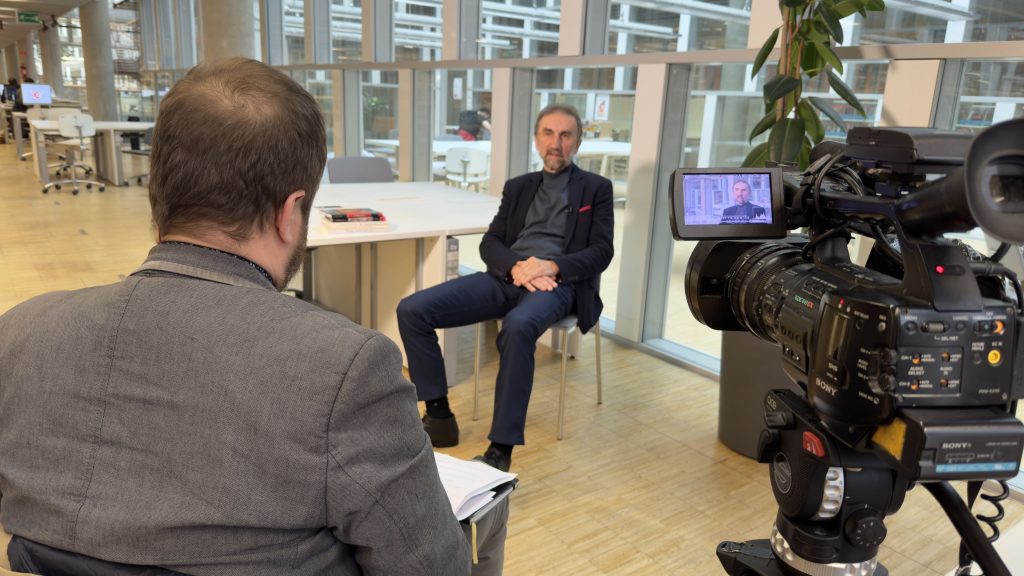
Bogdan Dembiński is currently a professor at UŚ, where he has taught and done his research work on Greek philosophy for almost four decades. Tomasz Mróz, who carried out the interview, in the last decade of the 20th century had been a participant in his lectures on ancient thought. The University of Silesia is not the only institution where prof. Dembiński delivers courses in philosophy. He teaches, for example, at The Karol Szymanowski Academy of Music in Katowice. He greatly appreciates this opportunity to introduce philosophy to the audiences who represent a different type of sensibility than philosophy students.
Having graduated in philosophy at the Catholic University of Lublin (KUL), Bogdan Dembiński returned to his home region of Silesia and received his Ph.D. on a thesis devoted to the philosophy of Martin Heidegger (1987). Apart from his university teachers it was Heidegger who induced him to focus on the everlasting legacy of Greek philosophy. Consequently, his postdoctoral thesis had Plato’s theory of ideas as its topic (1998) and subsequently Plato became the most important subject of his research. We shall add that prof. Dembiński was granted a title of the full professor in 2011 and then became a member of the Polish Academy of Arts and Sciences in Kraków.
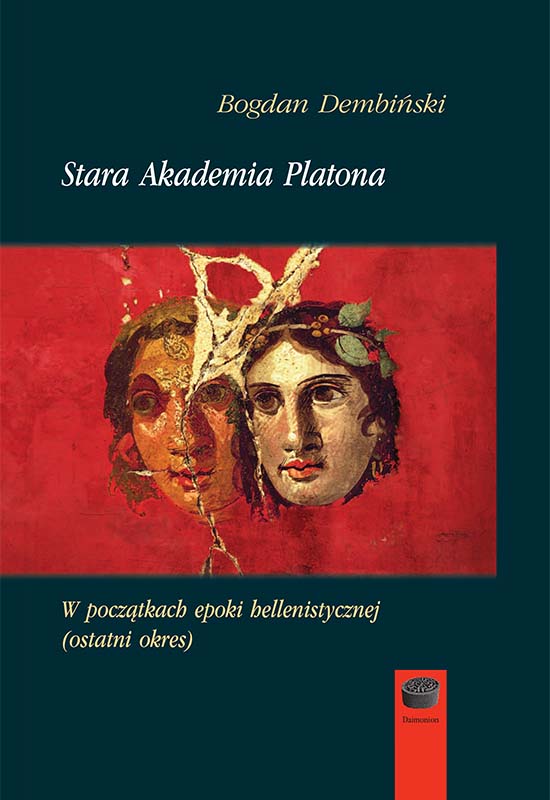
The list of books on Plato, which were authored by Bogdan Dembiński, includes: Teoria idei – ewolucja myśli Platońskiej [Theory of Ideas – the evolution of Plato’s thought], 1997 and re-editions; Późna nauka Platona – związki ontologii i matematyki [The Late Philosophy of Plato – relations between ontology and mathematics], 2003; Późny Platon i Stara Akademia [The Late Plato and the Old Academy], 2010; Stara Akademia Platona [Plato’s Old Academy], 2018.
Prof. Dembiński spoke about his academic curriculum and emphasised his current involvement in scientific activities of the Copernicus Center for Interdiciplinary Studies, founded by prof. Michał Heller, the recipient of the Templeton Prize. In Dembiński’s view, ancient Greek reflection on the nature and cosmos should be continuously referred to, not only by philosophers, by also by the representatives of contemporary natural sciences, theoretical physics and cosmology, for profound Greek ideas still have the power to stimulate research in many fields.
When the whole recording is edited and furnished with English subtitles, it will be make public and available on the project’s website. The interview meeting with prof. Dembiński would not be possible without his kind consent and hospitality of the UŚ Library staff. The interview was carried out by T. Mróz, while Jan Kadeřábek, a cinematographer and a cameraman, took care of all the technicalities.
A Review of Plato in Poland 1800-1950
It is our honour to announce that the second review of the book Plato in Poland 1800-1950. Types of Reception – Authors – Problems (Academia, Baden Baden 2021) has just seen the light of day (the first one was announced here). The review was published in “Revue Philosophique de Louvain” 2023 (vol. 120, 1).
The review was kindly composed by professor Sylvain Delcomminette (Université Libre de Bruxelles). Professor Delcomminette is an expert in Plato’s philosophy, his current research topics include the reception of Platonism in the Marburg neo-Kantian school and specific issues in the philosophy of Aristotle. For us, one of the most important conclusions in prof. Delcomminette’s review is that the reader of this book will not get bored. Thus our task is completed.
Full text of the review can be downloaded from the journal’s website
(with a personal account) here.
Vilnius and Ancient Philosophy
Institute of Philosophy, University of Zielona Góra (UZ), has for many years developed co-operation with Vilnius University (VU) in the framework of Erasmus+ programme. UZ philosophers, members of the faculty or students, visit Vilnius, and VU philosophers visit Zielona Góra almost every academic year, as we have recently reported here and here.
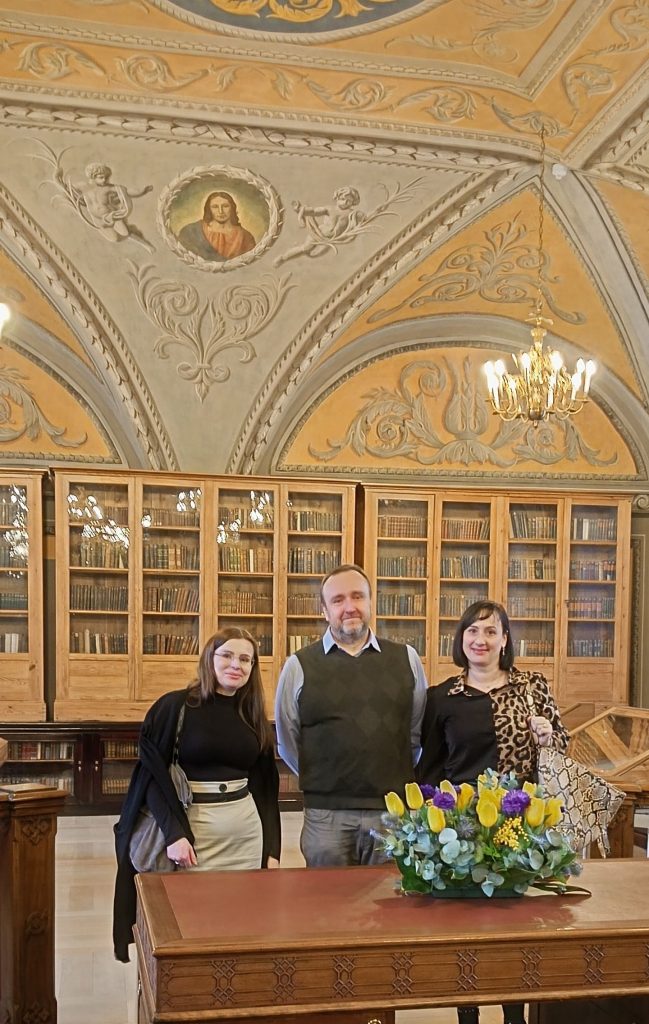
On Feb. 6-7th representatives of AΦR (Tomasz Mróz) and academic staff of the Institute (Justyna Kroczak, Joanna Zegzuła-Nowak) paid a working visit to Vilnius philosophers to discuss possibilities of expanding future research co-operation on the topics related to the reception of ancient philosophy.
Visiting group was given a tour of the old library of VU. The visit was an opportunity for UZ scholars to investigate possibilitites of a library query in special collections of VU and to learn the library regulations and new restrictions for readers who research manuscripts and old prints.
On the photo: J. Kroczak, T. Mróz, J. Zegzuła-Nowak in the historic Franciszek Smuglewicz Hall, VU, the old library.
The trip to Vilnius was funded from the “Small Grant” allocated last year to T. Mróz by the Deputy Rector of the University of Zielona Góra.
A paper on Polish translations of Plato
The latest issue of the “Revue de philosophie ancienne” (2023/2, vol. XLI) includes a paper by T. Mróz: Polish Translations of Plato’s Dialogues from the Beginnings to the Mid-Twentieth Century.
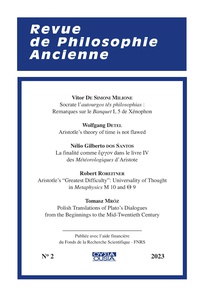
In his paper T. Mróz focuses on four most significant translators of Plato’s dialogues in Poland. They were: Felicjan Antoni Kozłowski (1805-1870), who was the first translator of Plato into Polish; Antoni Bronikowski (1817-1884), who was the most productive in the 19th century and kept on working on Plato in spite of unfavourable reviews; Stanisław Lisiecki (1872-1960), whose numerous translations remained unpublished; and finally Władysław Witwicki (1878-1948), whose renderings of the dialogues are still widely read. The paper presents their achievements and discusses the reception of their works.
Anyone whishing to receive an offprint should feel free to request it from the author via email.
Recent commentaries