Home » Posts tagged '19th century'
Tag Archives: 19th century
Polish Political Platos in Brill’s Companion
Brill’s Companion to the Legacy of Greek Political Thought edited by David Carter, Rachel Foxley, and Liz Sawyer is one of the latest volumes in the series (vol. 8, Leiden-Boston 2024). Contributors to this volume investigated a range of responses to issues surrounding the legacy of Greek political thought, exploring the ways in which political thinking has evolved from antiquity to the present day.

One of the chapters in this book was authored by Tomasz Mróz who discussed variety of Polish interpretations of Plato’s political works in studies written by nineteenth-century Polish authors (Plato’s Political Works in Nineteenth-Century Polish Thought, pp. 335-363), including historians of philosophy, philosophers and social thinkers. Their diverse views on the Republic of Plato reflected the wealth of ideas which are present in Plato’s opus. In spite of their various intellectual backgrounds and goals, all these authors found inspiration in Plato’s work for the implementation of his political ideas into their own arguments touching upon contemporary social or political issues, including the questions of democracy, socialism and gender equality.
Let’s say a few words about the authors presented in Mróz’s chapter to give a glance of its content: Bolesław Limanowski (1835-1935), a socialist thinker, regarder Plato as a progressive philosopher, despite his disregard for democracy. For Wojciech Dzieduszycki (1848-1909), a conservative politician, Plato’s socialist and feminist ideas were too destructive for society to be implemented. Wincenty Lutosławski (1863-1954), a famous Plato scholar, considered Plato’s socialism as a natural consequence of his metaphysics and only a transitional step in his development. Stefan Pawlicki (1839-1916), a neo-Scholastic philosopher, claimed that even Plato’s most controversial political ideas (communism and feminism) had stemmed from his deep moral beliefs, but all their shortcomings were later to be corrected by Christianity. Eventually, Eugeniusz Jarra (1881-1973), a historian of legal philosophy, emphasised gender equality and the possibility of social promotion as progressive ideas supporting democracy.
PS.: this chapter was edited and improved by Una Maclean-Hańćkowiak and is presented on Kudos platform.
Erasmus Teaching Visit in Vilnius University
In April, 18th-22nd, 2023, Tomasz Mróz enjoyed his third Erasmus teaching visit in Faculty of Philosophy, Vilnius University.
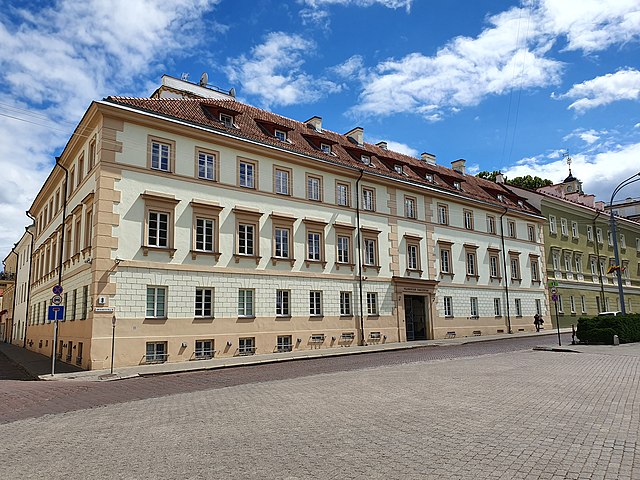
Vilnius University is a unique research and teaching institution in Central-Eastern Europe. It has a long and sometimes turbulent Polish-Lithuanian history. Some of the lectures delivered by T. Mróz to philosophy students in Vilnius concerned a part of this history and, naturally, reception of ancient philosophy.
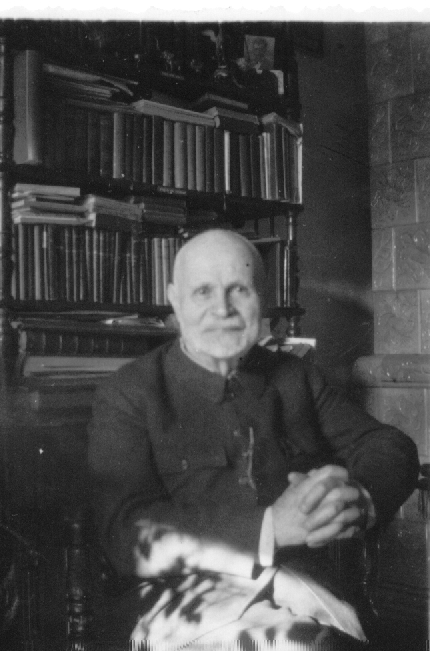
One of the lectures discussing the issues of ancient philosophy reception had Wincenty Lutosławski (1863-1954) as its topic. The focus was on his Vilnius period and his vision of a philosophical development of Plato from idealism to spiritualism. Since Lutosławski considered Polish Romantic Messianism to be founded on spiritualism, consequently he could consider this unique tradition to be rooted in Plato, who was presented by Lutosławski as an ancient philosophical predecessor of Polish 19th century literary and philosophical tendency.
Another lecture in which ancient philosophy reception appeared was devoted to Vitello (ca. 1230-1300?) and his theoretical reflection on the nature of the daemons. Vitello’s demonology stemmed from his research in natural sciences and it employed neo-Platonic and Aristotelian elements, such as a belief in a mathematical structure of the universe and the theory of four elements. Vitello’s philosophical investigations were presented against the background of the 13th century developments in philosophy.

Teaching duties were supplemented with meetings with the Faculty members and discussions on the plans of a future co-operation activities between philosophers of Vilnius University and University of Zielona Góra.
Recent commentaries