Home » Posts tagged 'T. Kavaliauskas'
Tag Archives: T. Kavaliauskas
Paper on H. Jakubanis as a Promoter of Greek Thought
It is not the first time (and, hopefully, not the last one either) that the Lithunian journal “Logos” publishes a paper composed by a member of Ancient Φilosophy Reception research group. The scope of the journal are scholarly studies in all areas of philosophy.
This time the author is Mariam Sargsyan, who in 2025 defended her Ph.D. thesis cum laude and received her doctoral diploma during a ceremony at the University of Zielona Góra, where AΦR group is affiliated.
Her article was published in vol. 124 of “Logos” and is available here in a bilingual, that is, Lithuanian (translated from English by Tomas Kavaliauskas) and original English version. It is important to remark here that Henryk Jakubanis (1879–1949), whose works are the topic of this paper, and his ancestors had their roots in Lithuania, although their mother tongue was Polish and they spent most of their lives in the Russian Empire. Two language versions of Sargsyan’s paper title are Henrikas Jakubanis kaip graikų mąstymo puoselėtojas and Henryk Jakubanis as a Promoter of Greek Thought.
Sargsyan’s article covers some issues from her previous Polish studies, as for example a short sketch of Jakubanis’ and a presentation of his historical-philosophical works. This is supplemented with archival materials from the Catholic University of Lublin. Additionally, the article delves into the intellectual lineage of Jakubanis, focusing on the influences of Alexei Gilarov (1856–1938) and Tadeusz Zieliński (1859–1944).
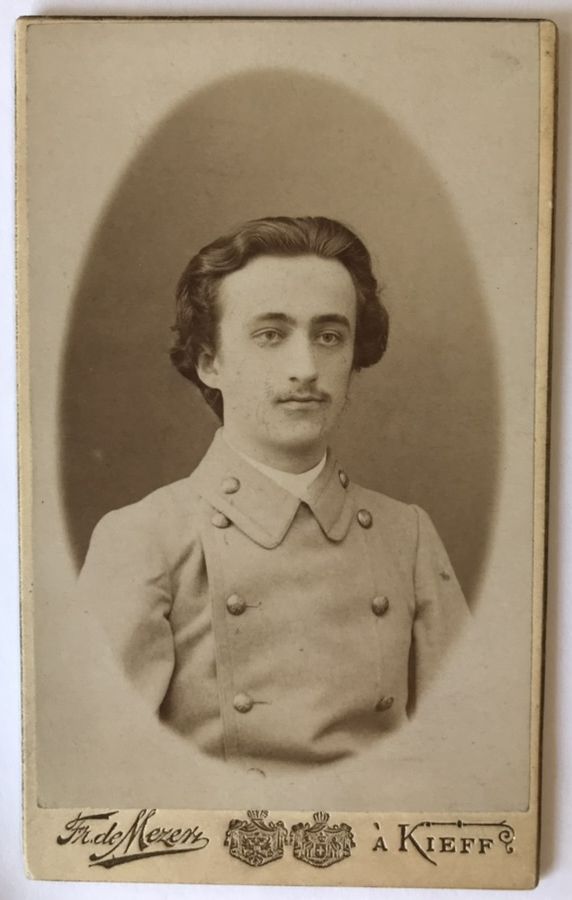
Let us focus only on Jakubanis’ work titled The Importance of Ancient Philosophy for the Modern Worldview (published in Kyiv in 1910) in which he identified the characteristic features of ancient thought with inner harmony on the top of them. Along with harmony, he listed universalism, sincerity, the ability to adopt justified views, and the plasticity of objectivism. He used harmony as an intrument for reviving ancient philosophy at the dawn of the 20th century. According to the him, modern times could undoubtedly be described as an epoch in a state of profound philosophical crisis. The essence of the crisis was the lack of unity in spiritual life and a deep split in its manifestations. This state was described as a threefold disharmony: in the scientific and theoretical sphere, in the discord of mind, feelings, and will, and, finally, in a disunion between theory and practice. In this regard the harmony of Greek thought seemed to him to be an accurate cure. More details can be found in Sargsyan’s paper.
Recent commentaries