Home » Posts tagged 'Plato' (Page 3)
Tag Archives: Plato
A Guest from Vilnius University
In the last week of November Institute of Philosophy hosted an Erasmus+ visitor from Vilnius University, prof. Jonas Čiurlionis, a long-time collaborator of Ancient Φilosophy Reception research group. It was his second visit in Zielona Góra. One of the tasks of our guest was to consult conclusions of the dissertation by Adrian Habura, the topic of which is a multifaceted reception of Aristotle in Władysław Tatarkiewicz’s oeuvre. It is sufficient to add that prof. J. Čiurlionis is Habura’s auxiliary supervisor.
The most important, however, were Čiurlionis’ lectures and talks for students of philosophy and related fields of study. During the first of them he discussed Aristotle’s Physics. He focused not only on the most significant problems of this work, as, for example, the theory of four elements, but also presented the broader context of Stagirite’s reflection, his fundamental premises and his general view of the world. At the end of the lecture, prof. Čiurlionis referred to Carlo Rovelli, a theoretical physicist, who considers Aristotelian physics to be still topical and not outdated.
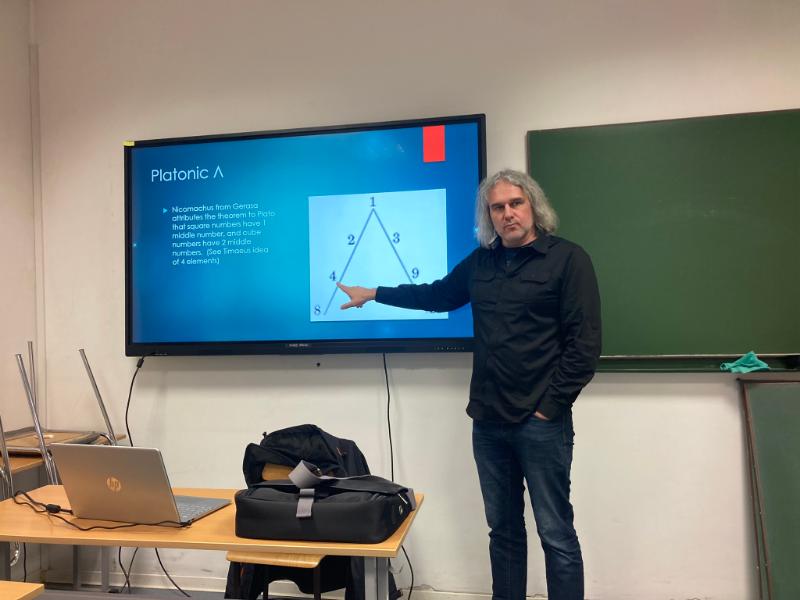
The second lecture on ancient philosophy was devoted to the subject of harmony, broadly considered. Starting with Pythagorean and Platonic concepts, prof. Čiurlionis moved on to other authors dealing with this issue and demonstrated how harmony manifested itself in various aspects of ancient Greek philosophy and, more broadly, in Greek culture, and in subsequent centuries, in music and astrology.
AΦR at the 3rd Congress on Polish Philosophy
The 3rd Congress on Polish Philosophy took place in October (18th-20th) in the Rydzyna Palace. It gathered scholars interested in researching the tradition of Polish philosophy and developing it. Two members of the Ancient Φilosophy Reception research group took part in this philosophical event: Adrian Habura – online, and Tomasz Mróz – onsite. The first of them spoke about the concept of love in the works of Władysław Tatarkiewicz (1886-1980), while the latter – on the history of studies on the reception of ancient philosophy in Poland.
Mróz’s paper was directly concerned with problems related to the reception of ancient philosophy and started with quotes of diverse opinions of two eminent Polish researchers in the history of Greek philosophy, that is, Stefan Pawlicki (1839-1916) and Wincenty Lutosławski (1863-1954). Lutosławski, when composing his works on Plato, searched for Polish authors and their studies to provide references to them, while Pawlicki paid no interest to the works of his compatriots on Greek philosophy.
In more recent decades it was Izydora Dąmbska (1904-1983), a philosopher and historian of philosophy, who published a study on the reception of Plato in Poland (1972), but nowadays many books and papers on this topic were published by the members of the AΦR research group. Concluding his talk Mróz briefly presented research projects of the members of the AΦR and the books they had published, to start with the latest one:
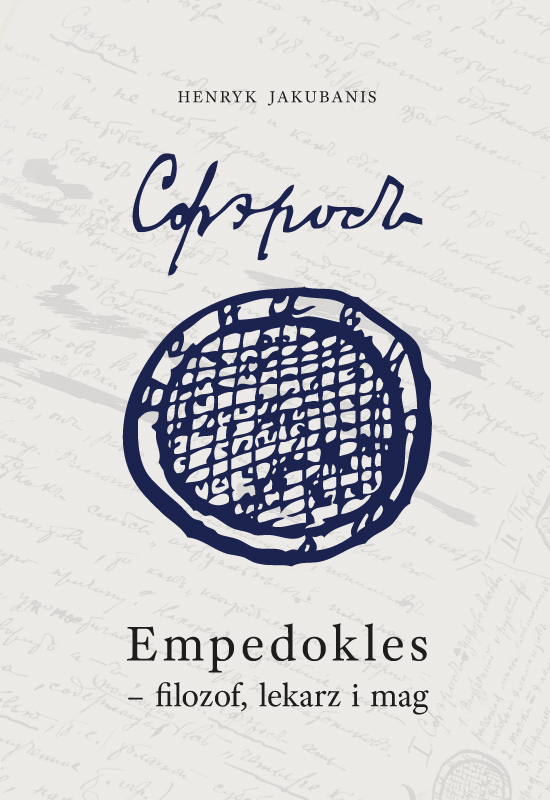
Henryk Jakubanis, Empedokles – filozof, lekarz i mag: Przyczynek do jego zrozumienia i oceny (Empedocles: a Philosopher, a Doctor and a Magus. Materials for Understanding and Assessing Him), transl. from Russian and ed. Mariam Sargsyan, A. Habura, Wydawnictwo Marek Derewiecki, Kęty 2024, 104 pp. (Studies and Texts in the History of Reception of Ancient Philosophy, vol. 3).
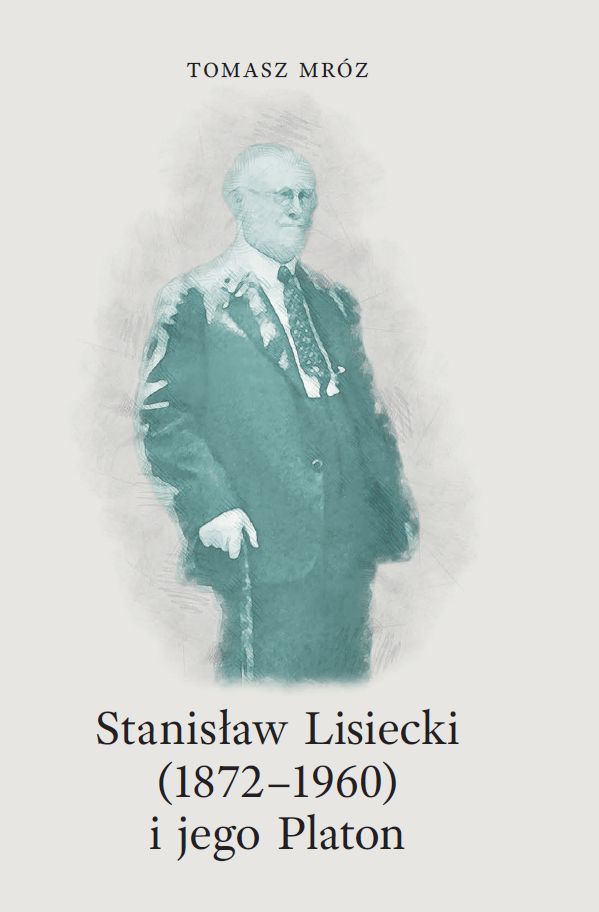
T. Mróz, Stanisław Lisiecki (1872-1960) i jego Platon (Stanisław Lisiecki (1872-1960) and His Plato), Wydawnictwo Marek Derewiecki, Kęty 2022, 150 pp. (Studies and Texts in the History of Reception of Ancient Philosophy, vol. 2).
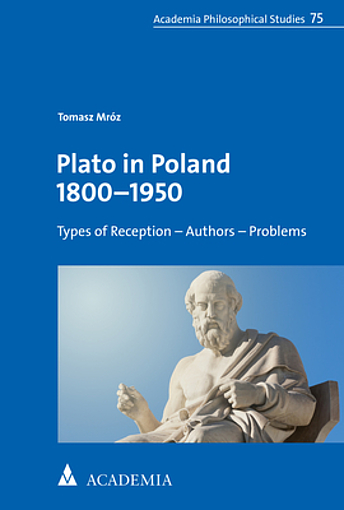
T. Mróz, Plato in Poland 1800-1950: Types of Reception – Authors – Problems, Academia Verlag / Nomos Verlagsgesellschaft, Baden Baden 2021, 480 pp. (Academia Philosophical Studies, vol. 75).
S. Lisiecki, O Platonie, Arystotelesie i o sobie samym (On Plato, Aristotle and on Himself), ed. T. Mróz, Wydawnictwo Marek Derewiecki, Kęty 2021, 367 pp. (Studies and Texts in the History of Reception of Ancient Philosophy, vol. 1).
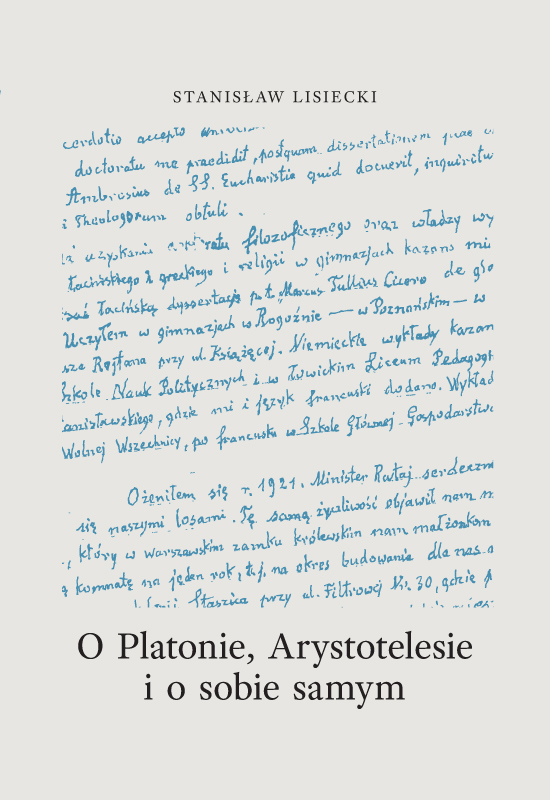
and some earlier ones…
American Platonism and ISNS Dublin Conference
International Society for Neoplatonic Studies, in accordance with its name, promotes studies and academic work on Platonism, Neoplatonism and Platonic tradition broadly considered. In co-operation with various academic centres throughout the world ISNS organises annual conferences with large number of panels covering a wide spectrum of what can be called Neoplatonism. In 2024 the conference was held in Trinity College, Dublin on June 19th-23rd.

Among numerous panels of the Dublin conference there was one on the American Platonic tradition, its title was: Transcendental Echoes: Neoplatonism’s Influence on American Renaissance Thought. The aim of this panel was described by its originator, prof. Sonya Isaak, as follows: “this interdisciplinary panel endeavors to explore the dynamic intersections between Neoplatonism and American Transcendentalism, elucidating the profound philosophical, spiritual, and literary amalgamations that defined this vibrant movement in the 19th century…”. The panel had only three speakers (prof. Jay Bregman, prof. S. Isaak and T. Mróz), but it gathered many participants in the audience who wanted to learn bout the developments of Platonism in the 19th century American thought.
T. Mróz’s paper was titled Paul Shorey as a Plato Scholar and his Influences from Ralph Waldo Emerson. Shorey (1857–1934) was the most eminent and internationally recognised American Plato scholar at the turn of the 20th century. He took part in the then international disputes on interpreting Plato’s philosophy and the very methods of reading and researching the dialogues.
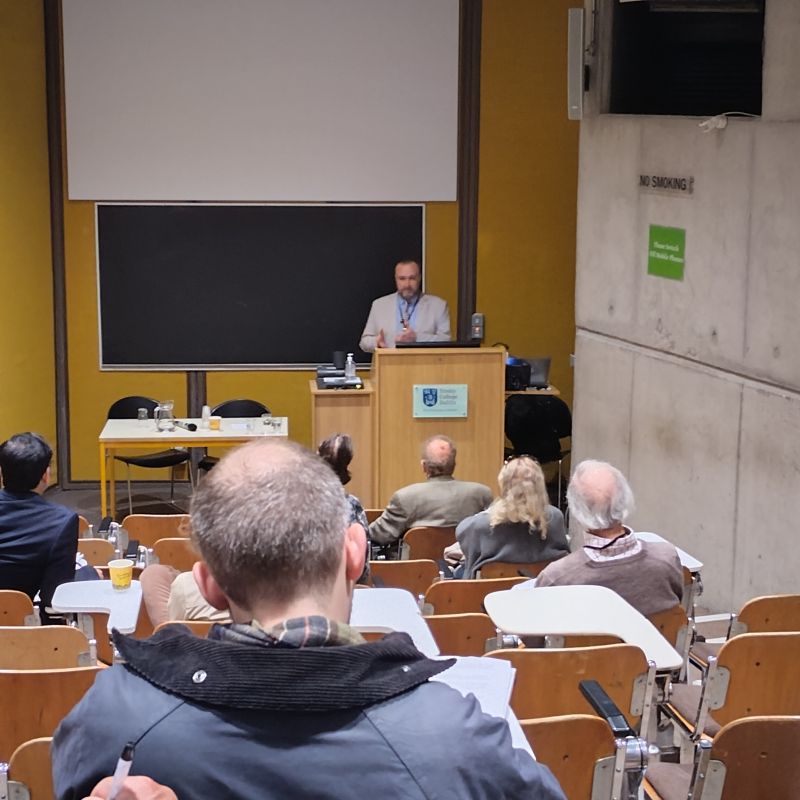
As an American Plato scholar, Shorey, in his works on Plato, did not avoid referring to American writers, with a particular emphasis on Emerson (1803–1882), the author of Representative Men (with a significant essay on Plato). Shorey, naturally, included Emerson in a long line of thinkers inspired by Plato, but the aim of Mróz’s paper was to focus on the influence exerted by the Transcendentalist writer and philosopher, Emerson, on the classics scholar and academic researcher, Shorey. Although he did not hold Emerson as a philosopher in high regard, there are some traits of his thinking of Plato which may be ascribed with Emersonian origins, for example, reading Plato as a moral philosopher and tendency toward unity. Thus the connection between American Transcendentalist movement and academic studies on Plato in American tradition was demonstrated.
History of Classics Discussed at UHK
An essential part of the Oral History and the Classics project was a conference held in the Faculty of Philosophy, University of Hradec Králové. This academic meeting which took place on June 1st-2nd and was titled Classics: the Past, the Present, and the Future. It gathered specialists reflecting on various issues related to the development of classical studies including history of ancient philosophy.
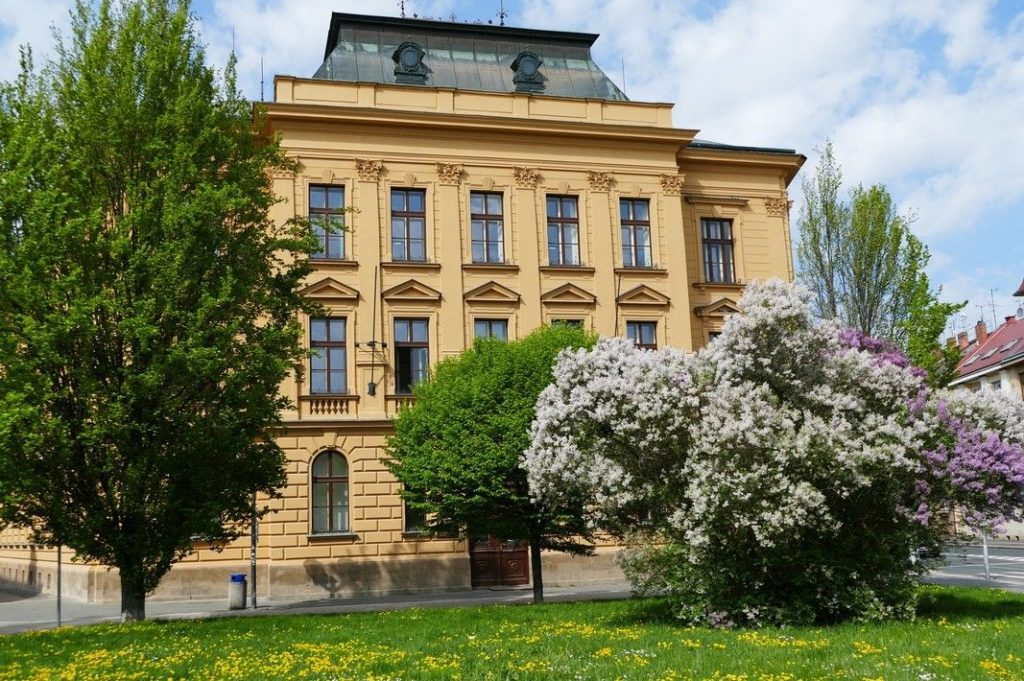
The head of the project and the conference was professor Jaroslav Daneš, with some help from Tomasz Mróz (University of Zielona Góra), a researcher in the project. Participants of the conference focused on historical developments of the classics, including their own experiences, “personal paths”, on recent problems, e.g. with teaching classics, and on the perspectives of future research in this area of studies.
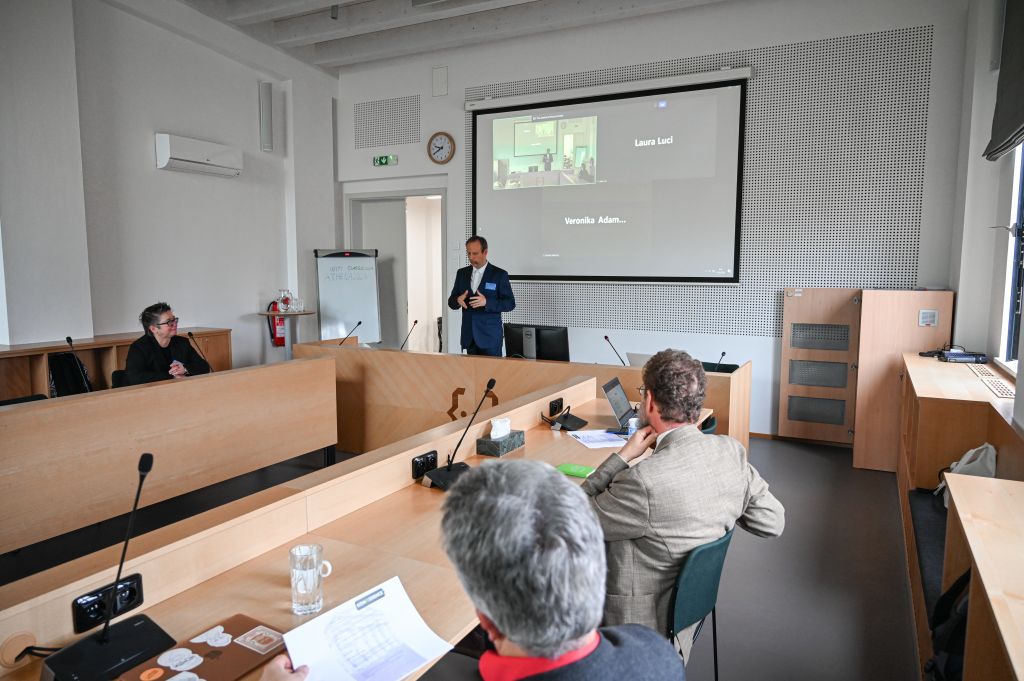
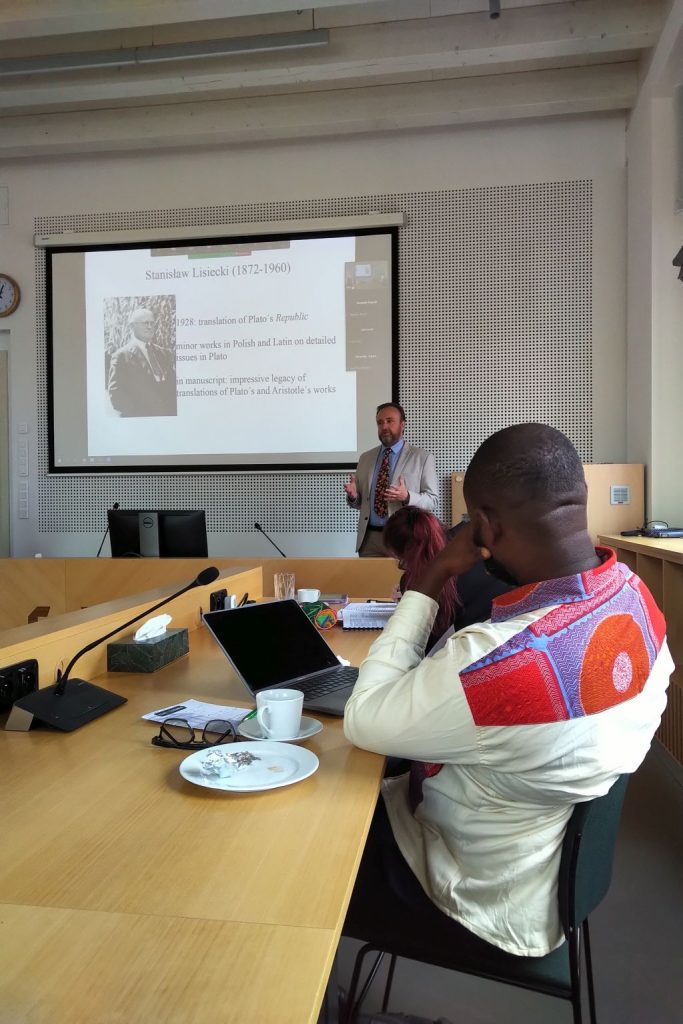
Platonic Inspirations was the title of the session during which an AΦR member,T. Mróz, delivered his paper: Plato in post-war Poland. Continuities and novelty. His talk was devoted to three Polish Plato scholars, who survived the World War II and attempted to include their experience of war and the post-war political situation of Poland into their studies on ancient philosophy. They were, starting with the oldest: Wincenty Lutosławski (1863-1954), Stanisław Lisiecki (1872-1960), Władysław Witwicki (1878-1948). It is sufficient to mention that it was the Marxist interpretation of Plato that was pushed in Poland after the war by Polish Marxist philosophers (e.g. by T. Kroński) and in general works on philosophy translated from Russian. In these circumstances Lutosławski planned to published a volume on Plato presenting him as an intellectual and moral remedy for Europe, Witwicki, quite the opposite, blamed the philosopher for inventing totalitarianism, and Lisiecki turned from Plato to Aristotle, who was more acceptable then as a naturalist and a critic of Plato.
Plato in Poland book available in OA
This post is only to announce that the book by T. Mróz, Plato in Poland 1800-1950. Types of Reception – Authors – Problems (Academia Verlag/Nomos Verlagsgesellschaft, Baden Baden 2021), as a result of the agreement with the publisher, is now available free in open access on the Nomos Verlag website here and in the repository of the University of Zielona Góra, here. Enjoy!
Philosophy and Poetry in Gorzów Wielkopolski
On May 13th-14th 2024 the Jacob of Paradies Academy in Gorzów Wielkopolski held an international conference Poesis Philosophorum – Philosophia Poetarum. The head, heart and the soul of this symposium was professor Marian Wesoły with whom Oral history team, including AΦR member, had conducted an interview in December 2023, as it was announced here.
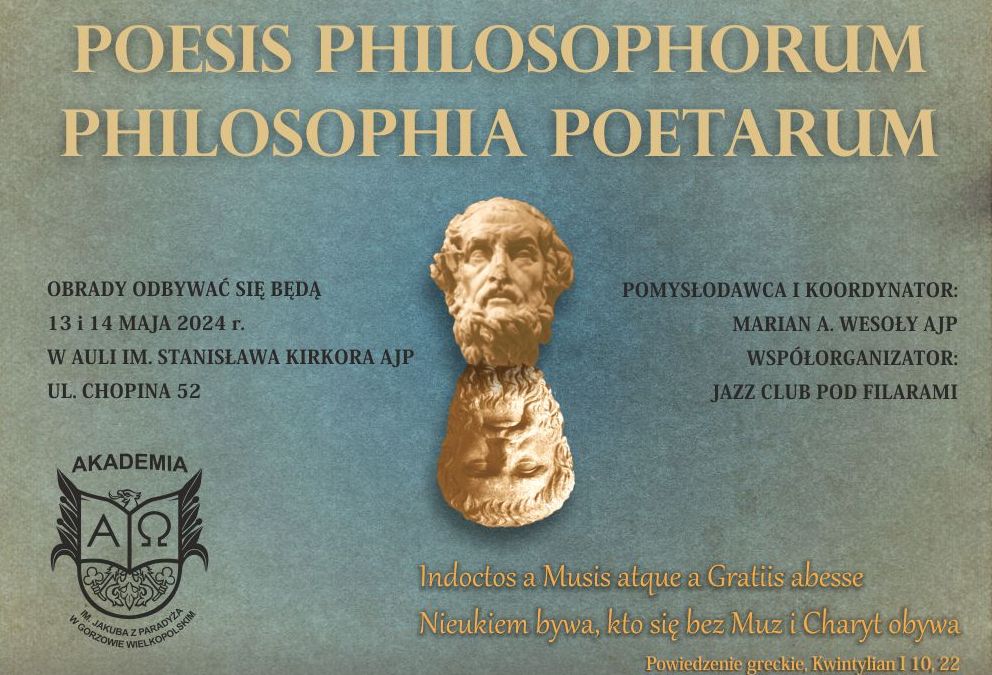
Detailed program of the conference can be downloaded here. Tomasz Mróz was one of the speakers on the first day of the conference. In his presentation he took an attempt to demonstrate how Polish poets referred to philosophers, or how philosophers used poetry to explain philosophy.

T. Mróz discussed both ancient and modern philosophers, whose ideas had been referred to by poetic means. Apart from various verses on Copernicus or Jarosław Iwaszkiewicz’s poem on Immanuel Kant, T. Mróz presented Ignacy Krasicki’s (1735-1801) satire on Plato and Stanisław Lisiecki’s (1872-1960) use of a church anthem to explain the predominant character of the Good in Plato’s philosophy.
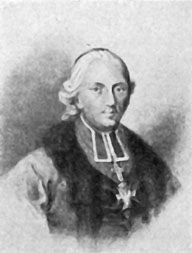
Krasicki was a leading representative of the Enlightenment literature in Poland. The aim of his poem was to ridicule Plato’s philosophy and the figure of an ancient sage in general: Plato, pompously speaking to his disciples as a possessor of wisdom, is ultimately bitten by a flea who in this way declares its possession over Plato. No philosopher, then, can escape nature!
Lisiecki was not a poet, but over a century later classics scholar and translator of Greek philosophy into Polish. He used the lyrics of a church song, praising inexhaustibility, inexplicability and God’s predominance over the created world. His intention was to demonstrate Polish audience that Plato’s highest Good had a similar character to Christian God, the highest being, and could be easily comprehended by means of analogy.
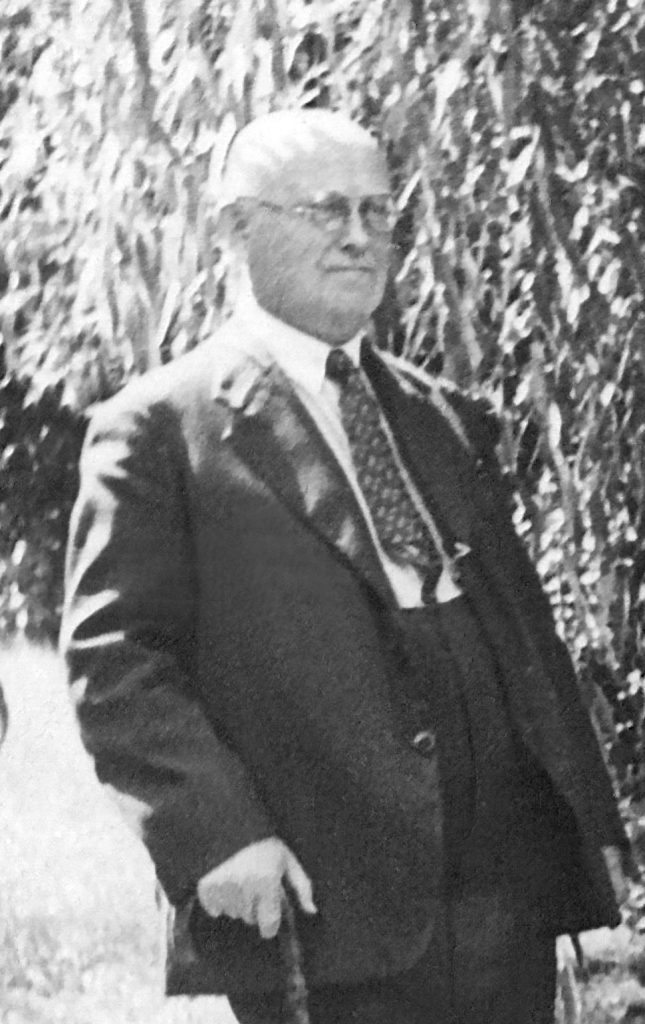
This paper contributed to the variety of topics discussed during the conference, presenting various relations between philosophy and poetry. The conference in general demonstrated that even smaller academic institutions can gather international participants, organise significant academic events and thus contribute to philosophical life, granted that there is some spiritus movens behind them.
A Visitor from Vilnius and Plato as a Teaching Subject
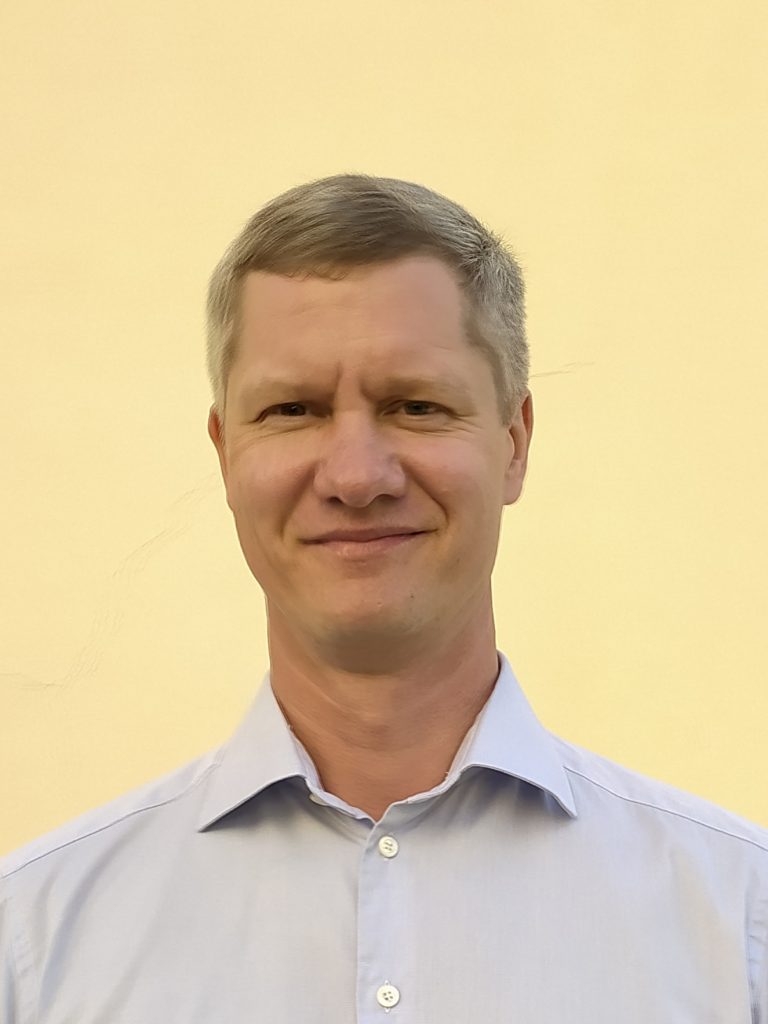
In March 4th-8th an Erasmus exchange visitor from Vilnius University stayed at the University of Zielona Góra and delivered some talks here. Our guest was dr. Mindaugas Stoškus who is an assistant professor at the Department of Theoretical Philosophy and Philosophy of Science, Faculty of Philosophy, VU.
Among M. Stoškus’ presentations there was one on the methods of teaching ancient philosophy, as a part the reception of ancient philosophy, and it was delivered to the students in the Doctoral School of Humanities and Social Sciences and to invited guests. The central topic of his lecture was Plato’s Republic and Plato’s political project which, resulting from Stoškus’ interactive co-operation with the audience, turned out to be a tricky and problematic issue. The lecturer demonstrated to the audience, consisting mostly of non-philosophers, how superficial reading of Plato’s opus magnum may lead to misunderstanding of the true nature of his political aims, one of which was disjoining wealth and personal success from political power and responsibility.
We hope that M. Stoškus’ visit at UZ is not the final chord of the co-operation between our two partner institutions and that our mutual collaboration will develop.
Recent commentaries