Home » Posts tagged 'In English' (Page 4)
Tag Archives: In English
A Presentation on H. Jakubanis in Halle
On April 26, 2023, Mariam Sargsyan gave a talk at the Colloquium of Aleksander-Brückner-Zentrum für Polenstudien & Professur für Osteuropäische Geschichte in the Martin Luther University Halle-Wittenberg. The title of her presentation was: From Student at the Russian Imperial University in Kyiv to Respected Professor at the Catholic University in Lublin: The Career of Henryk Jakubanis, 1879–1949.
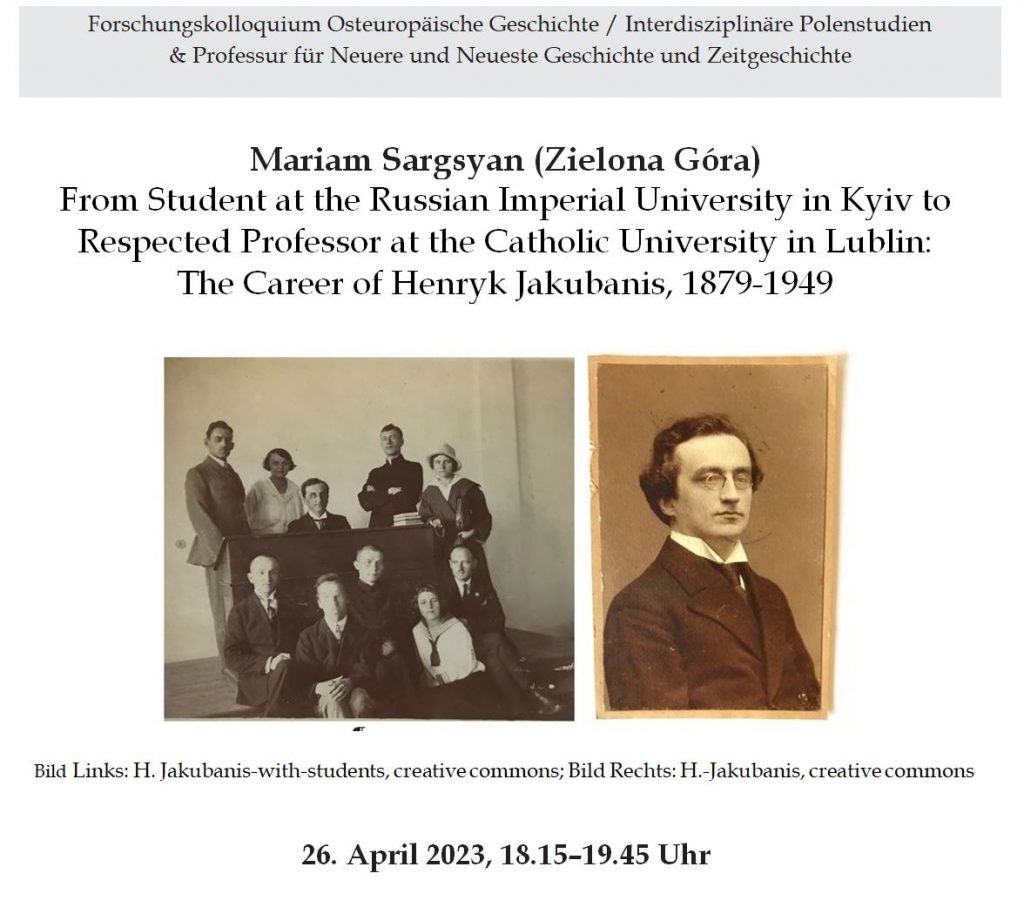
It was an important experience for M. Sargsyan to present a substantial part of her doctoral research, that is, the biography and major works of H. Jakubanis, to an audience consisting mostly of historians and not philosophers or historians of philosophy, and to receive their feedback and questions. The presentation, in addition to the highlights of Jakubanis’ life and career, included historical facts about Kyiv University, the 1st and 2nd World Wars, and peculiarities of academic life in pre-war Kyiv and post-war Lublin. The philosophical works of H. Jakubanis were also briefly discussed.
Results presented by M. Sargsyan, for example, approaching Jakubanis’ biography from the basically historical point of view, was in larger part an outcome of her NAWA scholarship at MLU Halle and her co-operation with the colleagues from Alexander-Brückner-Zentrum. It was an opportunity for her to take an attempt to compare life paths of Jakubanis with other imperial biographies, although at the moment it is impossible to research Kyiv archives.
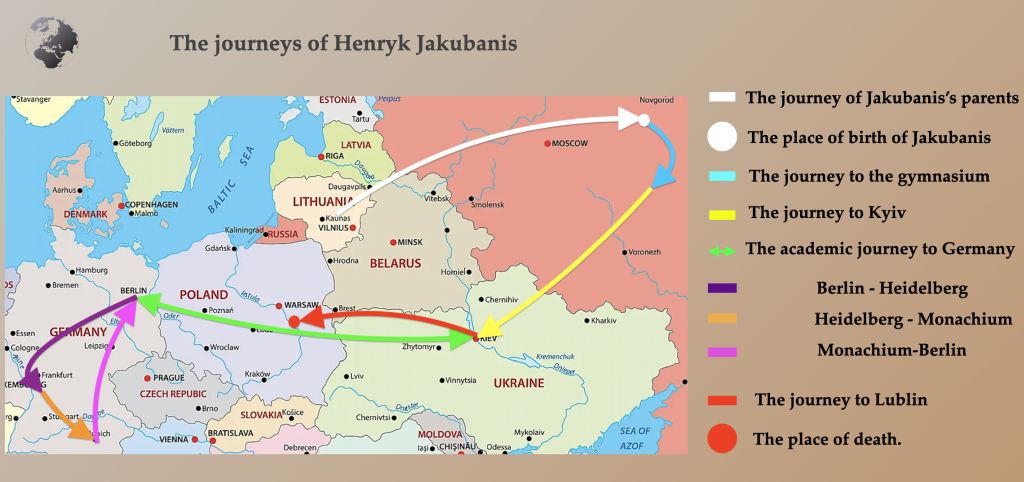
The audience at M. Sargsyan’s paper asked questiones on a variety of topics: the academic identity of H. Jakubanis, was he a classics scholar, a philosopher, a historian of philosophy, or an academic teacher. The question of the connection and relationship between H. Jakubanis and his supervisor, Alexei Gilarov (1856-1938), turned out to be interesting as well, for Gilarov had a significant influence on Jakubanis and his methods in historiography of philosophy, on his lecturing at the university, but at a certain moment, their paths diverged. Jakubanis’ relations with Tadeusz Zieliński (1859-1944), who had not spared benevolent gestures to his younger colleague, turned out to be particularly interesting for the audience. Methodological questions appeared as well and they concerned a possible reconstruction of Jakubanis’ academic contacts in a form of a network. What proved to be attractive for the audience was the graphic depiction of Jakubanis’ journeys.
To sum up, M. Sargsyan’s presentation was informative for the public and beneficial for further development of her own research.
Erasmus Teaching Visit in Vilnius University
In April, 18th-22nd, 2023, Tomasz Mróz enjoyed his third Erasmus teaching visit in Faculty of Philosophy, Vilnius University.
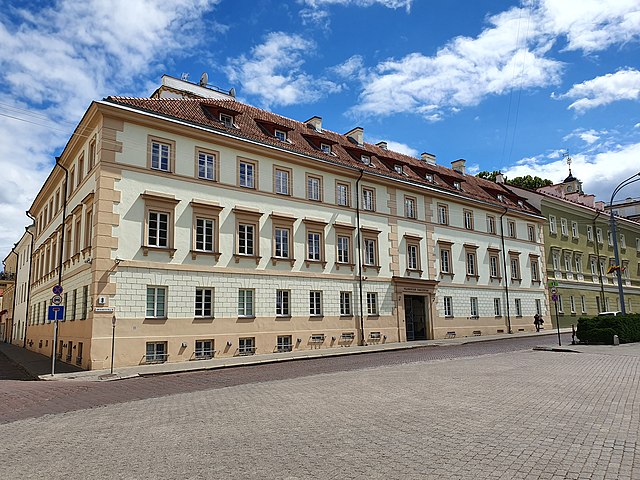
Vilnius University is a unique research and teaching institution in Central-Eastern Europe. It has a long and sometimes turbulent Polish-Lithuanian history. Some of the lectures delivered by T. Mróz to philosophy students in Vilnius concerned a part of this history and, naturally, reception of ancient philosophy.
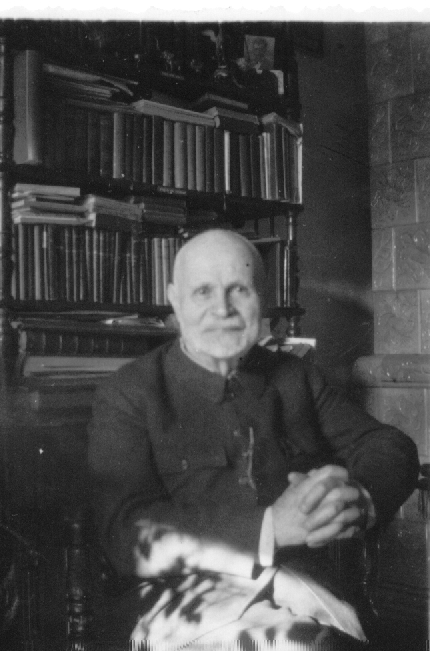
One of the lectures discussing the issues of ancient philosophy reception had Wincenty Lutosławski (1863-1954) as its topic. The focus was on his Vilnius period and his vision of a philosophical development of Plato from idealism to spiritualism. Since Lutosławski considered Polish Romantic Messianism to be founded on spiritualism, consequently he could consider this unique tradition to be rooted in Plato, who was presented by Lutosławski as an ancient philosophical predecessor of Polish 19th century literary and philosophical tendency.
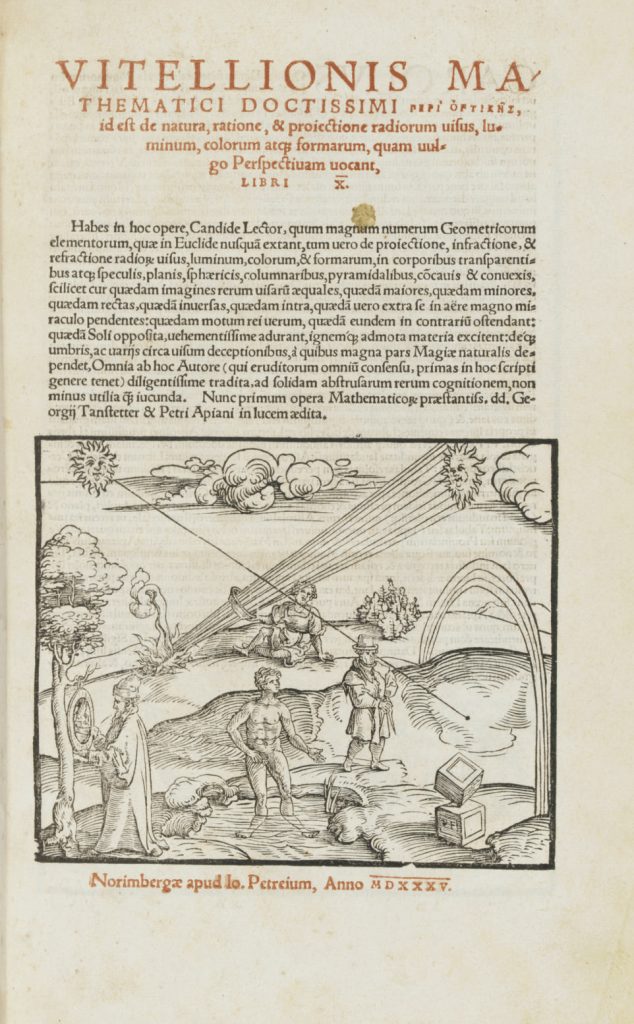
Another lecture in which ancient philosophy reception appeared was devoted to Vitello (ca. 1230-1300?) and his theoretical reflection on the nature of the daemons. Vitello’s demonology stemmed from his research in natural sciences and it employed neo-Platonic and Aristotelian elements, such as a belief in a mathematical structure of the universe and the theory of four elements. Vitello’s philosophical investigations were presented against the background of the 13th century developments in philosophy.
Teaching duties were supplemented with meetings with the Faculty members and discussions on the plans of a future co-operation activities between philosophers of Vilnius University and University of Zielona Góra.
A Paper on Vilnius’ Plato Scholar in a Lithuanian Journal
In “Logos” (issue 112), a Lithuanian journal, a paper was published on Józef Jeżowski (1793-1855) and his assessment of a Russian translation of Plato’s Laws. Subtitle of the paper, Classics scholar from Vilnius and his Plato between Germany and Russia, or Italy and Lapland, stems from Jeżowski’s deliberations on the future of classical and Platonic studies on the outskirts of Europe.
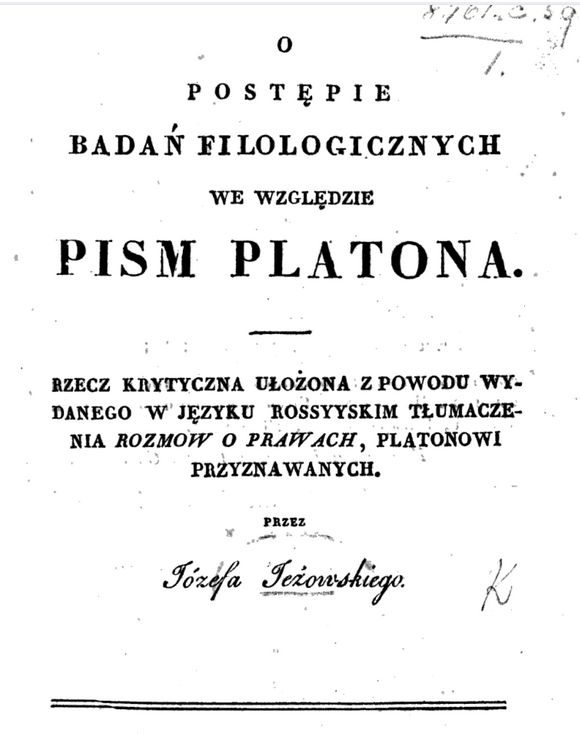
Who was Jeżowski? A partly forgotten figure among excellent scholars in the humanities, who were affiliated to Vilnius University in the first decades of the 19th century, an expert in classical languages and literatures, a scholar recognised for his edition of Horace’s Odes, an outstanding student of G. E. Grodek, moreover, a founding member of the Philomath Society, and a friend of A. Mickiewicz. Considering today’s political borders, his life’s path encompassed three countries, Lithuania, Russia and Ukraine, though in the 19th century Jeżowski was a Pole and a citizen of Russian Empire.
In a word, Jeżowski’s assessment of a translation of Plato’s Laws, produced by a Russian scholar, V. Obolensky, was not favourable, though somewhat superficial. Jeżowski, however, was rather focused on expressing his neo-classical manifesto rather than on a fair and insightful evaluation of the Russian text. His work bore a long title, which could be translated as follows: On the Progress of Philological Research Concerning the Writings of Plato. A Critical Piece, Composed Due to a Publication of the “Dialoues on the Laws”, Attributed to Plato. This study was actually addressed to Polish reading audiences, yet it was published in Moscow in 1829, during his years of exile in Russia. Jeżowski’s most important argument in his criticism was a complete lack of Obolensky’s references to German scholars, whose merits were considered by Jeżowski too significant to be passed over in silence. In his criticism, he was nevertheless optimistic, hoping that even in the most inhospitable circumstances it is possible for the humanities to flourish, and hard work can transform Lapland-like academic desert of Russia into blossoming Italy-like scenery, to which he compared German scholarship.
Considering the fact that Jeżowski was born in Uman and died in vicinity of Kaniv, both places being located in today’s Ukraine, and considering present war, Russian aggression on Ukraine, the paper was dedicated by the author to his fellow Ukrainian historians of philosophy.
A Cooperation in a Research Project with the University of Hradec Králové

In January 2023 at the Faculty of Philosophy University of Hradec Králové (FF UHK) a new research project starts. It is one of the winners of the Internal Grant Competition of FF UHK for International Research Teams. The aim of this competition was to stimulate and develop international research collaboration of FF UHK scholars with partners abroad.
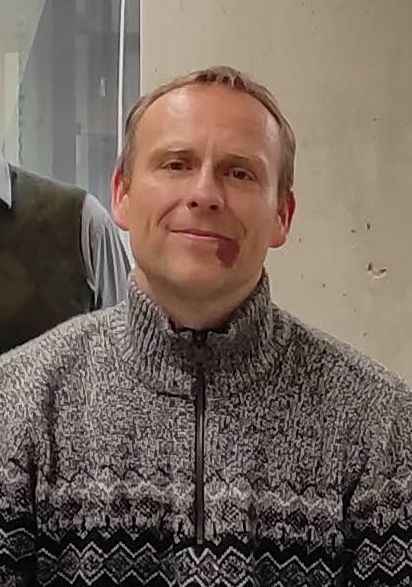
Principal investigator in the project is doc. Mgr. Jaroslav Daneš, Ph.D. who works as an associate professor in the Department of Philosophy and Social Sciences (FF UHK). His research interests include ancient Greek political theories, esp. theory of war in philosophy and tragedy, and related issues. Doc. Daneš has visited Institute of Philosophy, University of Zielona Góra, several times on various occasions (as Erasmus+ teacher, as a conference participant, and recently as a member of an academic committee of the International Workshop for Doctoral Students in Philosophy).
The title of doc. Daneš’ project is Oral History and Classics. In short, the project aims to record and collect individual histories of European classical scholars from various countries, including those who devoted their careers to researching ancient philosophy, and thus to uncover the history of this discipline in the experience of scholars. A database of interviews with distinguished scholars will be assembled and subsequently analysed to reveal the connections between personal histories and the history of the discipline, including historiography of ancient philosophy. A Polish collaborator of doc. Daneš in this project is Tomasz Mróz (UZ), whose share in project is estimated as 30%.
International Workshop for Doctoral Students with participation of AΦR
On Oct. 17th, 2022, International Workshop for Doctoral Students in Philosophy was held at the University of Zielona Góra (UZ). The meeting was organised by the Institute of Philosophy (UZ: Tomasz Mróz, Paweł Walczak) in cooperation with Faculty of Philosophy, University of Hradec Králové (UHK: Jaroslav Daneš, Michal Rigel), with a participation of the Doctoral School of Humanities and Social Sciences (UZ). Workshop took place in one of the seminar rooms in the University’s Library. The leaflet of the session’s schedule can be downloaded here. The workshop was held under the auspices of His Magnificence Rector (UZ), prof. dr hab. Wojciech Strzyżewski. The meeting was opened by the Deputy Rector for Science and International Cooperation (UZ), dr hab. inż. Marcin Mrugalski. Then the opening addresses were delivered by dr hab. Anna Wojciechowska (Head of the Doctoral School of Humanities and Social Sciences, UZ) and dr hab. Justyna Kroczak (Deputy Head of the Institute of Philosophy, UZ).
The schedule of the session was filled by the doctoral students’ papers, with a small representation of M.A. students, who presented central questions, hypotheses, and provisional structures of their dissertations. It was very interesting to learn the great variety of topics that attract attention of the young scholars nowadays, and to compare different methods and approaches applied in their research works. The topics included relations between ethics and various theories of evolution (Wai Fung Leung, UHK), comparison of Locke’s and Marx’ political theories (Vadzim Antsipau, UZ), study on Adorno’s negative dialectics (Hynek Kaplan, UHK), and an analysis of modern digital challenges for humanity (Doruk Kaynak, UHK).
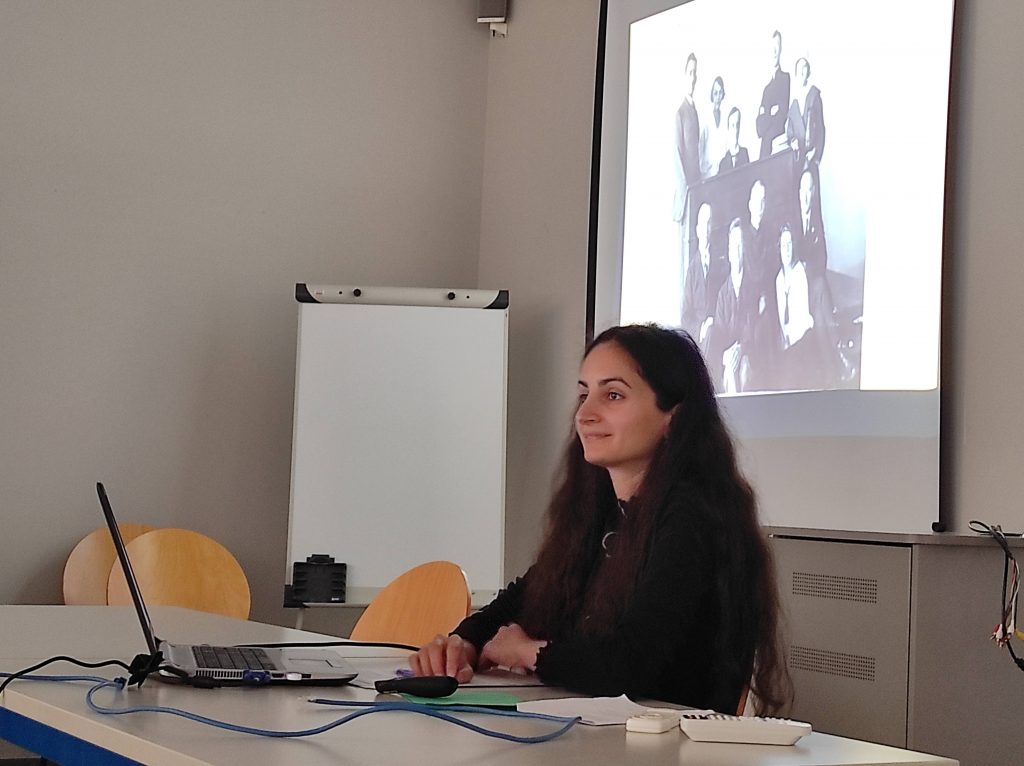
Two members of AΦR research group presented their papers, and at the same time sketched their dissertation plans. Mariam Sargsyan discussed her doctoral subject, that is, Henryk Jakubanis (1879–1949) as a Researcher of Ancient Philosophy and Its Reception. Her synthetic study will consist of a research of Jakubanis’ biography, works and his significance as a historian of philosophy. A display of some archival findings was an additional value of M. Sargsyan’s presentation.
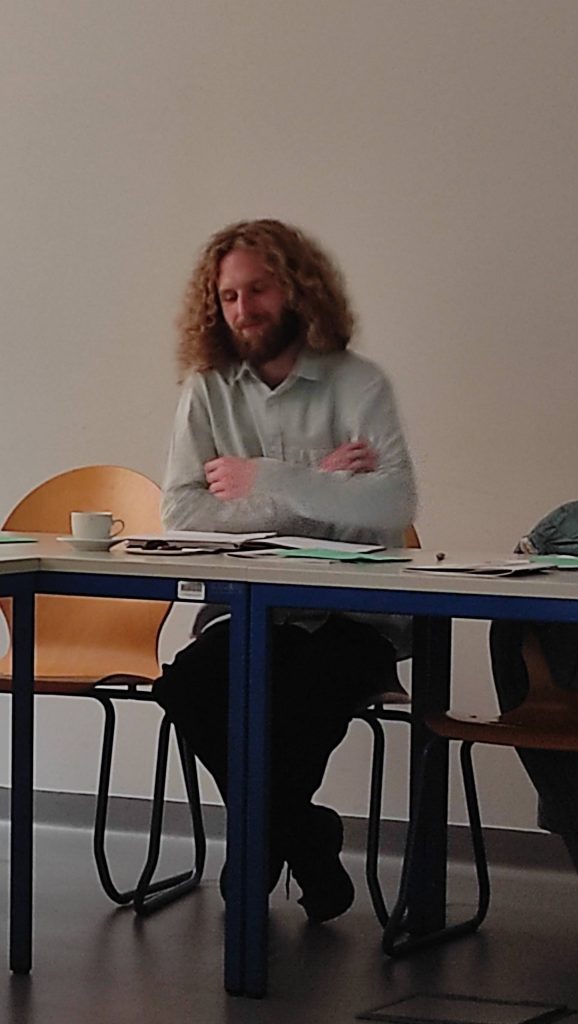
Adrian Habura’s paper was titled Aristotle as an inspiration and research subject of Władysław Tatarkiewicz (1886-1980). He presented his conclusions resulting from a detailed research in Tatarkiewicz’s writings. One of them was regarding Aristotle as the most important philosophical inspiration of Tatarkiewicz (or at least one of the most important). Habura pointed to a relations between Tatarkiewicz’s interpretation of Stagirite’s philosophy and his own philosophical investigations in the field of methodology, theory of cognition, axiology, ethics, and aesthetics. In all these fields of Habura discovered Aristotelian influences on Tatarkiewicz.
The audience consisted of the representatives of UHK & UZ, including the faculty and collaborators of the Institute of Philosophy (UZ), and Erasmus exchange students. It was a truly international meeting, in spite of the fact that the participants represented only two academic centres, for the origins of the speakers and members of the audience ranged from Czech and Polish to Chinese, Belarussian, Armenian, Turkish & Italian. At first glance, it seemed that the topics were extremely diverse, but at the end of the workshop and during informal meetings participants continued to discuss their topics. The workshop, thus, allowed the people of diverse backgrounds to meet each other and confront their ideas of doing philosophy, which is always inspiring and fruitful.
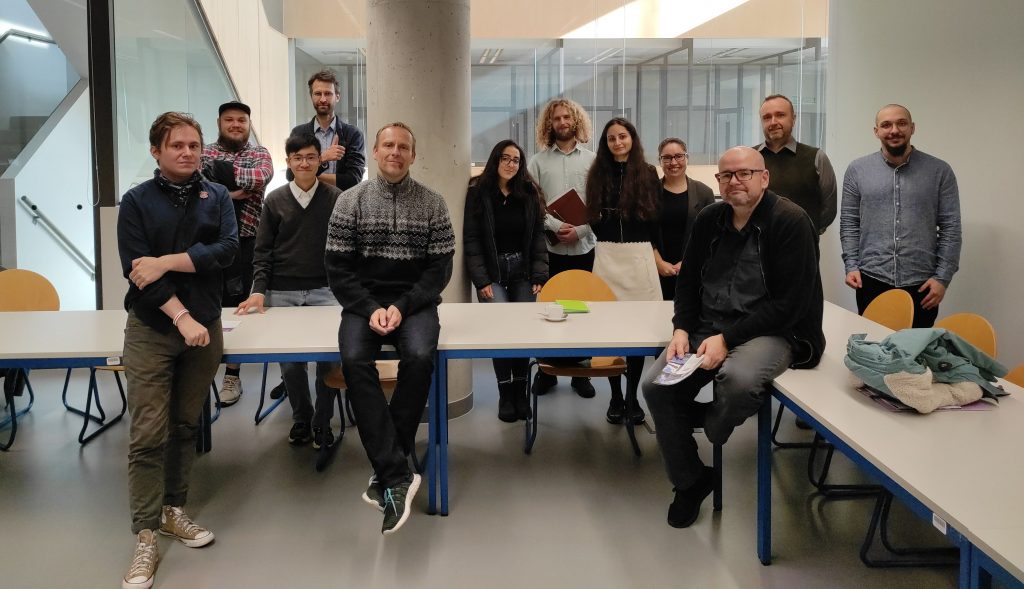
A more detailed presentation of the workshop in Polish, by A. Habura, has already been published in a monthly magazine of UZ (November [=Listopad] 2022) and available here, (pp. 38-39).
Plato Between Poland and Marburg
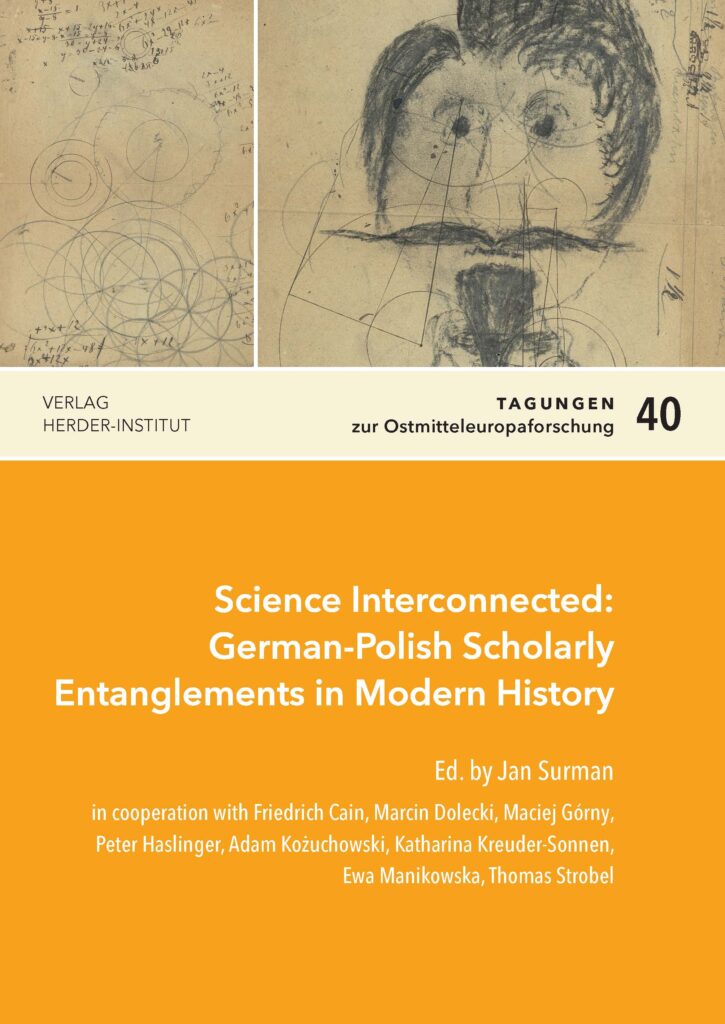
A paper by Tomasz Mróz, Studies on Plato at the Turn of the 20th Century: A Case of Polish-German Cooperation, was published in a collective volume titled Science Interconnected: German-Polish Scholarly Entanglements in Modern History (ed. Jan Surman et al., “Tagungen zur Ostmitteleuropaforschung” 40, Verlag Herder-Institut, Marburg 2022).
A fine and instructive episode of German-Polish cooperation, announced in the title of the paper, involved three philosophers and historians of philosophy: a German, Paul Natorp (1854-1924), and two Poles, Wincenty Lutosławski (1863-1954) and Władysław Tatarkiewicz (1886-1980).
For decades Marburg philosophers in general, and P. Natorp in particular, had a vivid interest in Plato. Natorp’s book, Platos Ideenlehre. Eine Einführung in den Idealismus (1903), is an important point in the history of interpretations of Plato and is still referred to by contemporary Plato scholars. At the time of publishing of Natorp’s book, W. Lutosławski already had an established reputation of Plato scholar, for his book, Origin and Growth of Plato’s Logic with an Account of Plato’s Style and of the Chronology of his Writings (1897), had incited international debate on the chronological order of Plato’s dialogues anew. Both scholars exchanged letters and Natorp allowed Lutosławski to read chapters of his soon-to-be-published book, the conclusions of which were to some extent concurrent with Lutosławski’s interpretation of the theory of ideas. Both scholars rejected traditional, rooted in Aristotle, understanding of the ideas’ existence.
W. Tatarkiewicz was a generation younger than the two scholars. As a young student of philosophy he arrived in Marburg to write his dissertation, and though its topic was Aristotle, the Marburg Plato was an important part of his curriculum. His dissertation was supervised by Hermann Cohen (1842-1918) and Natorp. One of the first Polish papers of Tatarkiewicz, published after his Ph.D, was devoted to his Marburg teachers’ interpretation of Plato to which he adhered (1911). Two decades later, when his History of Philosophy appeared in print (1931), he still considered Natorp’s book on Plato to be one of the essential works for Plato scholars.
What should be remarked, relations between German and Polish Plato researchers were in this case devoid of national prejudices and it was also a rare example of an influence exerted by Polish philosopher on a German peer scholar, for it was thanks to Lutosławski that Natorp pursued research on the chronology of Plato’s dialogues and publihed a series of papers on this topic. Tatarkiewicz, in turn, as he himself declared, owed his lasting research interest in the history of philosophy to his Marburg teachers.
To receive a pdf copy of this paper, do not hesitate to email the author: T.Mroz@ifil.uz.zgora.pl
History of Philosophy in Poland in Martin-Luther-Universität Halle
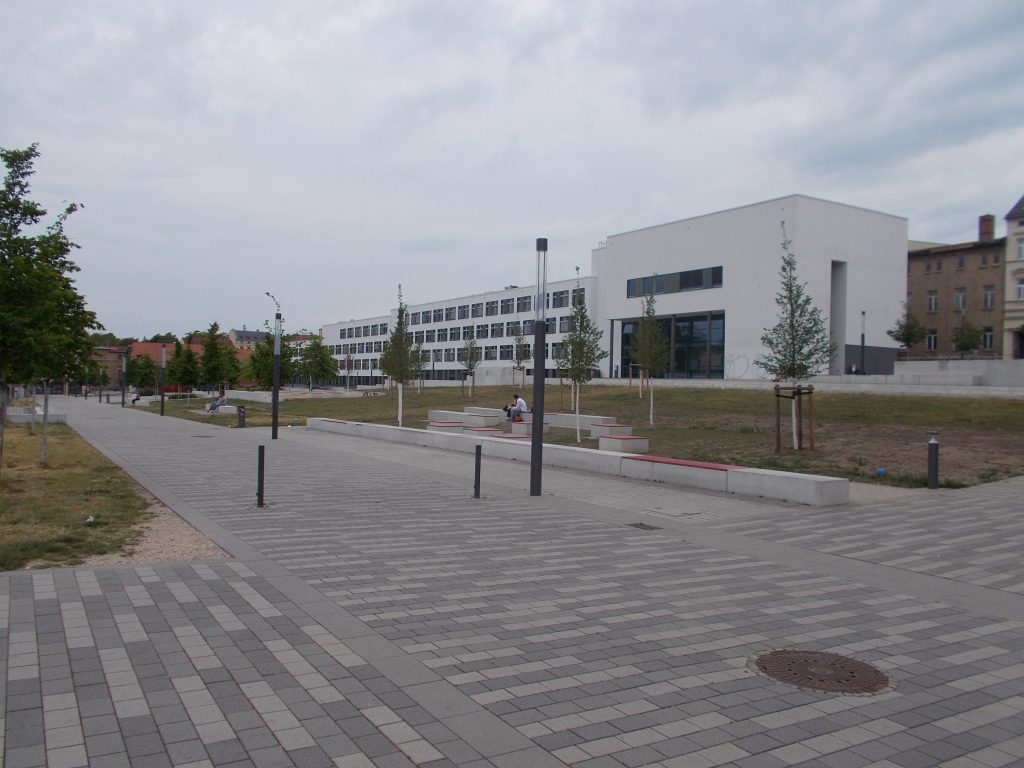
Selected Topics in the History of Philosophy in Poland was the title of the course, which was delivered in May and June 2022 by Tomasz Mróz for the students of Martin-Luther-Universität (MLU) Halle in the building of the Steintor Campus (on the left). T. Mróz was appointed at MLU as Gastprofessor (funded by Deutscher Akademischer Austauschdienst DAAD) for a month at the Aleksander-Brückner-Zentrum für Polenstudien (Institut für Geschichte).
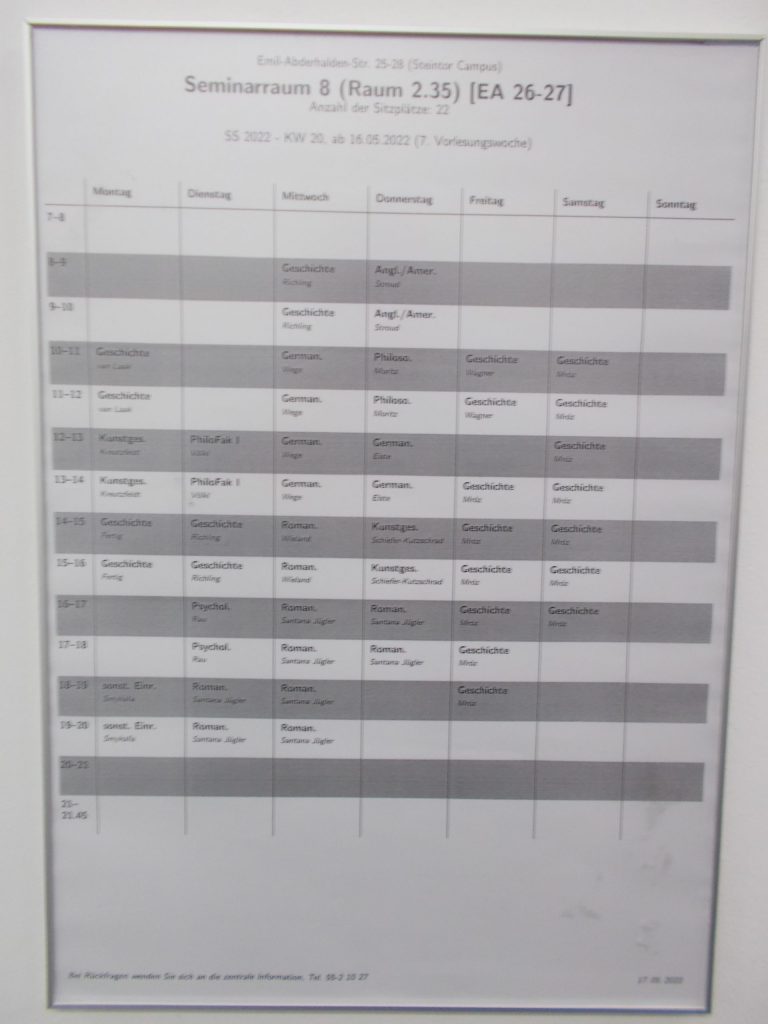
The course had a form of “Blockseminar” meetings and consisted of lectures, seminars and students’ presentations, focusing on various ideas, currents and problems in the history of philosophy in Poland. A course like this could not, obviously, do without a closer insight into some issues of ancient philosophy reception. For example, reception of Aristotle’s philosophy of nature in Vitello’s theory of demons and Pythagorean and Platonic inspirations in Copernicus were discussed. During one of the final lectures the problems of Plato reception in Poland were presented, as they were previosuly structured in the book Plato in Poland 1800-1950. The works of the following authors were briefly examined: A.I. Zabellewicz, F.A. Kozłowski, W. Tatarkiewicz, P. Semenenko, B. Limanowski, W. Dzieduszycki, E. Jarra, S. Pawlicki, W. Lutosławski, S. Lisiecki and W. Witwicki.
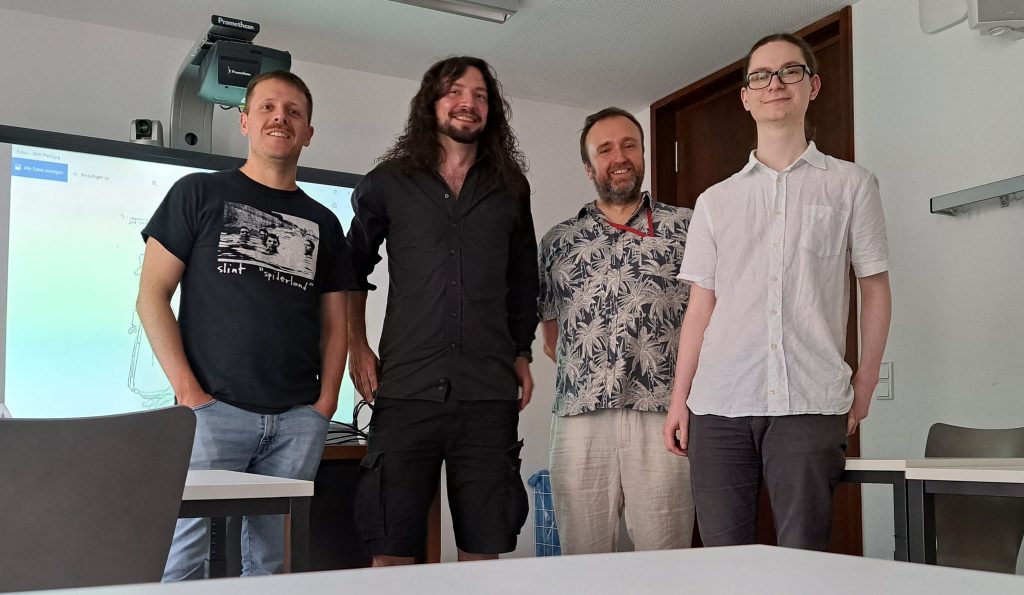
All the students attending the course in Polish philosophy should be thanked for their dilligence, co-operation and their presentations. The lectures, however, wouldn’t have taken place without the granting decision of professor Yvonne Kleinmann, who holds a chair in the East-European history at MLU and is the head of the Aleksander-Brückner-Zentrum für Polenstudien, and without co-ordinating work of doctor Paulina Gulińska-Jurgiel, to both of whom the lecturer is extremely grateful.
Recent commentaries