Home » Posts tagged 'Plato' (Page 5)
Tag Archives: Plato
A Report in “Études Platoniciennes”
We are delighted to inform that a concise review of T. Mróz’s book, Plato in Poland 1800-1950 (Academia Verlag, 2020), composed by Professor Luc Brisson, was published in Bulletin Platonicien of “Études platoniciennes” (vol. 17, 2022).
Plain text of the report by prof. Brisson is available here in open access.

There is no need to introduce Professor Brisson, a Canadian-French scholar, researcher and translator of Plato and neo-Platonic philosophers, to anyone who has even a vague idea on the current state of research in ancient Greek philosophy.
Currently Professor Brisson is an Emeritus Research Director (Ancient Philosophy Group) at The Centre Jean Pépin (Villejuif, France), a research laboratory of the Centre National de la Recherche Scientifique and the École Normale Supérieure of Paris.
A Paper on Vilnius’ Plato Scholar in a Lithuanian Journal
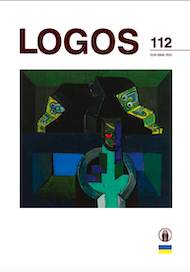
In “Logos” (issue 112), a Lithuanian journal, a paper was published on Józef Jeżowski (1793-1855) and his assessment of a Russian translation of Plato’s Laws. Subtitle of the paper, Classics scholar from Vilnius and his Plato between Germany and Russia, or Italy and Lapland, stems from Jeżowski’s deliberations on the future of classical and Platonic studies on the outskirts of Europe.
Who was Jeżowski? A partly forgotten figure among excellent scholars in the humanities, who were affiliated to Vilnius University in the first decades of the 19th century, an expert in classical languages and literatures, a scholar recognised for his edition of Horace’s Odes, an outstanding student of G. E. Grodek, moreover, a founding member of the Philomath Society, and a friend of A. Mickiewicz. Considering today’s political borders, his life’s path encompassed three countries, Lithuania, Russia and Ukraine, though in the 19th century Jeżowski was a Pole and a citizen of Russian Empire.
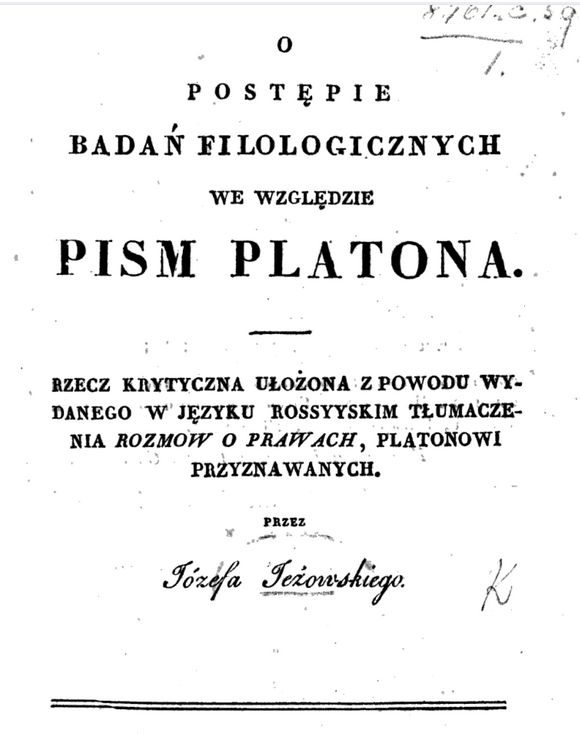
In a word, Jeżowski’s assessment of a translation of Plato’s Laws, produced by a Russian scholar, V. Obolensky, was not favourable, though somewhat superficial. Jeżowski, however, was rather focused on expressing his neo-classical manifesto rather than on a fair and insightful evaluation of the Russian text. His work bore a long title, which could be translated as follows: On the Progress of Philological Research Concerning the Writings of Plato. A Critical Piece, Composed Due to a Publication of the “Dialoues on the Laws”, Attributed to Plato. This study was actually addressed to Polish reading audiences, yet it was published in Moscow in 1829, during his years of exile in Russia. Jeżowski’s most important argument in his criticism was a complete lack of Obolensky’s references to German scholars, whose merits were considered by Jeżowski too significant to be passed over in silence. In his criticism, he was nevertheless optimistic, hoping that even in the most inhospitable circumstances it is possible for the humanities to flourish, and hard work can transform Lapland-like academic desert of Russia into blossoming Italy-like scenery, to which he compared German scholarship.
Considering the fact that Jeżowski was born in Uman and died in vicinity of Kaniv, both places being located in today’s Ukraine, and considering present war, Russian aggression on Ukraine, the paper was dedicated by the author to his fellow Ukrainian historians of philosophy.
Two Members of AΦR at the Second Congress of Polish Philosophy
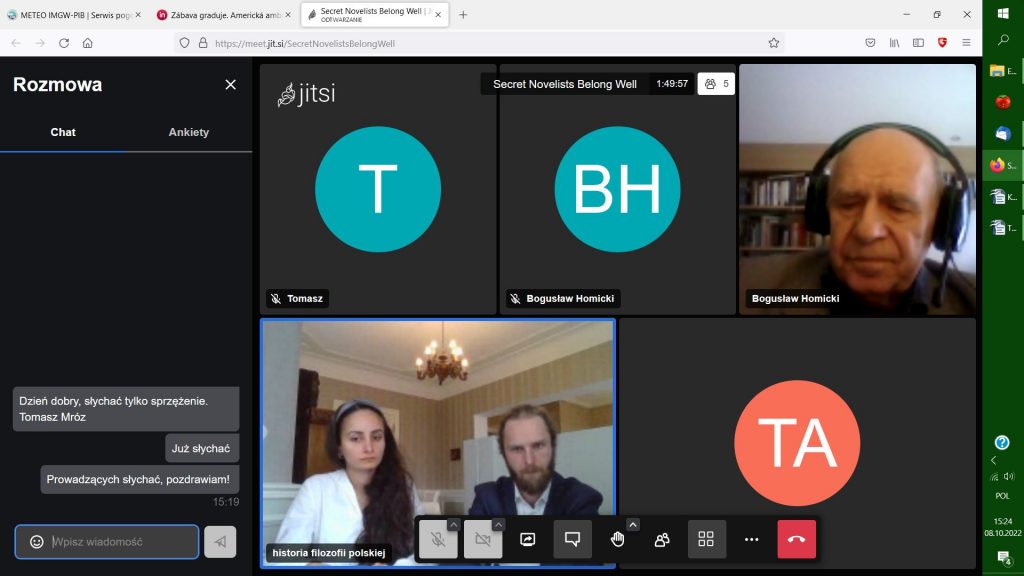
On October 7th-10th 2022 the Second Congress of Polish Philosophy took place in the Palace in Orla. Congress was held both on site and online. The organising institution of the Congress was the Chair of Philosophy (Department of History, University of Opole). The aim of this event was to research and develop Polish philosophical traditions. AΦR group members delivered their papers in the section devoted to the history of Polish philosophy.
The first lecture by an AΦR group member was titled Władysław Tatarkiewicz between Good and Happiness and was delivered by Adrian Habura. His paper was focused on axiological and ethical investigations of Tatarkiewicz in the years 1919-1947, and especially on his inaugural lecture On the Dual Understanding of Moral Act, which was delivered in October 1919 at the Stefan Batory University in Vilnius. Habura’s aim was to sketch the lines of development in Tatarkiewicz’s ethical investigations from the Good, as a topic of his postdoctoral dissertation (1919), to the happiness, from the book Analysis of Happiness (1947).
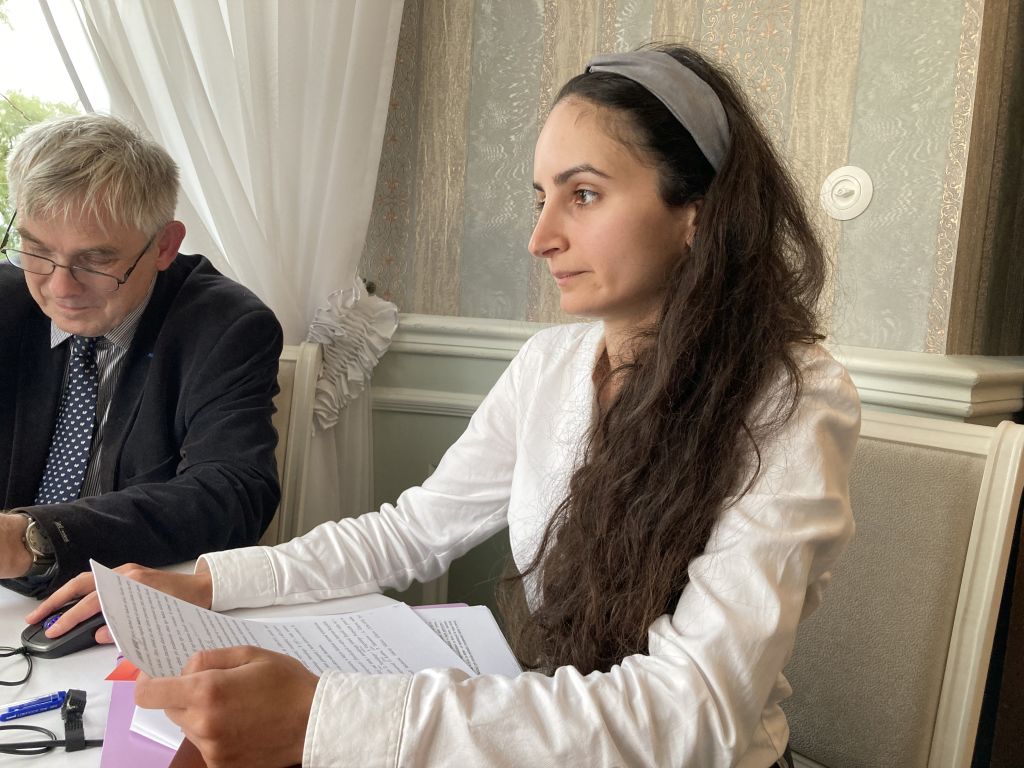
It was, however, only the second paper by an AΦR group member, which was devoted to the reception of ancient philosophy. It was Mariam Sargsyan’s presentation on Henryk Jakubanis, a Polish historian of Greek philosophy. The presentation’s title was Henryk Jakubanis (1879-1949) – a historian of Greek philosophy between Kyiv and Lublin.
The intellectual biography of this historian of philosophy is usually divided into two periods: Kyiv (1897-1922) and Lublin (1922-1949). The aim of Sargsyan’s paper was to present vita of Jakubanis considering both periods of his life and work. Lublin period is quite well known to Polish authors, but the significance of the Kyiv period remains unclear. In Lublin, Jakubanis headed the Department of Classical Philology and then the Department of Philosophy at the University of Lublin, which later became the Catholic University of Lublin.
It was, however, the Kyiv period which was the productive part of Jakubanis’ life, because in Kyiv he wrote his most important works: a book on Empedocles, consisting of a historical and philosophical study and a translation of the collected fragments of this thinker into Russian. Moreover, a series of articles on the significance of ancient philosophy, on the history of syllogism and on the relations between the ideas of Plato and Schiller, were composed by Jakubans in Kyiv. Sargsyan’s paper presented unknown facts from the biography of this historian of philosophy and discussed his works from the Kyiv period, which are usually barely mentioned.
Delivering their papers at the Congress was an important experience for both young researchers and it helped them develop their skills, not to mention social advantages of face to face scholarly meetings.
A Monograph Book on Stanisław Lisiecki (and his Plato)
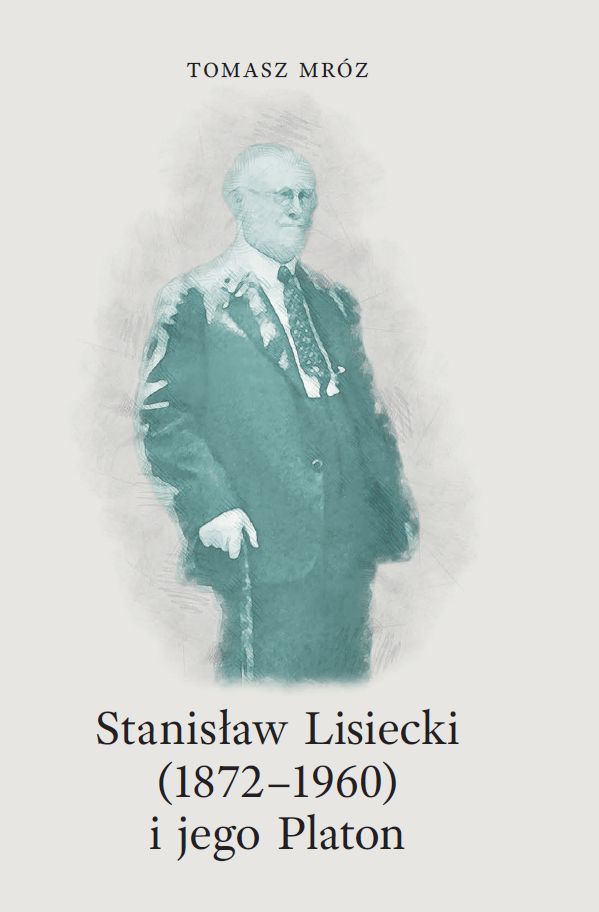
In a book series published by Marek Derewiecki a new volume has appeared. T. Mróz is the author and the title of the book is Stanisław Lisiecki (1872-1960) and His Plato (pp. 150). This book is a second one in the series and it complements volume one, which consisted mostly of unpublished materials produced by S. Lisiecki during his long and laborious life.
Apart from the foreword and concluding remarks, the book is divided into two main parts. The first part presents Lisiecki’s biography as fully as it has never been presented before. Numerous sources from the archival and manuscript collections from the libraries of Warsaw and Cracow were deployed to compose this chapter. Private, family materials were also used, including the photograph inside the book, an essential part of which was artistically remade to depict Lisiecki on the cover. His biography was divided into three chapters, which are separated from each other by two important facts in his life: leaving the clergy in 1921 and the outbreak of the World War II in 1939. The longest chapter is the middle one, between these two dates, because it was Lisiecki’s most productive period and it was possible to use numerous testimonies to document it.
Part two of the book discusses Lisiecki’s interpretation of Plato’s philosophy and its development. This part is divided into three parts as well. It presents Lisiecki’s views on the philosophical and spiritual evolution of Plato in three stages: Plato as a Socratic thinker, Plato in his mature works and Plato as an old sage. It was not possible to present Lisiecki’s views on all the important dialogues, for example on the Symposium or the Phaedrus, because his legacy is fragmentary and his comprehensive synthetic study on Plato had been destroyed during the war. Nevertheless, Plato in Lisiecki’s views is a half-religious thinker, an inspired poet and a visionary, whose creative personality was most fully expressed in his theory of the Good. The Good was sometimes identified by Lisiecki with God or with Providence and it transgressed dialectical formulation. Although Plato’s theory of reincarnation was assessed by Lisiecki as going too far, he found in it a consolation and an explanation of many phaenomena, for example, the inequality of talents among people.
Despite his admiration for Plato, Lisiecki did not avoid criticising him. Plato was for him a topical thinker and his dialogues – an intellectual challenge. We may say that Lisiecki, as many before him, was carried away by Plato’s enthusiasm, but he never lost sight of the deficiencies of Platonism.

This book is the final result of the research project on S. Lisiecki as a researcher of ancient Greek philosophy, sponsored by National Science Centre.
Plato Between Poland and Marburg
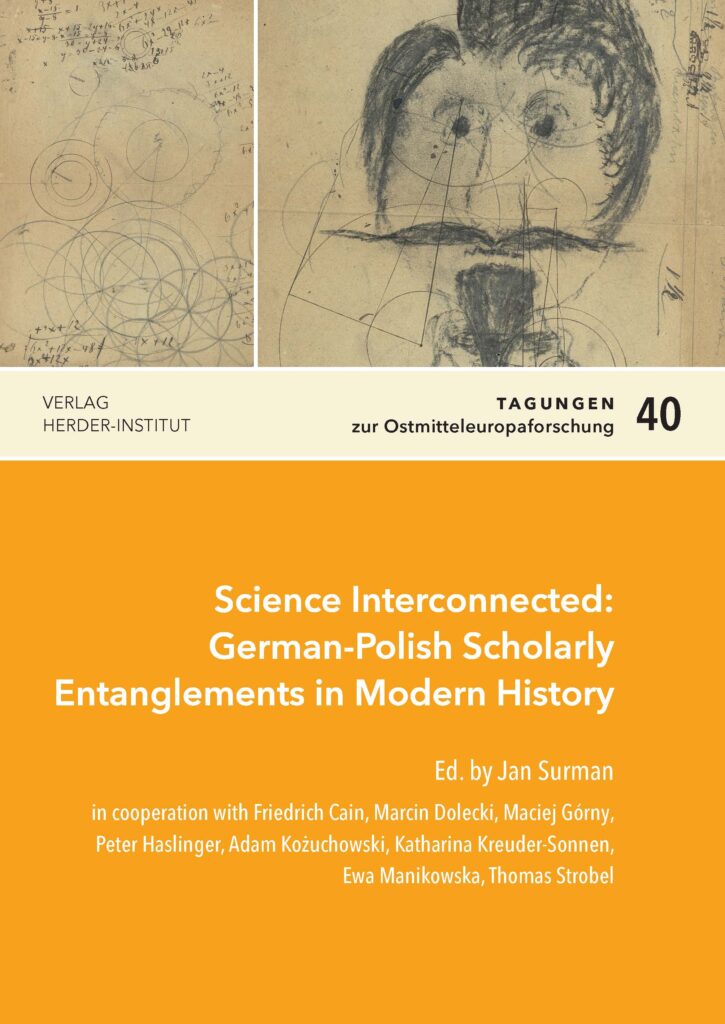
A paper by Tomasz Mróz, Studies on Plato at the Turn of the 20th Century: A Case of Polish-German Cooperation, was published in a collective volume titled Science Interconnected: German-Polish Scholarly Entanglements in Modern History (ed. Jan Surman et al., “Tagungen zur Ostmitteleuropaforschung” 40, Verlag Herder-Institut, Marburg 2022).
A fine and instructive episode of German-Polish cooperation, announced in the title of the paper, involved three philosophers and historians of philosophy: a German, Paul Natorp (1854-1924), and two Poles, Wincenty Lutosławski (1863-1954) and Władysław Tatarkiewicz (1886-1980).
For decades Marburg philosophers in general, and P. Natorp in particular, had a vivid interest in Plato. Natorp’s book, Platos Ideenlehre. Eine Einführung in den Idealismus (1903), is an important point in the history of interpretations of Plato and is still referred to by contemporary Plato scholars. At the time of publishing of Natorp’s book, W. Lutosławski already had an established reputation of Plato scholar, for his book, Origin and Growth of Plato’s Logic with an Account of Plato’s Style and of the Chronology of his Writings (1897), had incited international debate on the chronological order of Plato’s dialogues anew. Both scholars exchanged letters and Natorp allowed Lutosławski to read chapters of his soon-to-be-published book, the conclusions of which were to some extent concurrent with Lutosławski’s interpretation of the theory of ideas. Both scholars rejected traditional, rooted in Aristotle, understanding of the ideas’ existence.
W. Tatarkiewicz was a generation younger than the two scholars. As a young student of philosophy he arrived in Marburg to write his dissertation, and though its topic was Aristotle, the Marburg Plato was an important part of his curriculum. His dissertation was supervised by Hermann Cohen (1842-1918) and Natorp. One of the first Polish papers of Tatarkiewicz, published after his Ph.D, was devoted to his Marburg teachers’ interpretation of Plato to which he adhered (1911). Two decades later, when his History of Philosophy appeared in print (1931), he still considered Natorp’s book on Plato to be one of the essential works for Plato scholars.
What should be remarked, relations between German and Polish Plato researchers were in this case devoid of national prejudices and it was also a rare example of an influence exerted by Polish philosopher on a German peer scholar, for it was thanks to Lutosławski that Natorp pursued research on the chronology of Plato’s dialogues and publihed a series of papers on this topic. Tatarkiewicz, in turn, as he himself declared, owed his lasting research interest in the history of philosophy to his Marburg teachers.
To receive a pdf copy of this paper, do not hesitate to email the author: T.Mroz@ifil.uz.zgora.pl
History of Philosophy in Poland in Martin-Luther-Universität Halle
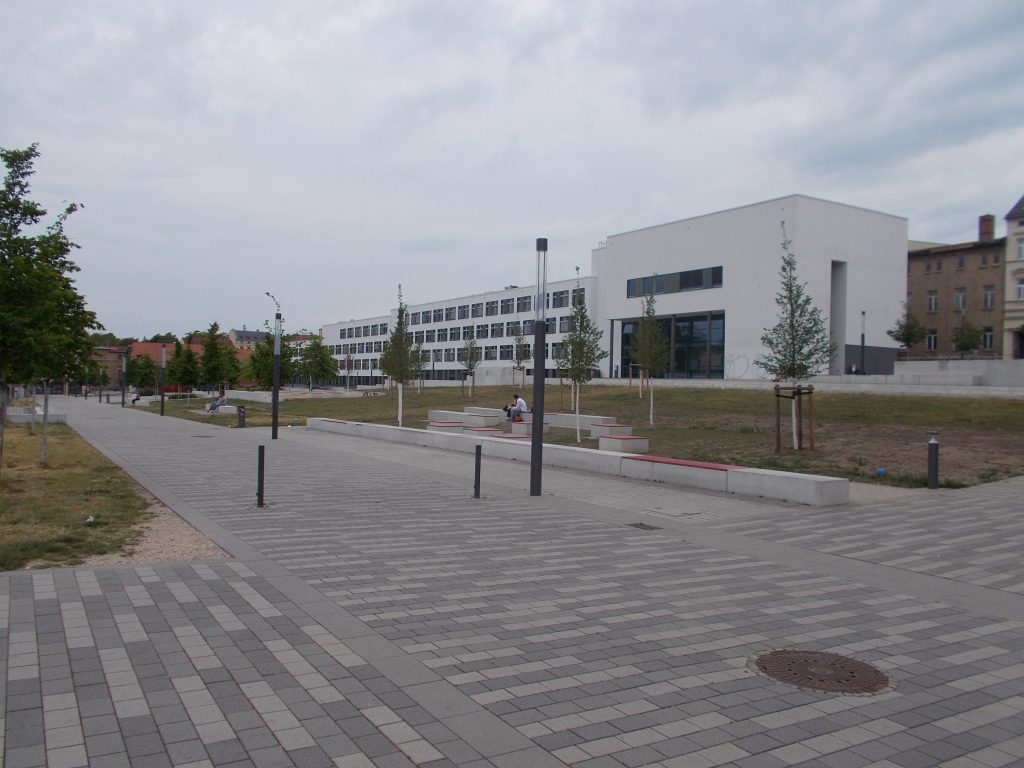
Selected Topics in the History of Philosophy in Poland was the title of the course, which was delivered in May and June 2022 by Tomasz Mróz for the students of Martin-Luther-Universität (MLU) Halle in the building of the Steintor Campus (on the left). T. Mróz was appointed at MLU as Gastprofessor (funded by Deutscher Akademischer Austauschdienst DAAD) for a month at the Aleksander-Brückner-Zentrum für Polenstudien (Institut für Geschichte).
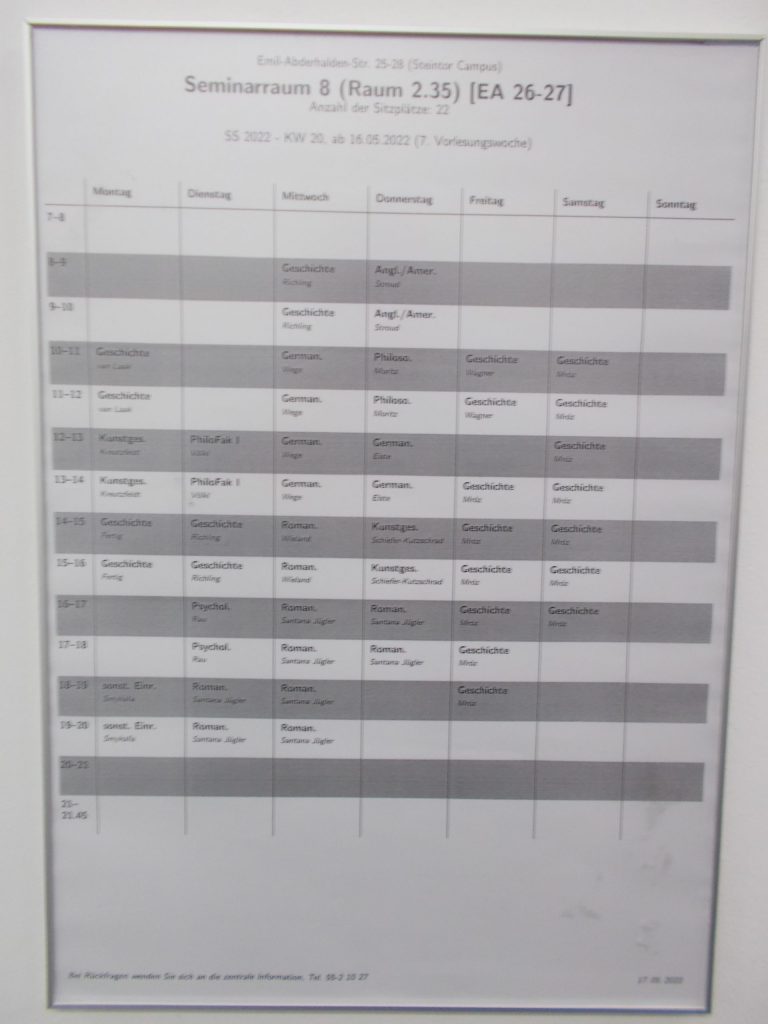
The course had a form of “Blockseminar” meetings and consisted of lectures, seminars and students’ presentations, focusing on various ideas, currents and problems in the history of philosophy in Poland. A course like this could not, obviously, do without a closer insight into some issues of ancient philosophy reception. For example, reception of Aristotle’s philosophy of nature in Vitello’s theory of demons and Pythagorean and Platonic inspirations in Copernicus were discussed. During one of the final lectures the problems of Plato reception in Poland were presented, as they were previosuly structured in the book Plato in Poland 1800-1950. The works of the following authors were briefly examined: A.I. Zabellewicz, F.A. Kozłowski, W. Tatarkiewicz, P. Semenenko, B. Limanowski, W. Dzieduszycki, E. Jarra, S. Pawlicki, W. Lutosławski, S. Lisiecki and W. Witwicki.
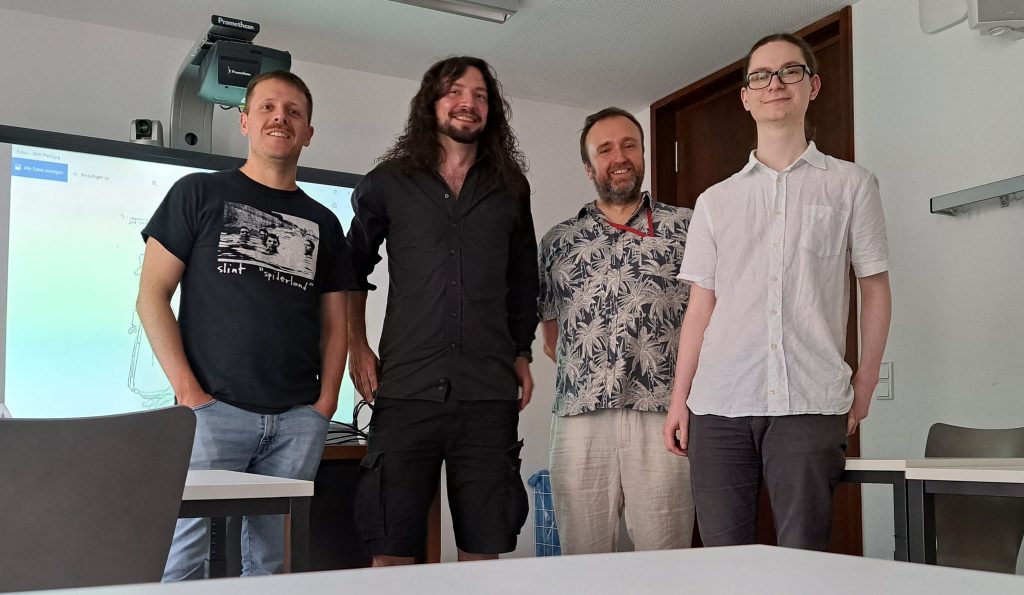
All the students attending the course in Polish philosophy should be thanked for their dilligence, co-operation and their presentations. The lectures, however, wouldn’t have taken place without the granting decision of professor Yvonne Kleinmann, who holds a chair in the East-European history at MLU and is the head of the Aleksander-Brückner-Zentrum für Polenstudien, and without co-ordinating work of doctor Paulina Gulińska-Jurgiel, to both of whom the lecturer is extremely grateful.
Plato’s Adventures with Censorship in Poland
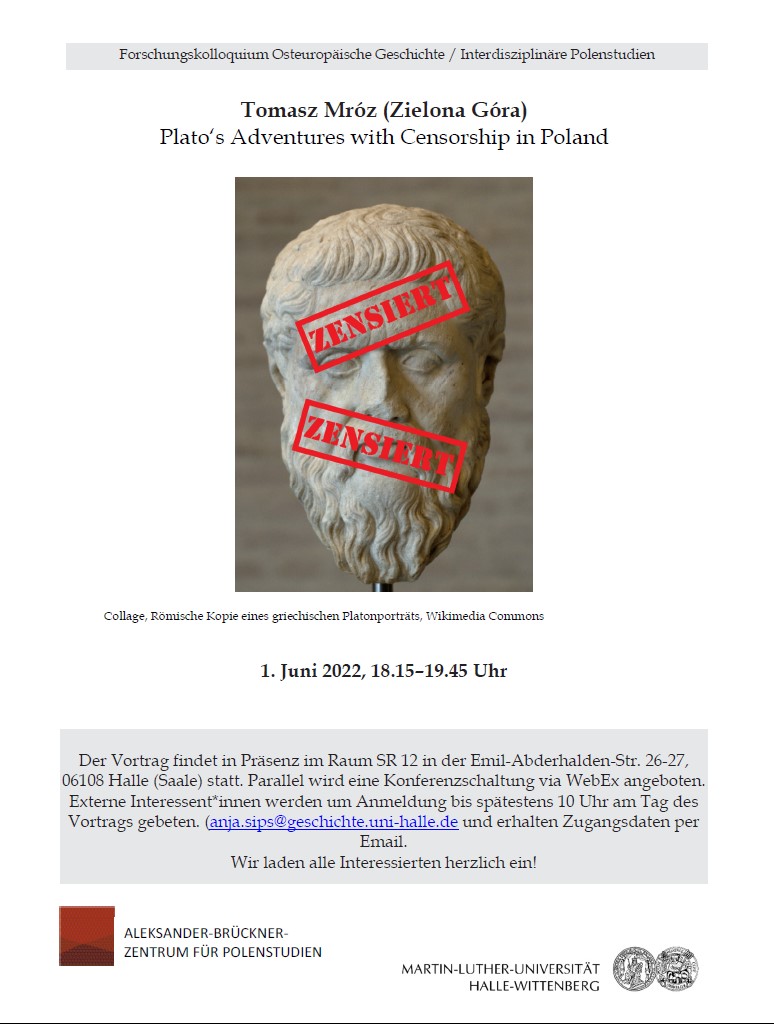
On June, 1st, a talk by Tomasz Mróz was delivered at the Interdisziplinäre Kolloquium Osteuropäische Geschichte / Polenstudien (Martin-Luther-Universität Halle). The topic of the presentation was the interference of various types of (broadly understood) censorship with Plato scholars and research on Plato in Poland. T. Mróz discussed three (and a half) cases of such interference. The talk was a supplemented and developed version of one of Mróz’s previous papers.
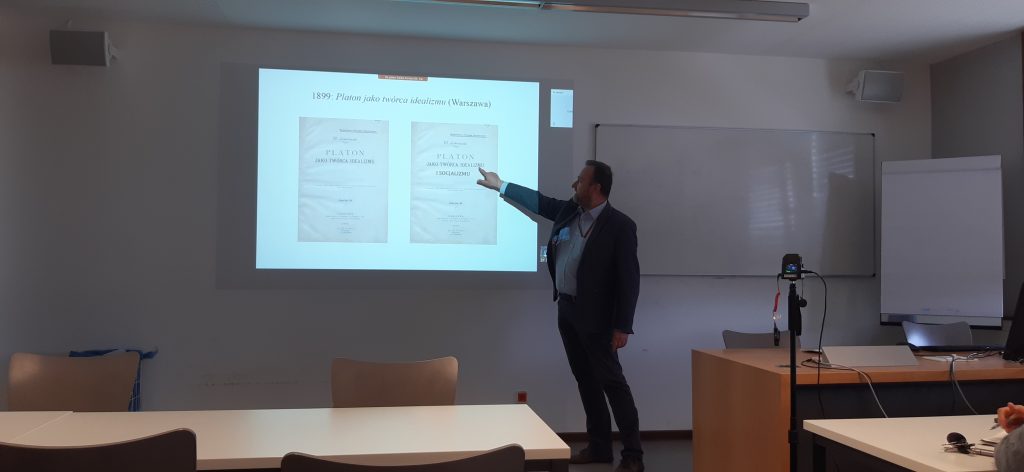
The first case of censorship was relatively harmless, for only one word, namely: socialism, was removed from the title of Wincenty Lutosławski’s book, Plato as a Creator of Idealism [and Socialism], (Warsaw 1899). Imperial Russian authorities in Warsaw removed the word “socialism” from the title and from the table of contents, without even looking into the text of his book on Plato, for “socialism” occurs on many pages, being – in Lutosławski’s view, a natural consequence of idealism.
Stanisław Lisiecki represented another case of broadly understood censorship. He was an enthusiast of Plato and a translator of his dialogues, but only his Republic saw the light of day in the interwar period, while all the remaining dialogues were left unpublished in the manuscripts. His leaving the clergy and Roman Catholic church was the most probable the reason of his difficult situation in Polish academia, for some scholars were unable to accept him as a colleague and assess his works without religious prejudice. As a result, his works were not published, but some justice in this regard has been recently done by the members of the AΦR research group.
Władysław Witwicki was more succesful in his translations of Plato’s works. Soon after the Word War II he managed to publish a small book on Plato (Plato as an Educationalist, 1947) and a translation of Plato’s Republic (1948). In the book and in his commentaries to Plato’s text, he compared the post-war reality of Poland and Plato’s political project to a concentration camp, great monastery, or a totalitarian state. Some of his remarks were censored and the second edition of the Republic (1958) appeared in print in an ideologically “corrected” version.
As the additional “half” of the censorship cases, Witwicki’s struggle with his sister, who was a Catholic nun, were presented. She tried to convince him not to criticize Catholicism in his commentaries, but he replied to her with a short comic story depicting his and Plato’s imaginary meeting with her, and Plato’s escape from holy water.
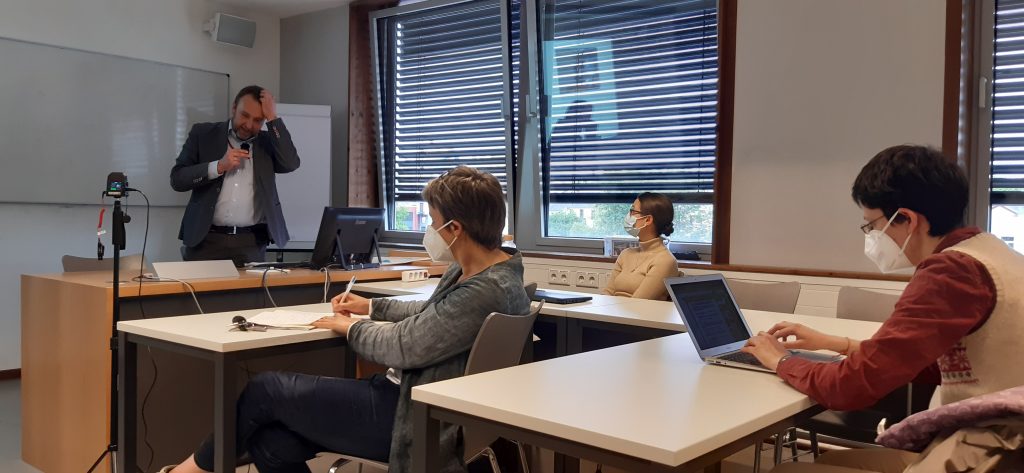
Thanks to the fact that the audience consisted of specialists in East-European history, in philosophy and in the historiography of philosophy, a wide spectrum of questions appeared and the author did his best to satisfy multi-oriented demands of the public.
T. Mróz’s stay in Halle was sponsored by Aleksander-Brückner-Zentrum für Polenstudien from the funds of Deutscher Akademischer Austauschdienst (DAAD).
Recent commentaries