Home » Posts tagged 'Poland' (Page 6)
Tag Archives: Poland
A Biography of a Classics Scholar: Stanisław Lisiecki (1872-1960)
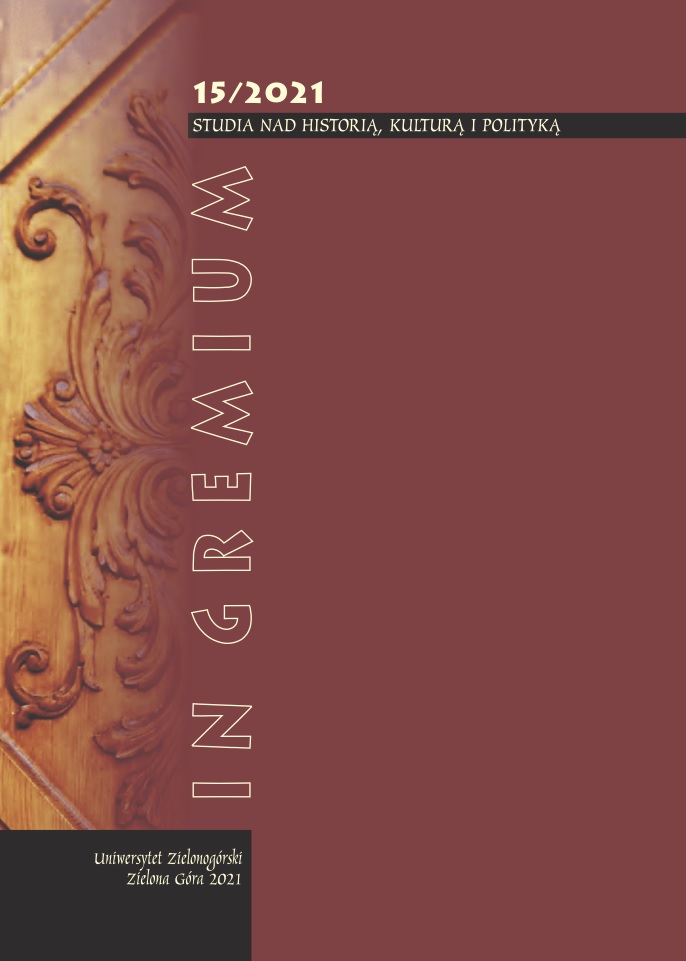
The latest issue of “In Gremium” annual journal (15/2021) includes a paper by Tomasz Mróz who took an attempt to compose a biographical sketch of Stanisław Lisiecki (1872-1960). The course of his life can be reconstructed from scraps of information in letters, official documents and only few printed materials.
This is the most extensive biography of Lisiecki so far and it was based on handwritten documents from the Archive of Polish Academy of Sciences, the Manuscript Section of the Jagiellonian Library, and from private collections. A turning point in his life was his decision to abandon his church career and start living as a layperson. In the interwar Poland his choice was not met with acceptance of the members of the then academia.
Although he cannot be counted among the top Polish historians of ancient philosophy or classics scholars, he was unjustly disregarded as a historical figure with a considerable, though unpublished legacy, coinsisting of translations of and commentaries to a number of Plato’s and Aristotle’s works.
The paper (in Polish) can be downloaded from the journal’s website here.
A View of Plato’s Paths in Poland
A lengthy, 480 pages, monograph book by T. Mróz was published in Academia Verlag’s series “Academia Philosophical Studies” as vol. 75. The title of the book is Plato in Poland 1800-1950. Types of Reception – Authors – Problems.
Some material from the book, including table of contents, is available on publisher’s website. The book attempts to make Polish Plato reception available to non-Polish readers. The years 1800-1950 cover essential phaenomena in modern Polish philosophy, for they encompass periods of reception of Western philosophical trends and the development of the Lvov-Warsaw school, neo-Messianism and neo-Scholasticism. The book discusses how each of these phaenomena contributed to interpreting Plato. The material is divided into three main parts focused on various types of reception.
The book is a final outcome of a project sponsored by Polish government within the National Programme for the Development of Humanities funding scheme. An essential collaborator in this project was Una Maclean-Hańćkowiak, who patiently edited the author’s style.
Platonic Concept of Reincarnation in Polish Philosophy

The latest issue of “Studia z Historii Filozofii” (Studies in the History of Philosophy, vol. 12, iss. 1) includes a paper by Adrian Habura on an episode in Polish reception of Plato’s theory of reincarnation or transmigration of souls.
Habura aims to present Stanisław Lisieckiʼs interpretation and assessment of Plato’s concept of metempsychosis, and then position his work against the background of diverse results of W. Lutosławski and P. Siwek. Lisieckiʼs reflection on Plato, and especially on his theory of reincarnation, proves that he was an unfairly forgotten scholar, who had had knowledge, capabilities and diligence sufficient to grant him a well-deserved place in Polish historiography and reception of Greek philosophy. Due to an unfortunate set of circumstances, including Lisiecki’s abandonment of Catholic clergy and his uncertainty of the value of his own work, he worked on margins of Polish academic life in the interwar period. Yet, as far as it was possible, he attempted to reconcile Platonism and Christian thought and find consolation in a perspective of future incarnations.
Full paper, in Polish, can be downloaded from the journal’s website here.
Plato between Scotland and Poland

In 2018 “Journal of Scottish Philosophy” (vol. 16, iss. 2) published a paper which was not, in fact, discussing Scottish philosophy as such, but was devoted to an episode in history of historiography of ancient philosophy and classical studies in Scotland.
The title of the paper clearly defines its topic: Scottish-Polish Cooperation on Plato at the Turn of the Twentieth Century. This paper discusses an example of Scottish-Polish cooperation on research, undertaken at the turn of the twentieth century, into the dialogues and philosophy of Plato. Two scholars were involved in this research: the Scottish classical scholar and historian of ancient philosophy, Lewis Campbell (1830–1908), and the Polish Plato scholar and philosopher, Wincenty Lutosławski (1863–1954). Their research on the chronology of Plato’s dialogues is analysed and the reception of their works discussed. The paper is enriched with some excerpts from their correspondence.
Unfortunately, the paper is not accessible on the journal’s website. If anyone, however, would like to receive an offprint, feel free to email the author: T.Mroz@ifil.uz.zgora.pl
A brief presentation of this paper can be found on Kudos website.
Censorship against Plato Scholars and Plato Himself

A volume on various aspects of relations between censorship, politics and oppression was published in 2018 by Gdańsk University Press. The book was a result of an international conference which took place in Gdańsk in 2017.
A paper by T. Mróz, included in this collective volume, discusses three cases of censorship on works of Polish Plato scholars who were active in three various periods of Polish history. First, the title of W. Lutosławski’s book on Plato was shortened by Imperial Russian authorities in Warsaw, they removed the word “socialism” from the title of his book on Plato. Its final version was then reduced to “Plato as the Creator of Idealism”.
S. Lisiecki, in turn, translated dialogues and wrote extensive introductions to them, but only his Republic saw the light of day in the interwar period, while all the remaining dialogues were left unpublished (but some of them, fortunately, will be published this year!). His leaving the clergy and Roman Catholic church might have been one of the reasons of his difficult situation in Polish academia.
Finally, W. Witwicki’s translation of the Republic with his commentaries appeared in print in 1948. After his death, the second edition was published in 1958, but some of his ironic and critical remarks on totalitarian system were removed.
Paper by T. Mróz can be downloaded from the University’s repository here.
Recent commentaries