Another Work by H. Jakubanis Available in Polish Translation
Henryk Jakubanis (1879-1948) for over two decades worked in the Catholic University of Lublin, but his most important works were composed in Russian, during his Kyiv period, and were unavailable to Polish audiences. It was only recently that they started to be translated and published by the members and collaborators of the AΦR group. First, his study on Empedocles was translated and published, and now it is the paper titled: The Significance of Ancient Philosophy for the Modern Worldview (1910), accompanied by a commentary from the translator, Mariam Sargsyan.
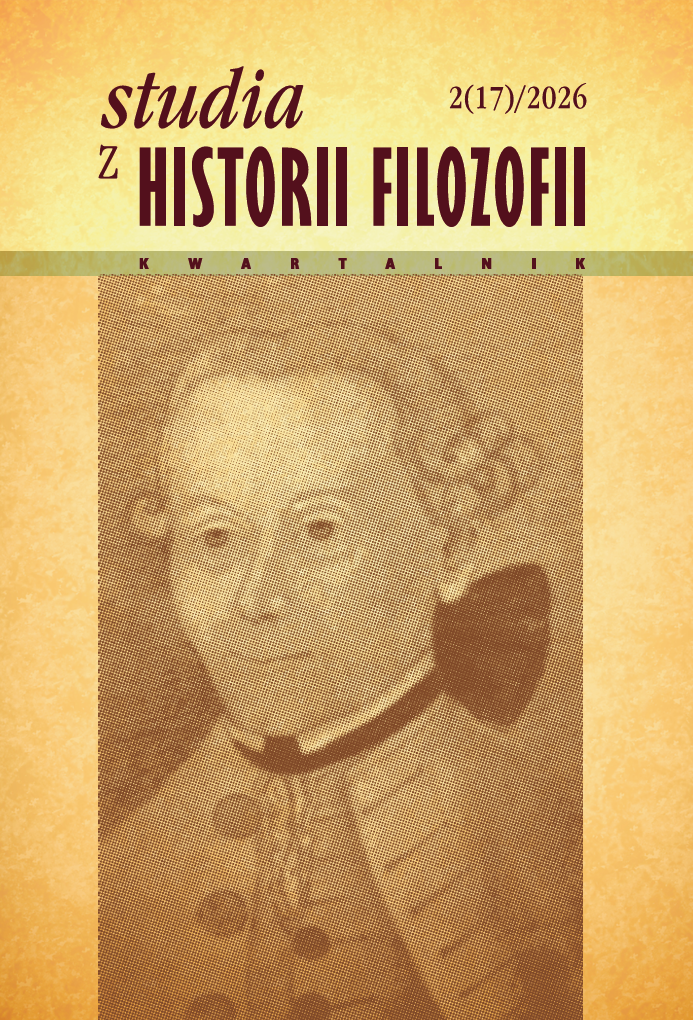
The translation and the commentary were published in “Studia z Historii Filozofii” 2 (17)/2026, one of the top Polish journals for the history of philosophy. The whole volume in open access can be found here, while the translation – here, and the commentary – here. The original article, based on a lecture, had been published in an university journal in Kyiv in 1910 as Значенiе древней философiи для современнаго мiропониманiя.
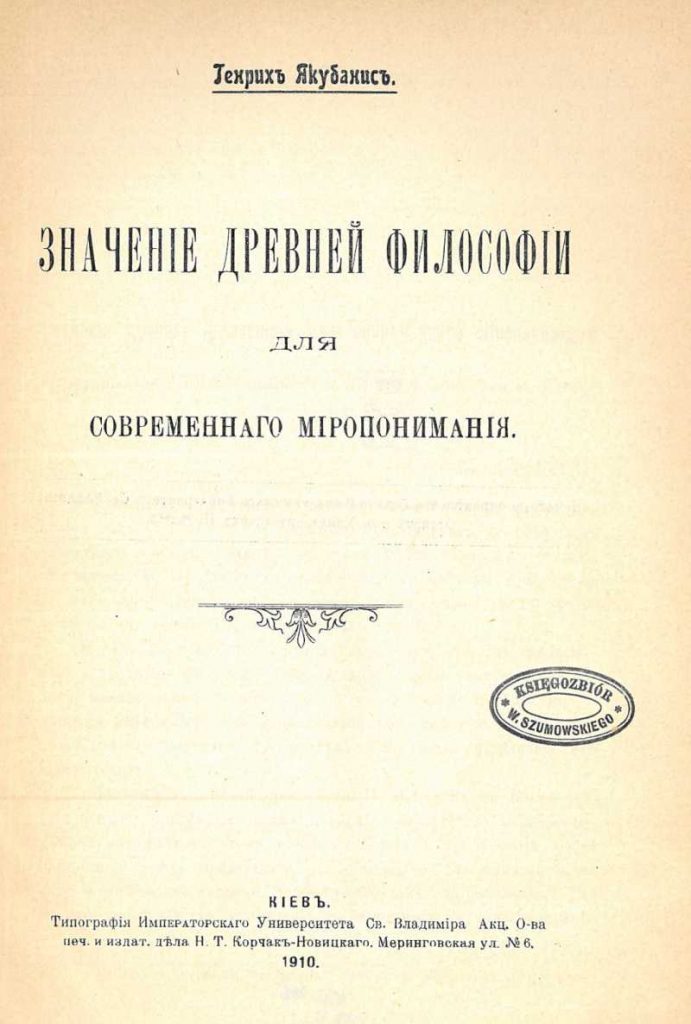
In his article, Jakubanis discussed metaphilosophical issues and presented his views on the then state of philosophy. He emphasised the enduring values of the ancient world, compared ancient and modern approaches to philosophical inquiries, and expressed hopes for the revival of the Hellenic culture. He remarked on the growing interest in antiquity in general, and in philosophy in particular, that had been demonstrated by studies of many scholars. At the same time, however, he noticed a crisis in modern philosophical thought. He took an attempt to identify its reasons: increasing specialisation of sciences, narrowing of intellectual horizons, and the discrepancy between theory and practice. Ancient thought, on the contrary, seemed to embody harmony and other timeless values.
Jakubanis’ aim was to revive ancient Greek culture, he argued that such a revival would contribute to overcoming the then crisis. In his view, such a revival should be based on three principal components: „nationality, antiquity, and Christianity”, in which he followed the ideas of his older colleague, Polish classics scholar, Tadeusz Zieliński (1859-1944). The translation of Jakubanis’ paper provides Polish audiences with an opportunity to become acquainted with the works of a scholar whose methods were moulded in pre-revolutionary Kyiv and who continued teaching in Lublin, in independent Poland.
The translation and commentary were the results of the research project funded by National Science Centre on Henryk Jakubanis (1879-1949) as a classics scholar and historian of ancient philosophy.

Erasmus+ Teaching Visits in Vilnius Continue
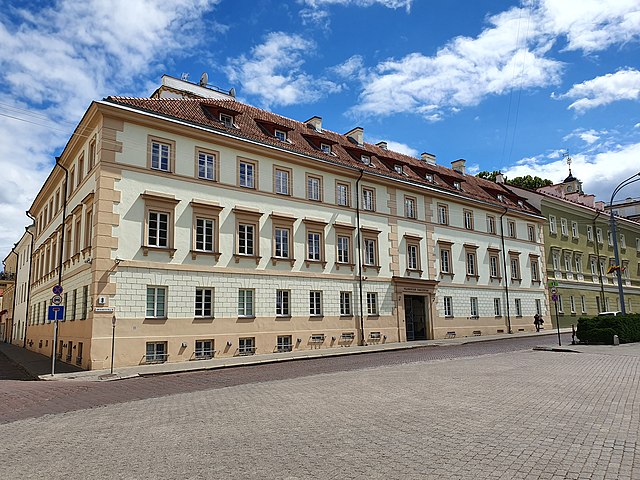
In May, 11th-15th, 2026, Tomasz Mróz enjoyed his fifth Erasmus+ teaching visit in Faculty of Philosophy, Vilnius University.
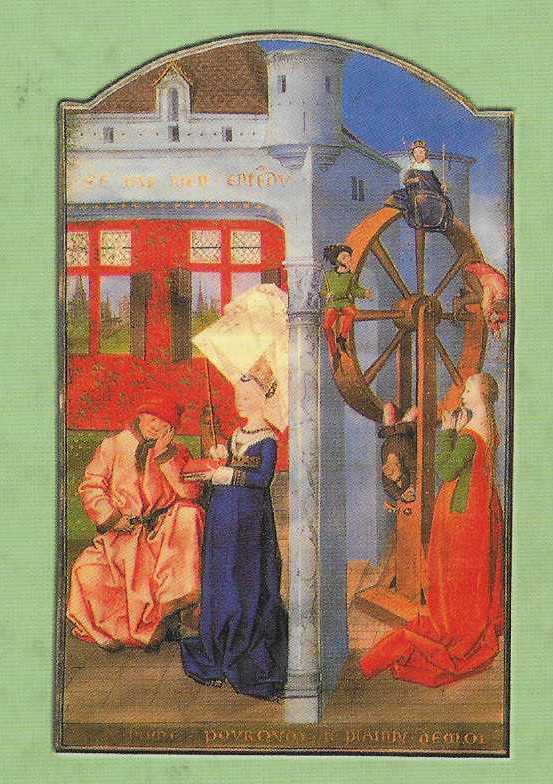
One of the lectures was focused on discussing various problems related to historiography of philosophy, using the method and structure of the History of Philosophy by Władysław Tatarkiewicz (1886-1980), especially in regard to ancient philosophers. An additional material for discussion was provided by the Lithuanian edition of this three-volume book (2001) with covers – contrary to Polish editions – decorated with various images. The front cover of vol. I, for example, depicts Boethius – what students were able to discover with only little help! – in his consoling dialogue with Philosophy herself, and the wheel of Fortune, an important argument for a philosophers not to let a hard lot get them down.
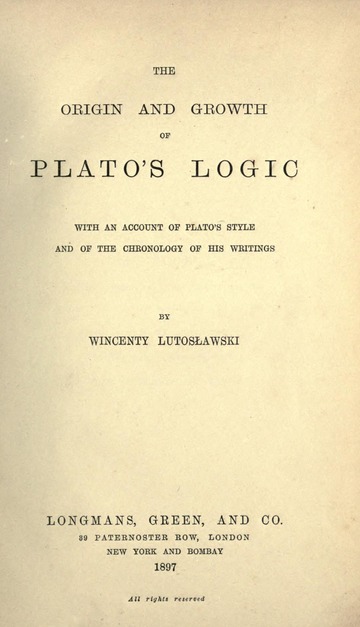
Another lecture related to the history of ancient philosophy scholarship was devoted to Wincenty Lutosławski (1863-1954), a renowned researcher of Plato, and the Vilnius period of his academic career. A decade spent in Vilnius was by Lutosławski considered a disappointment with his colleague professors and low number of students. He was able, however, to promote a successful Ph.D. student interested in Plato, Benedykt Woyczyński (1895-1927), initiate correspondence with notable persons, not only philosophers, and – last, but not least – work on his idea of a historical development of metaphysics, which was his focus until his ultimate years.
This lecture was an open event and it was advertised here.
Recent commentaries