Home » Posts tagged '2026'
Tag Archives: 2026
Demons, Calcidius and Vitello at ISNS Symposium

On June 3rd-6th in Leuven, Belgium, the 23rd annual symposium of the International Society for Neoplatonic Studies (ISNS) took place. The programme of the whole event can be downloaded here. AΦR was certainly present there.
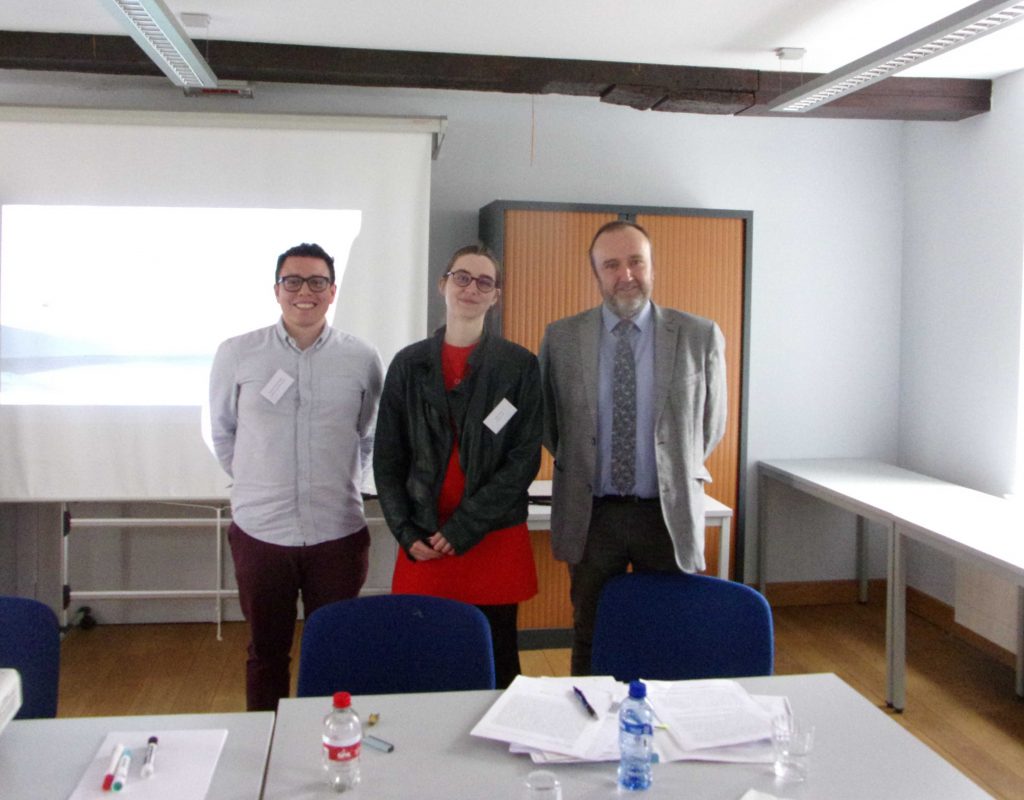
Together with two other panelists, Tomasz Mróz presented his paper in the panel: Medieval Platonism. These panelists were Heide König (LMU Munich) and Ernesto Fuentes Padgett (Notre Dame). Mróz’s paper was titled Vitello’s Theory of Daemons. Platonic Inspirations in a Naturalistic Treatment.

Vitello was a philosopher and a natural scientist of the second half of the 13th century, best known for his treatise in optics. To obtain degrees he travelled to the universities in Paris and Padua, but he also visited Viterbo. Although he gained recognition as the author of Perspectiva, dedicated to Wilhelm of Moerbecke, his interests went beyond optical issues and in a letter titled De causa primaria paenitentiae in hominibus et de natura daemonum he differentiated between the real demons as animals and apparent demons, as the effects of optical illusions or malfunctions of human cognition. He developed a theory of demons, their nature, their position among natural creatures, and investigated a number of detailed issues connected to the life of demons and their various interactions with human beings.
Mróz took an attempt to demonstrate how Vitello started with Plato, Calcidius’ commentary to the Timaeus, mathematical considerations and the Averroists’ theory of double truth to prove the existence of demons as animals and how, subsequently, he took advantage of his experience as a natural scientist and a confessor to supplement the theory with a number of observations and the then common opinions that eventually, in his eyes, reinforced the theory.
The conference in Leuven was, as all ISNS events, a successful meeting, gathering specialist in history of philosophy from antiquity to modern times. It was also an opportunity to see and listen to papers of scholars from all the continents. It was also a pleasure to see there our collaborator from Vilnius University, Jonas Čiurlionis, who delivered a paper Mathematics of Music in Timaeus’ creation of the World Soul.
Talks on W. Tatarkiewicz’s Lectures on Greek Philosophy
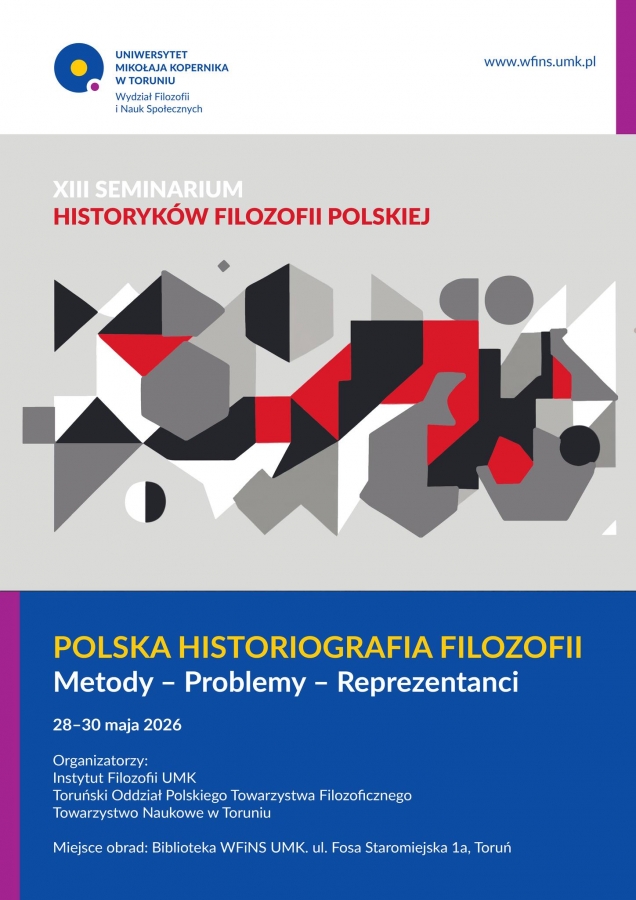
A series of conferences called Seminars of Historians of Polish Philosophy continues and develops. The latest edition (the 13th) was organised in Toruń by the Institute of Philosophy of the Nicolaus Copernicus University on May 28th-30th, 2026. The title of the meeting was Polish Historiography of Philosophy. Methods – Problems – Representatives. The members of Ancient Φilosophy Reception research group were obviously present there. It should be only briefly mentioned here that the 12th edition of the Seminar took place in May 2025 in Zielona Góra, and the initiative came from AΦR.
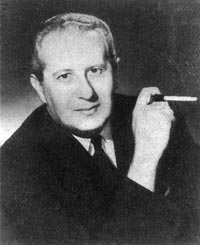
Those were Tomasz Mróz and Adrian Habura who represented Institute of Philosophy (UZ). Both their papers were presented in the panel New Sources for the History of Polish Philosophy, and both were focused on various aspects of the same archival material. This material cosisted of excerpts, reports and notes taken by Bohdan Zawadzki (1902-1966, photo on the right) from lectures delivered in Warsaw in the early 20’s of the 20th century by Władysław Tatarkiewicz (1886-1980). They remained unknown before Habura’s short research visit in Vilnius.
The paper by T. Mróz was titled Bohdan Zawadzki’s reports from Władysław Tatarkiewicz’s lectures on Greek philosophy. Mróz made a general presentation of Zawadzki as a student of Władysław Witwicki (1878-1948) in Warsaw and a professor in Vilnius, and his relations to Tatarkiewicz. Then he focused on the manuscript materials and the representation of Plato in them. His conclusion was that even a preliminary analysis of Zawadzki’s notes, especially in parts devoted to Plato, demonstrates that Tatarkiewicz as a lecturer of Greek philosophy was still influenced by his studies in Marburg and he had provided his students with much richer material than he later included in volume I of his History of Philosophy.
A. Habura, in his paper titled Two images of Aristotle in Władysław Tatarkiewicz’s works in the light of Bohdan Zawadzki’s notes, examined a more detailed issue related to Zawadzki’s manuscripts. A starting point of his paper was a distinction between the two “images” of Aristotle that Tatarkiewicz developed before the WWII. The first was the result of his doctoral studies in Marburg (1910), while the second was included in his History of Philosophy (1931). An analysis of these two “images” leads to the conclusion that, although they are formally different, they do not differ so much in the content. Zawadzki’s manuscripts from Tatarkiewicz’s lectures are valuable in this case, because they allow to demonstrate that in the 1920s, while writing his History of Philosophy, Tatarkiewicz’s studies on Aristotle were more developed than they appeared until now.
Participation of both scholars in the Seminar was sponsored from the funds of “Small Grant” (UZ).
A Conference in Częstochowa: Polish Studies on Plato
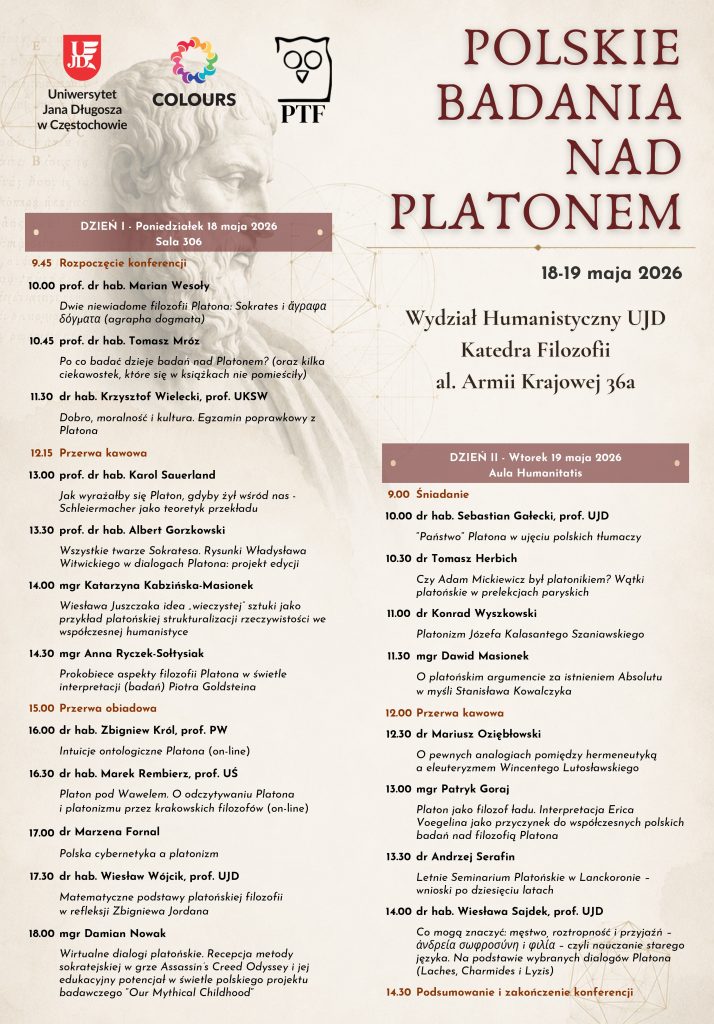
Ancient Φilosophy Reception research group couldn’t have been absent at the conference on Polish Studies on Plato, which was held in Jan Długosz University (UJD) in Częstochowa on May 18-19th, 2026.
The conference was organised by the Chair of Philosophy of UJD, and prof. Wiesława Sajdek was the head of the whole event. Tomasz Mróz delivered his paper in the opening panel, after the introductory talk by prof. Marian Wesoły. Reports from the first day of the conference (in Polish) were published on the websites of UJD and a local radio station. It should be emphasised that both professors, Sajdek and Wesoły, have already collaborated in various activities of AΦR.
The paper by Mróz had a long title: Why study the history of studies on Plato? (and a couple of interesting pieces that were not included in the books). He argued, certainly, for the positive answer to the question in the title, since – for example – discussions about Plato’s legacy and various interpretations of his philosophy reflect philosophical trends of their times and commenting on Plato’s dialogues provides a convenient opportunity to express one’s own views. Moreover, Mróz discussed peculiar history of the texts that had “Plato” and “Poland” in their titles, starting with an English report, published by Lewis Campbell (1830-1908), Plato in Poland (1893), on the then recent studies on Plato’s logic by Wincenty Lutosławski (1863-1954). Then, the history of Polish texts by Irena Pannenkowa (1879-1969), Izydora Dąmbska (1904-1983), Zbigniew Nerczuk (another collaborator of AΦR), and Mróz himself followed.
Mróz discussed briefly some issues related to his decades long studies on Polish traditions in researching and translating Plato that were unsuitable for publishing in scholarly works. They were e.g. his reminiscences from his meetings with Lutosławski’s daughter, Janina Lutosławska (1922-2006), and the archival discoveries he had made in the legacies of Lutosławski, Stefan Pawlicki (1839-1916), Stanisław Lisiecki (1872-1960), and Henryk Jakubanis (1879-1949), many of which he was able to edit and publish.
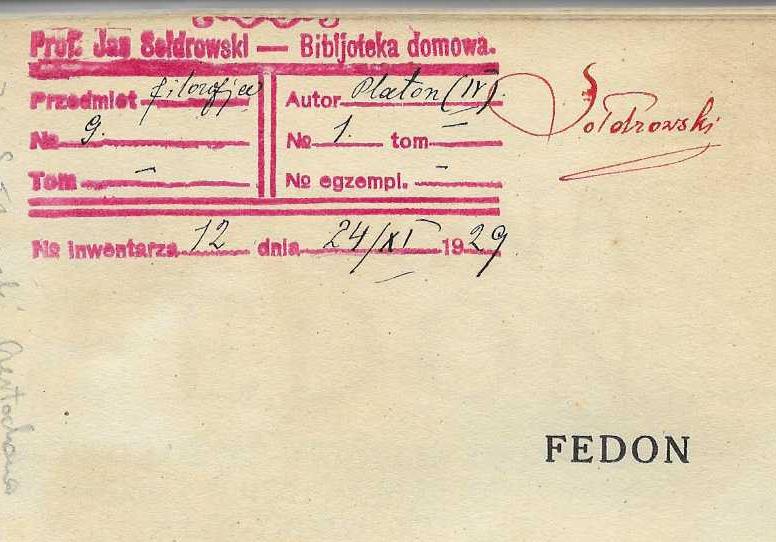
In the final parts of his talk, Mróz presented a small detail related to the location of the conference, the city of Częstochowa. Once in his research he came across a copy of the Phaedo in Władysław Witwicki’s (1878-1948) translation (Warsaw 1925) which had been owned by Jan Sołdrowski (1889-1970), a teacher of various subjects (including classics) and a Catholic activist from Częstochowa. His notes on the margins of the book revealed his thoughts and impressions from reading the dialogue.
Another Work by H. Jakubanis Available in Polish Translation
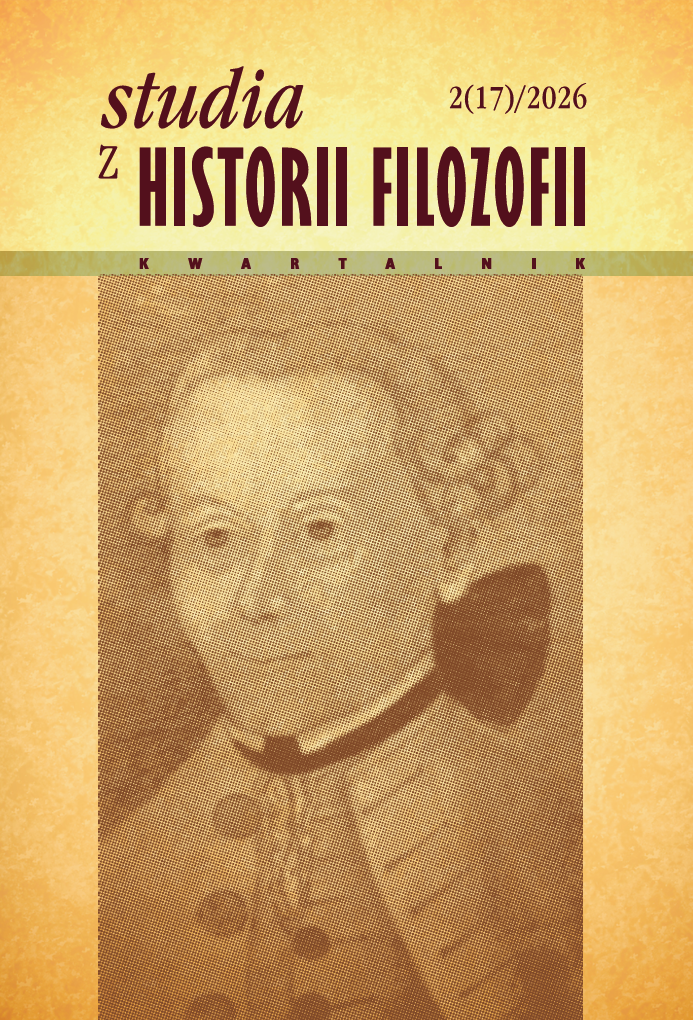
Henryk Jakubanis (1879-1948) for over two decades worked in the Catholic University of Lublin, but his most important works were composed in Russian, during his Kyiv period, and were unavailable to Polish audiences. It was only recently that they started to be translated and published by the members and collaborators of the AΦR group. First, his study on Empedocles was translated and published, and now it is the paper titled: The Significance of Ancient Philosophy for the Modern Worldview (1910), accompanied by a commentary from the translator, Mariam Sargsyan.
The translation and the commentary were published in “Studia z Historii Filozofii” 2 (17)/2026, one of the top Polish journals for the history of philosophy. The whole volume in open access can be found here, while the translation – here, and the commentary – here. The original article, based on a lecture, had been published in an university journal in Kyiv in 1910 as Значенiе древней философiи для современнаго мiропониманiя.
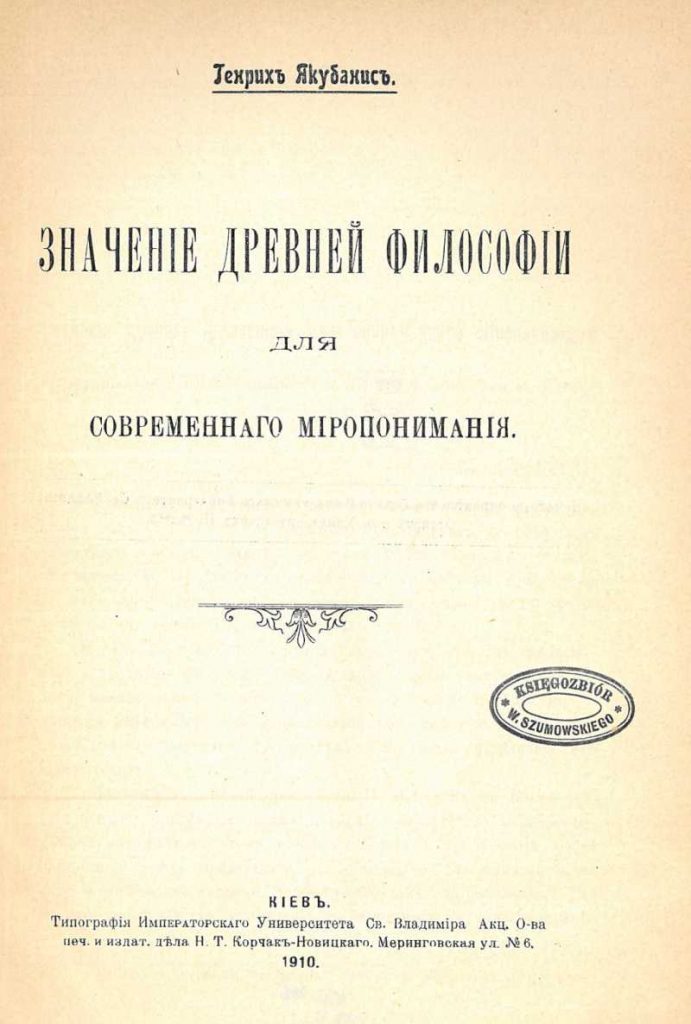
In his article, Jakubanis discussed metaphilosophical issues and presented his views on the then state of philosophy. He emphasised the enduring values of the ancient world, compared ancient and modern approaches to philosophical inquiries, and expressed hopes for the revival of the Hellenic culture. He remarked on the growing interest in antiquity in general, and in philosophy in particular, that had been demonstrated by studies of many scholars. At the same time, however, he noticed a crisis in modern philosophical thought. He took an attempt to identify its reasons: increasing specialisation of sciences, narrowing of intellectual horizons, and the discrepancy between theory and practice. Ancient thought, on the contrary, seemed to embody harmony and other timeless values.
Jakubanis’ aim was to revive ancient Greek culture, he argued that such a revival would contribute to overcoming the then crisis. In his view, such a revival should be based on three principal components: „nationality, antiquity, and Christianity”, in which he followed the ideas of his older colleague, Polish classics scholar, Tadeusz Zieliński (1859-1944). The translation of Jakubanis’ paper provides Polish audiences with an opportunity to become acquainted with the works of a scholar whose methods were moulded in pre-revolutionary Kyiv and who continued teaching in Lublin, in independent Poland.
The translation and commentary were the results of the research project funded by National Science Centre on Henryk Jakubanis (1879-1949) as a classics scholar and historian of ancient philosophy.

Erasmus+ Teaching Visits in Vilnius Continue
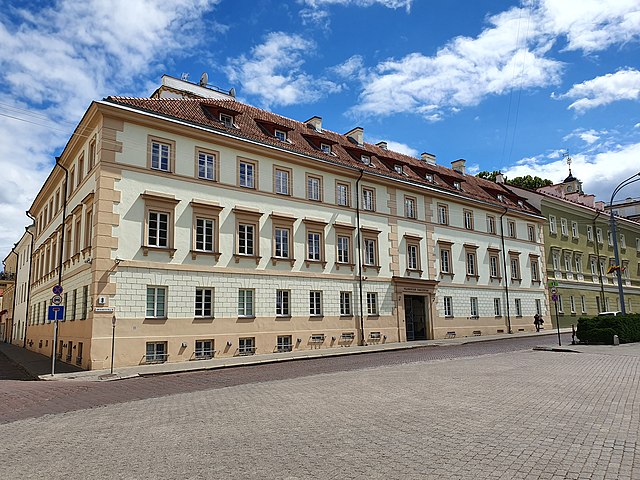
In May, 11th-15th, 2026, Tomasz Mróz enjoyed his fifth Erasmus+ teaching visit in Faculty of Philosophy, Vilnius University.
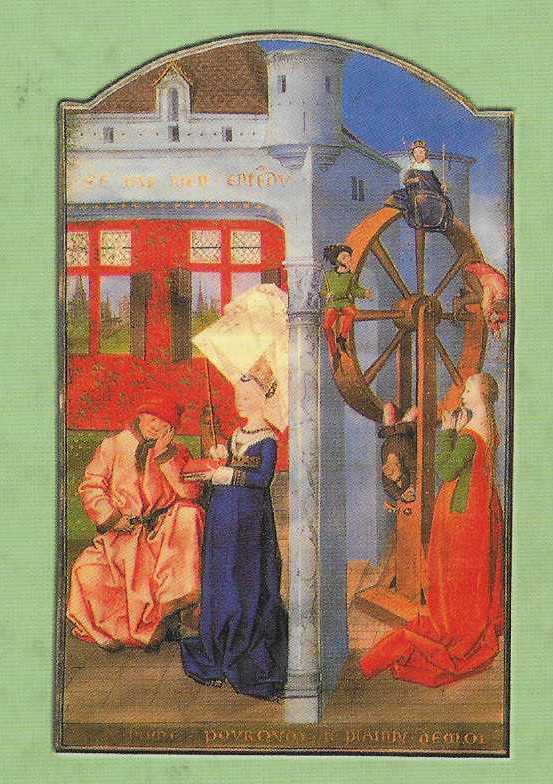
One of the lectures was focused on discussing various problems related to historiography of philosophy, using the method and structure of the History of Philosophy by Władysław Tatarkiewicz (1886-1980), especially in regard to ancient philosophers. An additional material for discussion was provided by the Lithuanian edition of this three-volume book (2001) with covers – contrary to Polish editions – decorated with various images. The front cover of vol. I, for example, depicts Boethius – what students were able to discover with only little help! – in his consoling dialogue with Philosophy herself, and the wheel of Fortune, an important argument for a philosophers not to let a hard lot get them down.
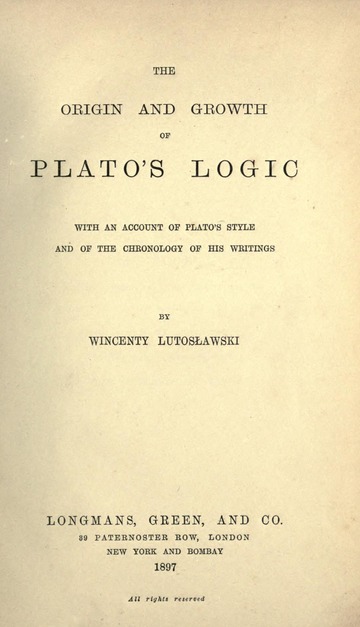
Another lecture related to the history of ancient philosophy scholarship was devoted to Wincenty Lutosławski (1863-1954), a renowned researcher of Plato, and the Vilnius period of his academic career. A decade spent in Vilnius was by Lutosławski considered a disappointment with his colleague professors and low number of students. He was able, however, to promote a successful Ph.D. student interested in Plato, Benedykt Woyczyński (1895-1927), initiate correspondence with notable persons, not only philosophers, and – last, but not least – work on his idea of a historical development of metaphysics, which was his focus until his ultimate years.
This lecture was an open event and it was advertised here.
A. Habura’s Research Stay in Vilnius
We have already informed that the members of the Ancient Φilosophy Reception research group received a “Small Grant” from the Deputy Rector for Science and International Cooperation of the University of Zielona Góra. The aim of the AΦR team is to pursue research on the notes by Bohdan Zawadzki (1902-1966) from Władysław Tatarkiewicz’s (1886-1980) lectures on the philosophy of the Greeks. Now, we are glad to announce that the work is progressing.
The first phase of the research plan, that is, preliminary analysis of the manuscripts, has just been completed. It was thanks to the works of Adrian Habura, who travelled to Vilnius in May 2026 to assess the value of Zawadzki’s manuscripts and to identify the most significant issues that were emphasised by both, Zawadzki, the student, and Tatarkiewicz, the lecturing professor.

The next steps in the research plan include studies of the most important problems related to Tatarkiewicz’s lectures, as they were rendered by Zawadzki. The results will be presented in near future as conference or seminar papers and academic articles.
A Note on “Plato in Poland” in “The Polish Review”
It has been only recently that we have learned about a note on Tomasz Mróz’s book (Plato in Poland 1800-1950: Types of Reception – Authors – Problems, Baden-Baden 2021) that appeared in “The Polish Review” (New York) in 2022 (vol. 67, no. 4, p. 176) in the section: Books Briefly.
A paragraph long note by the journal editors assessed the book as “a valuable addition to the history of Polish philosophy”.
Recent commentaries