Vilnius and Ancient Philosophy
Institute of Philosophy, University of Zielona Góra (UZ), has for many years developed co-operation with Vilnius University (VU) in the framework of Erasmus+ programme. UZ philosophers, members of the faculty or students, visit Vilnius, and VU philosophers visit Zielona Góra almost every academic year, as we have recently reported here and here.
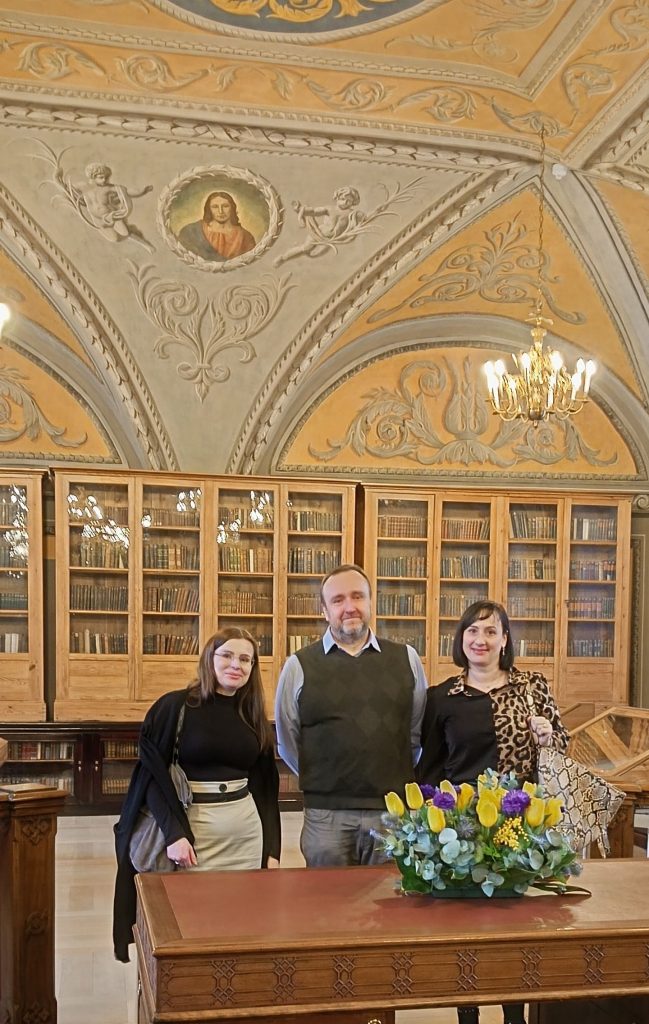
On Feb. 6-7th representatives of AΦR (Tomasz Mróz) and academic staff of the Institute (Justyna Kroczak, Joanna Zegzuła-Nowak) paid a working visit to Vilnius philosophers to discuss possibilities of expanding future research co-operation on the topics related to the reception of ancient philosophy.
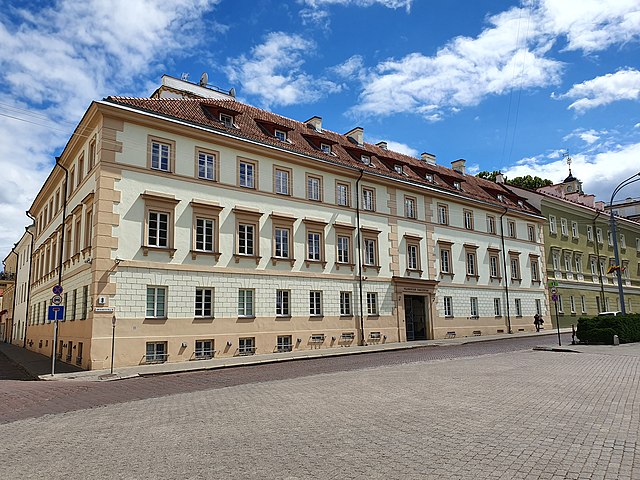
Visiting group was given a tour of the old library of VU. The visit was an opportunity for UZ scholars to investigate possibilitites of a library query in special collections of VU and to learn the library regulations and new restrictions for readers who research manuscripts and old prints.
On the photo: J. Kroczak, T. Mróz, J. Zegzuła-Nowak in the historic Franciszek Smuglewicz Hall, VU, the old library.
The trip to Vilnius was funded from the “Small Grant” allocated last year to T. Mróz by the Deputy Rector of the University of Zielona Góra.
A paper on Polish translations of Plato
The latest issue of the “Revue de philosophie ancienne” (2023/2, vol. XLI) includes a paper by T. Mróz: Polish Translations of Plato’s Dialogues from the Beginnings to the Mid-Twentieth Century.
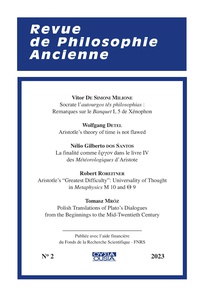
In his paper T. Mróz focuses on four most significant translators of Plato’s dialogues in Poland. They were: Felicjan Antoni Kozłowski (1805-1870), who was the first translator of Plato into Polish; Antoni Bronikowski (1817-1884), who was the most productive in the 19th century and kept on working on Plato in spite of unfavourable reviews; Stanisław Lisiecki (1872-1960), whose numerous translations remained unpublished; and finally Władysław Witwicki (1878-1948), whose renderings of the dialogues are still widely read. The paper presents their achievements and discusses the reception of their works.
Anyone whishing to receive an offprint should feel free to request it from the author via email.
“Oral History and the Classics” Team in Poznań
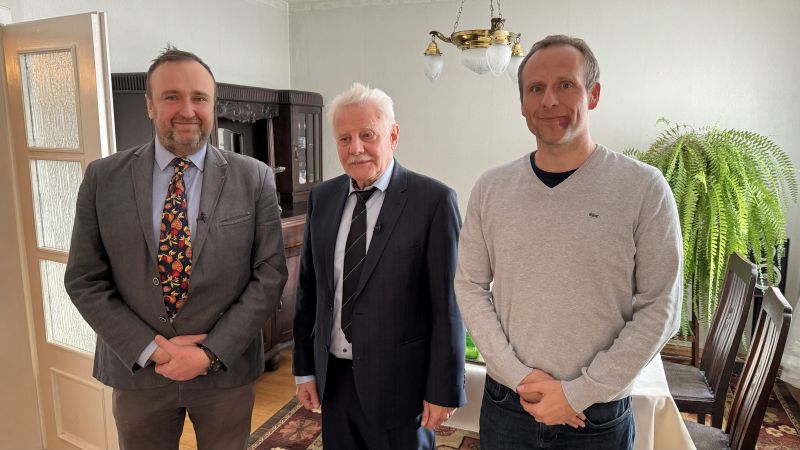
On Dec. 5th, 2023, Oral History and the Classics project team enjoyed the honour to visit Professor Marian Andrzej Wesoły at his home, in the vicinity of Poznań. Prof. Wesoły agreed to give an interview which will be included in the Oral History and the Classics collection on the website of the University of Hradec Králové.
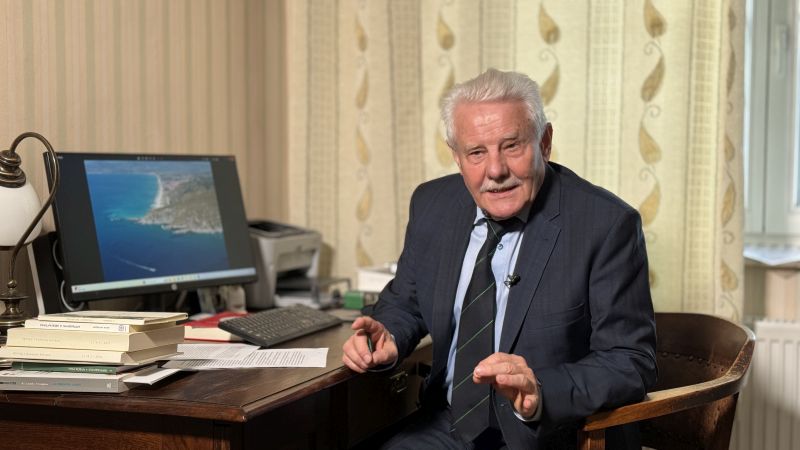
Marian Wesoły is currently a professor emeritus of Adam Mickiewicz University in Poznań and lectures at the Jacob of Paradies Academia in Gorzów Wielkopolski. His entire academic career in Poland was connected to Poznań and Adam Mickiewicz University. His doctoral (1977) and postdoctoral (1992) dissertations were devoted to the history of Greek philosophy. In 2008 he received the title of a full professor. He was granted several foreign scholarships, e.g. in Italy (1980: University of Padova, 1983: Italian Institute for History in Naples, 1997: Villa I Tatti), Germany (1986/87: University of Tübingen), and Greece (1993, 2000, 2012: Academy of Athens). Prof. Wesoły is a co-founder of the „Peitho. Examina Antiqua” journal. For 20 years he has regularly participated in the Eleatica-Symposia, initiated by Prof. Livio Rossetti at the Alario Foundation in Ascea, close to the ruins of ancient Elea/Velia. Finally, we should mention that on the 100th anniversary of the Adam Mickiewicz University in Poznań (2019) he was awarded Knight’s Cross of the Order of Polonia Restituta.
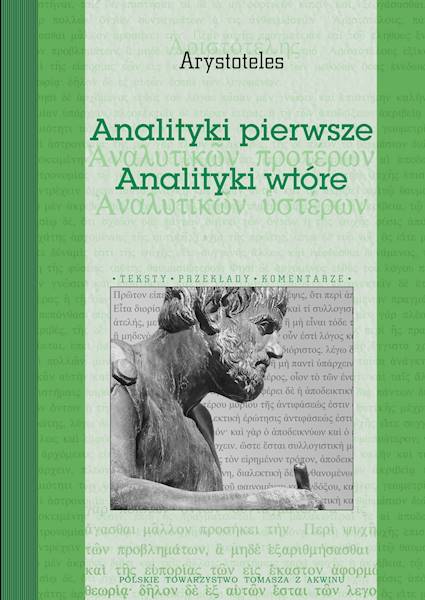
Prof. Wesoły is a specialist in Greco-Roman and Byzantine philosophies. In his numerous works he attempts to combine philological analyses with philosophical interpretation. Moreover, he is active as a translator and one of his most recent productions is a bilingual edition and commentary of Aristotle’s Analytica Priora et Posteriora (2020).
During the interview prof. Wesoły reflected on his academic and research curriculum, but also shared his views on perspectives of his discipline, on political constraints in researching ancient philosophy, recalled his memories of the great scholars whom had the opportunity to meet and with whom he collaborated etc. When the whole recording is edited and furnished with English subtitles, it will be make public and available on the project’s website.
The interview meeting with prof. Wesoły would not be possible without his kind consent and warm welcome of the team members by his family at their home. Those were Tomasz Mróz and Jaroslav Daneš who carried out the interview, while Jan Kadeřábek, a cinematographer and a cameraman, took care of all the technicalities.
“Small Grant” from the University of Zielona Góra
Prof. Marcin Mrugalski, the Deputy Rector for Science and International Cooperationof of the University of Zielona Góra (UZ), home institution of the AΦR, awarded Tomasz Mróz with a “Small Grant” of a maximum possible value. These internal grants are distributed by the Rector annually among those researchers of UZ, who had submitted their proposals to the National Science Centre (NCN), received positive assessements from the experts, yet finally had not been granted funding. Aim of the “Small Grants” is to increase the chances of the researches in future granting competitions.
“Small Grant” funds for AΦR will be spent on developing and strenghtening a co-operation between AΦR members and the Institute of Philosophy (UZ) with colleagues from the Faculty of Philosophy, Vilnius University (VU), on the topic of the history of research on ancient philosophy in VU during its complex history.
AΦR at the Twelfth Polish Congress of Philosophy in Łódź
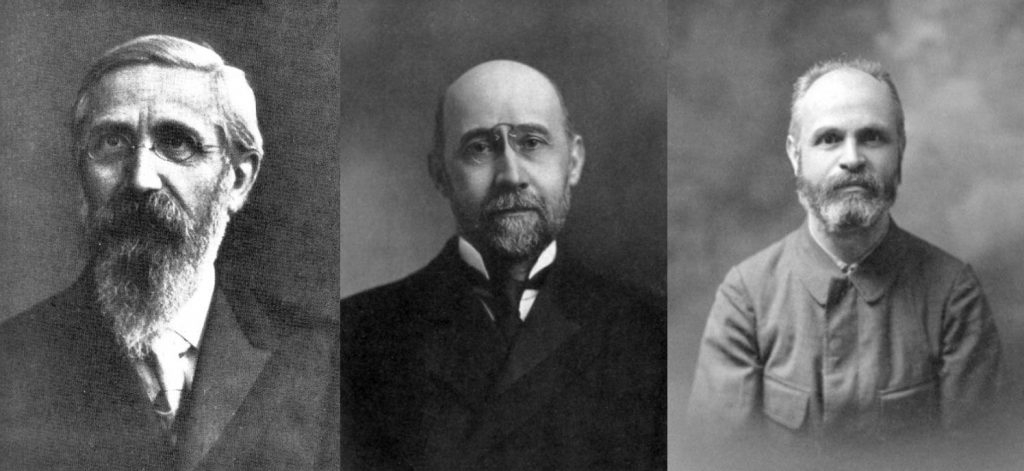
In September (11th-16th) 2023 the 12th Polish Congress of Philosophy took place in Łódź. Three members of AΦR took part in this great event, and they delivered four papers there. Tomasz Mróz spoke about three traditions of doing philosophy and three interpretations of Plato at the ancient philosophy section, and the other three papers were presented in the section of Polish philosophy: on the influence of Aristotle on the works of W. Tatarkiewicz (Adrian Habura); on H. Jakubanis’ arguments for the reneval of philosophy in accordance to its ancient roots (Mariam Sargsyan); and on B. Kieszkowski, a researcher of Renaissance Platonism, on his life, works and their reception (again T. Mróz).
T. Mróz’s paper, Three Traditions of Doing Philosophy and Three Interpretations of Plato, was devoted to presenting three Plato scholars of the turn of the 20th century, Paul Natorp (1854–1924), a German, Paul Shorey (1857–1934), an American, and Wincenty Lutosławski (1863–1954), a Pole, and their interpretations of Plato. Mróz attempted to relate these three personalities of one generation and their Platonic studies with their native, dominant philosophical traditions: neo-Kantianism, Emersonian tradition and Polish Romantic Messianism. Their methodologies, views on the chronology of the dialogues and the status of ideas were discussed, as a starting point for future comparative research of their Platonic studies and reciprocal references.
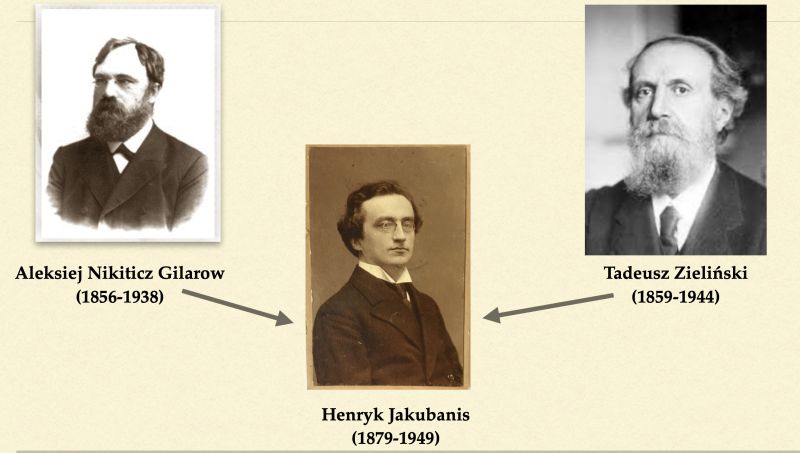
M. Sargsyan’s presentation was titled: Arguments of Henryk Jakubanis (1879-1949) for Renewal of Philosophy and Culture on the Ancient Model. It started with an introductory part about the biography of Jakubanis to familiarise the audience with his personality. Then the main part followed and it consisted in discussing Jakubanis’ work The Significance of Ancient Philosophy for the Modern View of the World (1910). Historical and philosophical research methods of Jakubanis were analysed and compared with those of his academic supervisor in Kyiv, Alexei Gilarov. Another comparative perspective was provided by the works of Tadeusz Zielinski, who was an internationally recognised scholar, and a kind, older colleague for Jakubanis.
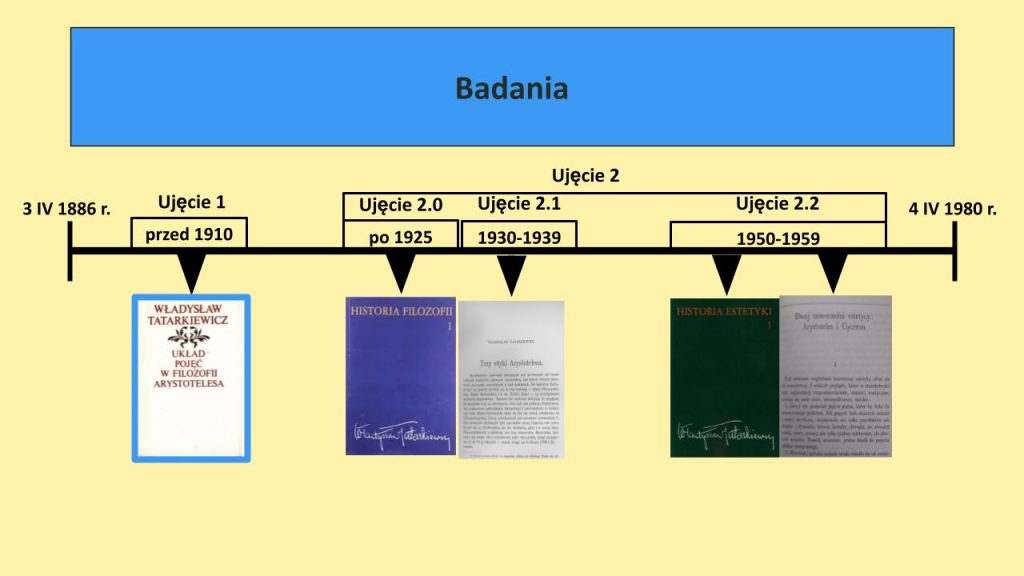
A. Habura’s paper was titled Aristotle in the Works of Władysław Tatarkiewicz and divided into two parts. In the first one, following Tatarkiewicz’s own statement, Habura distinguished two “images” of Aristotle’s philosophy which Tatarkiewicz had developed during his research career. Habura took into account various works of Tatarkiewicz and demonstrated that these two images were not contradictory, but rather complementary to each other. In the second part of his presentation Habura distinguished five aspects of Aristotle’s inspiration in Tatarkiewicz’s works, in accordance with Tatarkiewicz’s own reflection on this topic, and proved a significant, substantial and lasting impact of Aristotle on Tatarkiewicz’s original philosophical investigations.
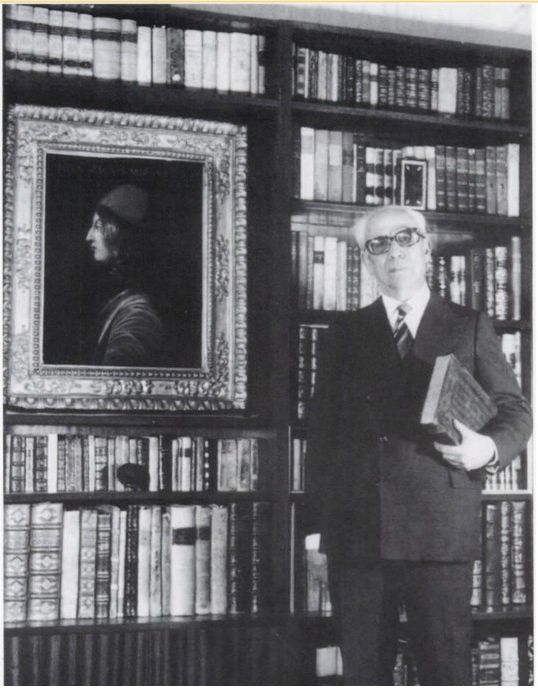
Second paper by Mróz was a presentation of a further development of his research on Bohdan Kieszkowski, a Polish scholar who was a specialist on Renaissance Platonism and Pico della Mirandola. Earlier this year Mróz discussed Kieszkowski’s biography, but this time the focus was on Kieszkowski’s works and their reception, that is, his polemic with another Polish expert in Renaissance philosophy, M. Heitzman (1899-1964), on the sources of Renaissance Italian Platonism, and a critical reception of Kieszkowski’s edition of Pico’s Conclusiones (1973) by a Portuguese researcher, José Vitorino de Pina Martins (1920-2010). Heitzman searched for the roots of philosophy in Florentine Academy in medieval thought, while Kieszkowski tended to emphasise the role of ancient sources. As for Pina Martins, he praised Kieszkowski’s erudition, yet pointed to a large number of errors in Conclusiones, resulting from various reasons, including Kieszkowski’s lack of precision in reading Latin texts.
Bertrand Russell, His Views on Ancient Philosophy and Critical Reaction on Them in Poland
In August 17-18th T. Mróz took part in the sixth annual History of Analytic Philosophy Workshop organised by Tilburg Center for Moral Philosophy, Epistemology and
Philosophy of Science. This year’s meeting was devoted to Global Reception of Russell’s Scientific Philosophy.

T. Mróz’s paper was prepared in co-operation with Paweł Polak (The Pontifical University of John Paul II in Kraków), who presented his part in an on-line form. The title of their presentation was The Early Reception of Russell’s Philosophy among Polish Philosophers – a Diversity of Perspectives. P. Polak focused in particular on reception of Russell’s ideas among the representatives of the Lvov-Warsaw School, while T. Mróz discussed two cases of reception of Russell’s History of Western Philosophy (1945) among Polish historians of philosophy, and some other issues, e.g. the censorship of Russell’s texts in Poland.
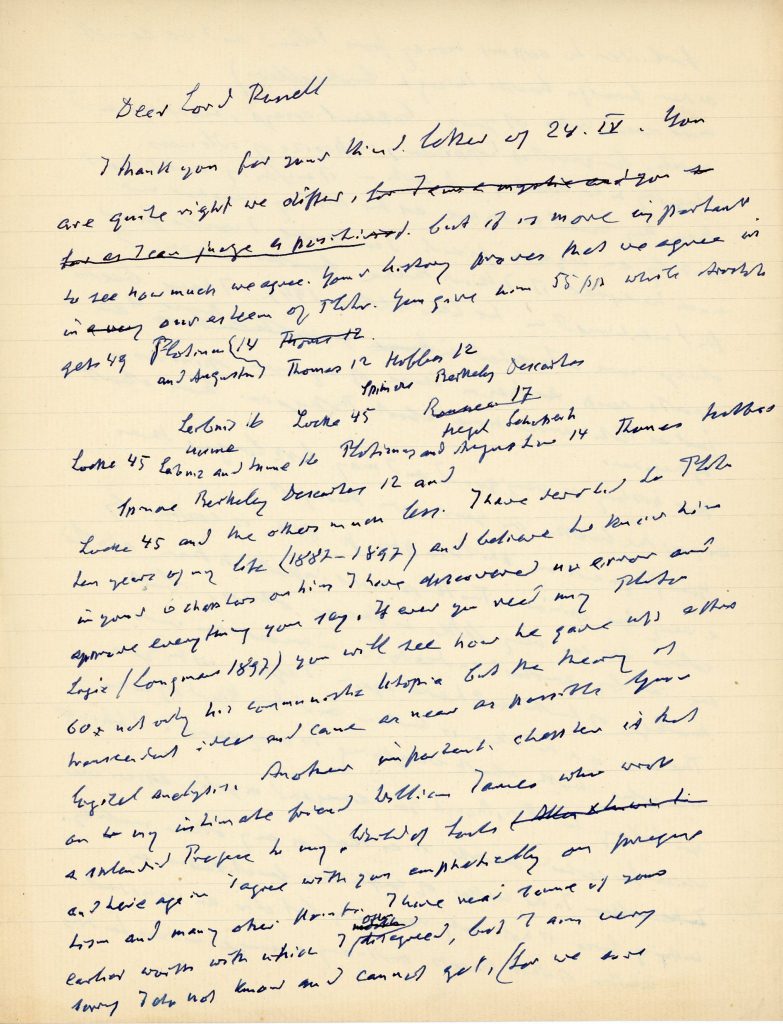
What matters here is ancient philosophy. The first Polish critic of Russell’s History was Wincenty Lutosławski (1863-1954), who expressed his views on Russell’s Plato in a letter (Lutosławski’s draft on the left) to the author (a paper in “Russell” on the letters between the two philosophers has been announced here). Despite the differences between them, Lutosławski declared in his letter: “Your History proves that we agree in our esteem of Plato”. Moreover, he praised Russell, “In your six chapters on him [=Plato] I did not discover a single error and I agree with everything you say”. In fact, both authors set themselves different goals in discussing Plato and this resulted in disparate methods in their presentations of Platonism, yet Lutosławski’s opinion was so important for Russell that he passed it immediately to his publisher.
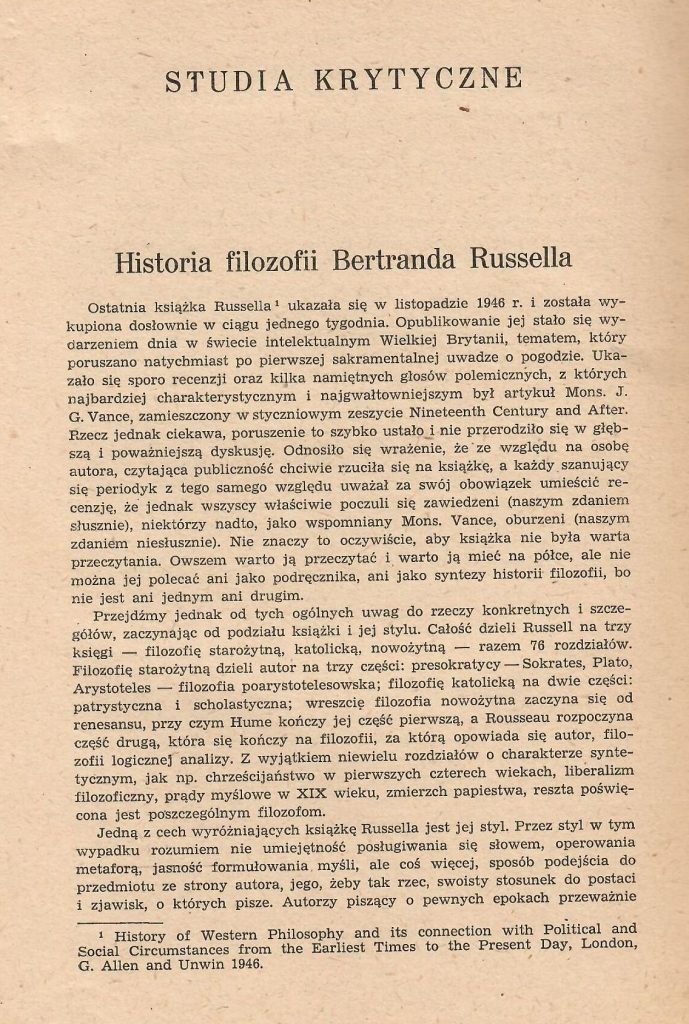
Marian Heitzman (1899-1964) was not a philosopher of a similar recognition to Lutosławski, he was an expert in Renaissance philosophy and in F. Bacon. His views on Russell’s History were published as an extensive review study in the oldest Polish philosophical journal „Philosophical Review” [Przegląd Filozoficzny]. His general opinion on Russell’s book was the following: “it is worth to read the book and it is worth to have it on a bookshelf, but it cannot be recommended as a handbook or a synthetic study of the history of philosophy”. He appreciated Russell’s style and his „humour coloured by a bit of Volterian scepticism”. His focus was Renaissance philosophy, but he remarked on many deficiences in Russell’s chapters on ancient topics. For example, the missing or too shortly discussed subjects, according to Heitzman, included Gorgias, Zeno and the logic of the Stoics. Although Russell intended to emphasise issues in political and social philosophies, in Heitzman’s eyes he missed the cosmopolitanism of the Cynics and misrepresented the problem of the Sophists and democracy. Finally, Russell aimed to present various philosophers as the effects of their social conditions, but he failed to illustrate this with Antisthenes of Athens (not an Athenian citizen) and his philosophy of cynicism.
Conference Annoucement!

As we have already informed, AΦR co-operates with the Faculty of Philosophy, University of Hradec Králové (FF UHK), in a project titled Oral History and the Classics.
One of the acitivities of the project team, led by prof. Jaroslav Daneš, Ph.D., is organising an international conference in Hradec Králové, which will be held on June 1st-3rd, 2024. The title of the conference is: Classics: the Past, the Present, and the Future. “Classics”, certainly, includes the history of research on ancient philosophy and its reception. Deadline for submissions is in March and the keynote speakers are professors Frisbee Sheffield, Neville Morley, Sophie Mills, Filip Karfík, and Cinzia Bearzot.
The most up to date information on the conference is available on the conference website: memoryclassics.eu
Late submissions will still be considered!!!
This post will be updated.
Recent commentaries