A Member of AΦR Received a NAWA Scholarship
Mariam Sargsyan, already a member of the AΦR research group and a grantee in National Science Centre (NCN) project on Henryk Jakubanis (Генрих Якубанис: 1879–1949) and his works on ancient Greek philosophy, has recently received a scholarship from NAWA (Polish National Agency for Academic Exchange). The programme’s name is NAWA Preludium Bis 2 and it is intended exclusively for doctoral students working under NCN projects in doctoral schools. The aim of NAWA Preludium Bis 2 programme is to support international mobility of doctoral students by enabling them to gain academic experience in international research centres.
Considering the topic of M. Sargsyan’s dissertation, H. Jakubanis, a scholar whose career started successfully in Saint Vladimir Imperial University of Kyiv, at first she intended to spend her internship in Kyiv, in Taras Shevchenko National University of Kyiv. After the Russian invasion on Ukraine, unfortunately, her research stay there turned out to be impossible.
In these circumstances the plans had to change and eventually M. Sargsyan’s scholarship will be spent in Germany, at the Martin Luther University in Halle, and to be more precise, at the Aleksander Brückner Centre for Polish Studies (ABZ), from April to July 2023. Scholars connected to ABZ research both historical and present-day developments in Polish politics, society, language, and culture in multidisciplinary perspective. Professor Yvonne Kleinmann, who is the Head of ABZ, agreed to be an academic supervisor of M. Sargsyan’s scholarship.
The main goal of M. Sargsyan’s internship is to research historical and cultural circumstances of Jakubanis’ life and to enrich her thesis with literature hardly available in Poland. It will significantly contribute to producing a comprehensive biographical, historical and philosophical study of this historian of philosophy.
The list of M. Sargsyan’s tasks in Halle includes: preparation and presentation of a paper at the Colloquium of East-European History (Interdisziplinäres Kolloquium Osteuropäische Geschichte / Polenstudien) and participation in the activities of ABZ.
A Paper on Vilnius’ Plato Scholar in a Lithuanian Journal
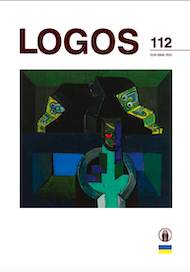
In “Logos” (issue 112), a Lithuanian journal, a paper was published on Józef Jeżowski (1793-1855) and his assessment of a Russian translation of Plato’s Laws. Subtitle of the paper, Classics scholar from Vilnius and his Plato between Germany and Russia, or Italy and Lapland, stems from Jeżowski’s deliberations on the future of classical and Platonic studies on the outskirts of Europe.
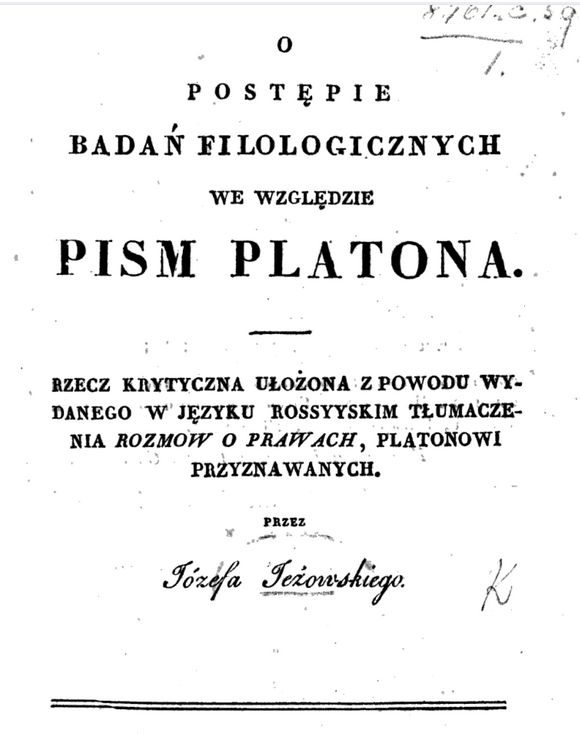
Who was Jeżowski? A partly forgotten figure among excellent scholars in the humanities, who were affiliated to Vilnius University in the first decades of the 19th century, an expert in classical languages and literatures, a scholar recognised for his edition of Horace’s Odes, an outstanding student of G. E. Grodek, moreover, a founding member of the Philomath Society, and a friend of A. Mickiewicz. Considering today’s political borders, his life’s path encompassed three countries, Lithuania, Russia and Ukraine, though in the 19th century Jeżowski was a Pole and a citizen of Russian Empire.
In a word, Jeżowski’s assessment of a translation of Plato’s Laws, produced by a Russian scholar, V. Obolensky, was not favourable, though somewhat superficial. Jeżowski, however, was rather focused on expressing his neo-classical manifesto rather than on a fair and insightful evaluation of the Russian text. His work bore a long title, which could be translated as follows: On the Progress of Philological Research Concerning the Writings of Plato. A Critical Piece, Composed Due to a Publication of the “Dialoues on the Laws”, Attributed to Plato. This study was actually addressed to Polish reading audiences, yet it was published in Moscow in 1829, during his years of exile in Russia. Jeżowski’s most important argument in his criticism was a complete lack of Obolensky’s references to German scholars, whose merits were considered by Jeżowski too significant to be passed over in silence. In his criticism, he was nevertheless optimistic, hoping that even in the most inhospitable circumstances it is possible for the humanities to flourish, and hard work can transform Lapland-like academic desert of Russia into blossoming Italy-like scenery, to which he compared German scholarship.
Considering the fact that Jeżowski was born in Uman and died in vicinity of Kaniv, both places being located in today’s Ukraine, and considering present war, Russian aggression on Ukraine, the paper was dedicated by the author to his fellow Ukrainian historians of philosophy.
A Cooperation in a Research Project with the University of Hradec Králové

In January 2023 at the Faculty of Philosophy University of Hradec Králové (FF UHK) a new research project starts. It is one of the winners of the Internal Grant Competition of FF UHK for International Research Teams. The aim of this competition was to stimulate and develop international research collaboration of FF UHK scholars with partners abroad.
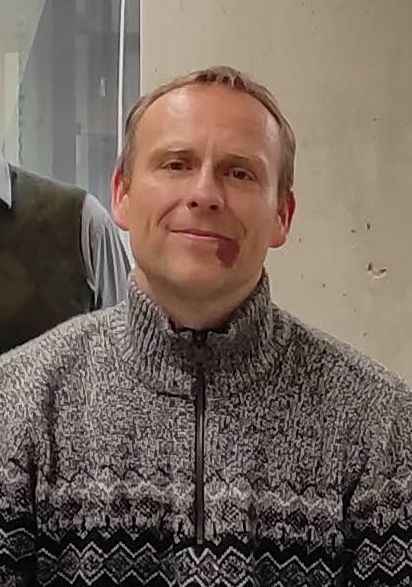
Principal investigator in the project is doc. Mgr. Jaroslav Daneš, Ph.D. who works as an associate professor in the Department of Philosophy and Social Sciences (FF UHK). His research interests include ancient Greek political theories, esp. theory of war in philosophy and tragedy, and related issues. Doc. Daneš has visited Institute of Philosophy, University of Zielona Góra, several times on various occasions (as Erasmus+ teacher, as a conference participant, and recently as a member of an academic committee of the International Workshop for Doctoral Students in Philosophy).
The title of doc. Daneš’ project is Oral History and Classics. In short, the project aims to record and collect individual histories of European classical scholars from various countries, including those who devoted their careers to researching ancient philosophy, and thus to uncover the history of this discipline in the experience of scholars. A database of interviews with distinguished scholars will be assembled and subsequently analysed to reveal the connections between personal histories and the history of the discipline, including historiography of ancient philosophy. A Polish collaborator of doc. Daneš in this project is Tomasz Mróz (UZ), whose share in project is estimated as 30%.
International Workshop for Doctoral Students with participation of AΦR
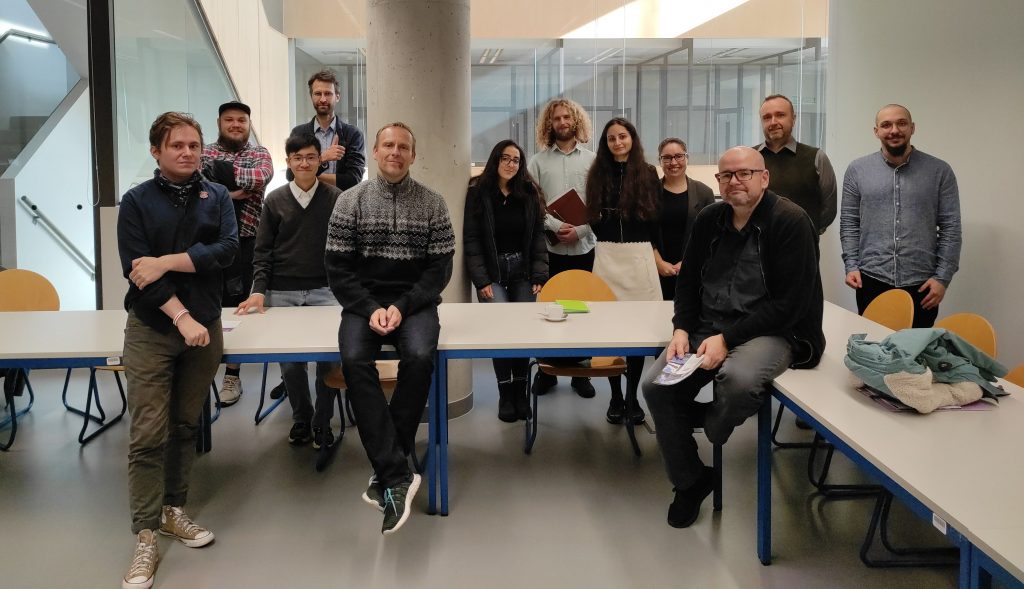
On Oct. 17th, 2022, International Workshop for Doctoral Students in Philosophy was held at the University of Zielona Góra (UZ). The meeting was organised by the Institute of Philosophy (UZ: Tomasz Mróz, Paweł Walczak) in cooperation with Faculty of Philosophy, University of Hradec Králové (UHK: Jaroslav Daneš, Michal Rigel), with a participation of the Doctoral School of Humanities and Social Sciences (UZ). Workshop took place in one of the seminar rooms in the University’s Library. The leaflet of the session’s schedule can be downloaded here. The workshop was held under the auspices of His Magnificence Rector (UZ), prof. dr hab. Wojciech Strzyżewski. The meeting was opened by the Deputy Rector for Science and International Cooperation (UZ), dr hab. inż. Marcin Mrugalski. Then the opening addresses were delivered by dr hab. Anna Wojciechowska (Head of the Doctoral School of Humanities and Social Sciences, UZ) and dr hab. Justyna Kroczak (Deputy Head of the Institute of Philosophy, UZ).
The schedule of the session was filled by the doctoral students’ papers, with a small representation of M.A. students, who presented central questions, hypotheses, and provisional structures of their dissertations. It was very interesting to learn the great variety of topics that attract attention of the young scholars nowadays, and to compare different methods and approaches applied in their research works. The topics included relations between ethics and various theories of evolution (Wai Fung Leung, UHK), comparison of Locke’s and Marx’ political theories (Vadzim Antsipau, UZ), study on Adorno’s negative dialectics (Hynek Kaplan, UHK), and an analysis of modern digital challenges for humanity (Doruk Kaynak, UHK).
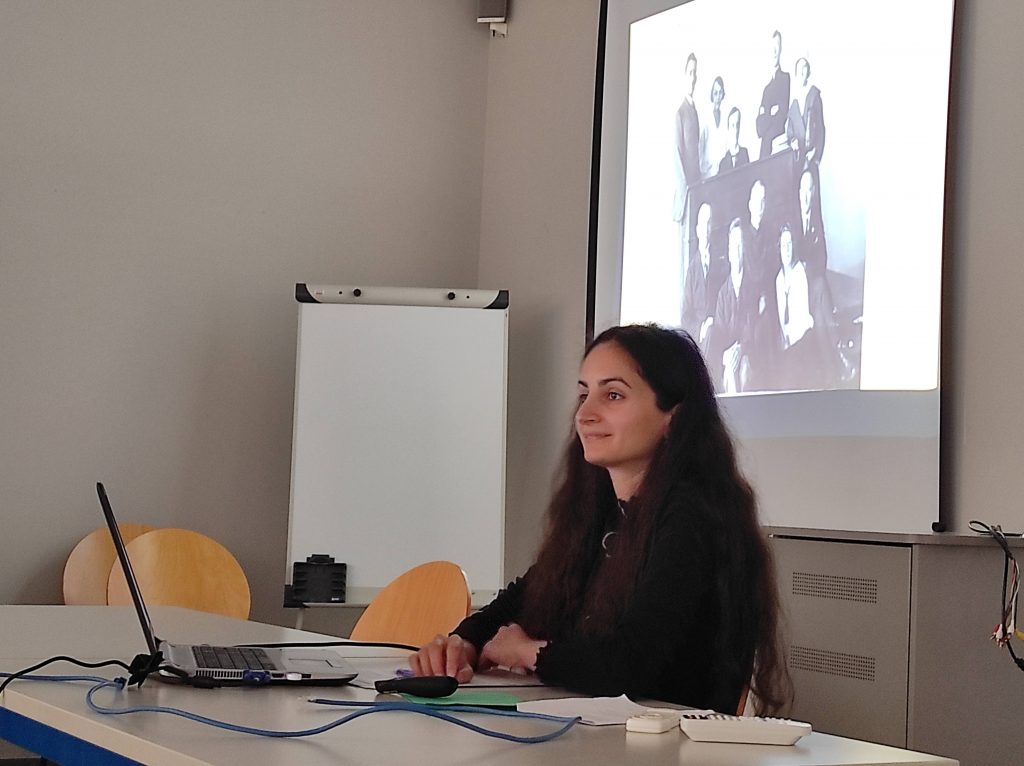
Two members of AΦR research group presented their papers, and at the same time sketched their dissertation plans. Mariam Sargsyan discussed her doctoral subject, that is, Henryk Jakubanis (1879–1949) as a Researcher of Ancient Philosophy and Its Reception. Her synthetic study will consist of a research of Jakubanis’ biography, works and his significance as a historian of philosophy. A display of some archival findings was an additional value of M. Sargsyan’s presentation.
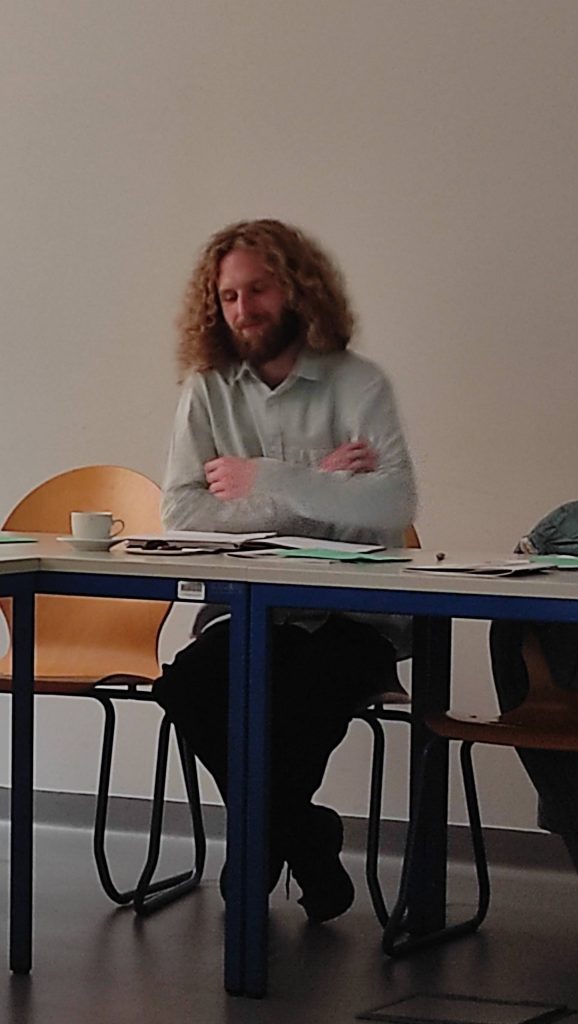
Adrian Habura’s paper was titled Aristotle as an inspiration and research subject of Władysław Tatarkiewicz (1886-1980). He presented his conclusions resulting from a detailed research in Tatarkiewicz’s writings. One of them was regarding Aristotle as the most important philosophical inspiration of Tatarkiewicz (or at least one of the most important). Habura pointed to a relations between Tatarkiewicz’s interpretation of Stagirite’s philosophy and his own philosophical investigations in the field of methodology, theory of cognition, axiology, ethics, and aesthetics. In all these fields of Habura discovered Aristotelian influences on Tatarkiewicz.
The audience consisted of the representatives of UHK & UZ, including the faculty and collaborators of the Institute of Philosophy (UZ), and Erasmus exchange students. It was a truly international meeting, in spite of the fact that the participants represented only two academic centres, for the origins of the speakers and members of the audience ranged from Czech and Polish to Chinese, Belarussian, Armenian, Turkish & Italian. At first glance, it seemed that the topics were extremely diverse, but at the end of the workshop and during informal meetings participants continued to discuss their topics. The workshop, thus, allowed the people of diverse backgrounds to meet each other and confront their ideas of doing philosophy, which is always inspiring and fruitful.
A more detailed presentation of the workshop in Polish, by A. Habura, has already been published in a monthly magazine of UZ (November [=Listopad] 2022) and available here, (pp. 38-39).
Two Members of AΦR at the Second Congress of Polish Philosophy
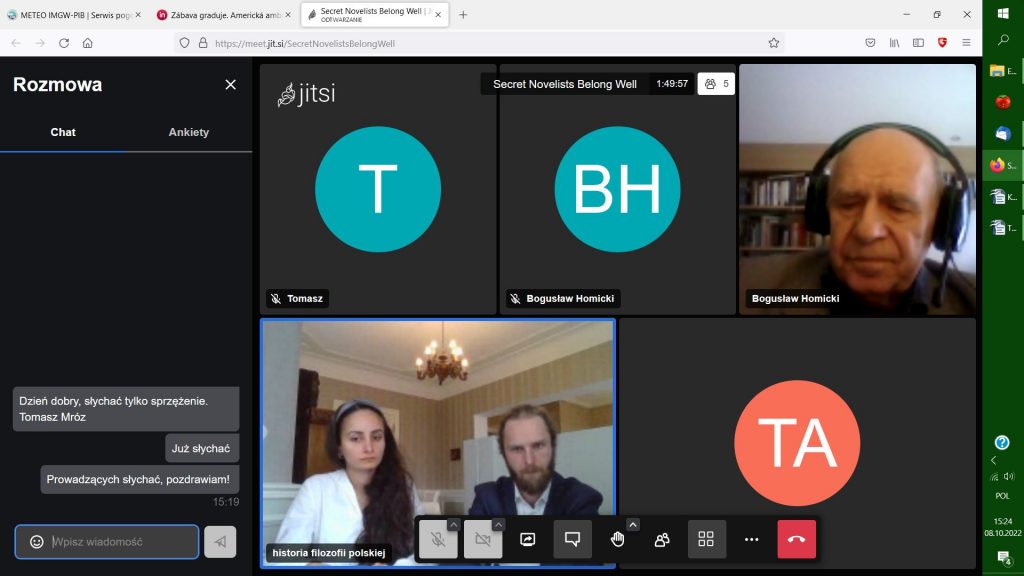
On October 7th-10th 2022 the Second Congress of Polish Philosophy took place in the Palace in Orla. Congress was held both on site and online. The organising institution of the Congress was the Chair of Philosophy (Department of History, University of Opole). The aim of this event was to research and develop Polish philosophical traditions. AΦR group members delivered their papers in the section devoted to the history of Polish philosophy.
The first lecture by an AΦR group member was titled Władysław Tatarkiewicz between Good and Happiness and was delivered by Adrian Habura. His paper was focused on axiological and ethical investigations of Tatarkiewicz in the years 1919-1947, and especially on his inaugural lecture On the Dual Understanding of Moral Act, which was delivered in October 1919 at the Stefan Batory University in Vilnius. Habura’s aim was to sketch the lines of development in Tatarkiewicz’s ethical investigations from the Good, as a topic of his postdoctoral dissertation (1919), to the happiness, from the book Analysis of Happiness (1947).
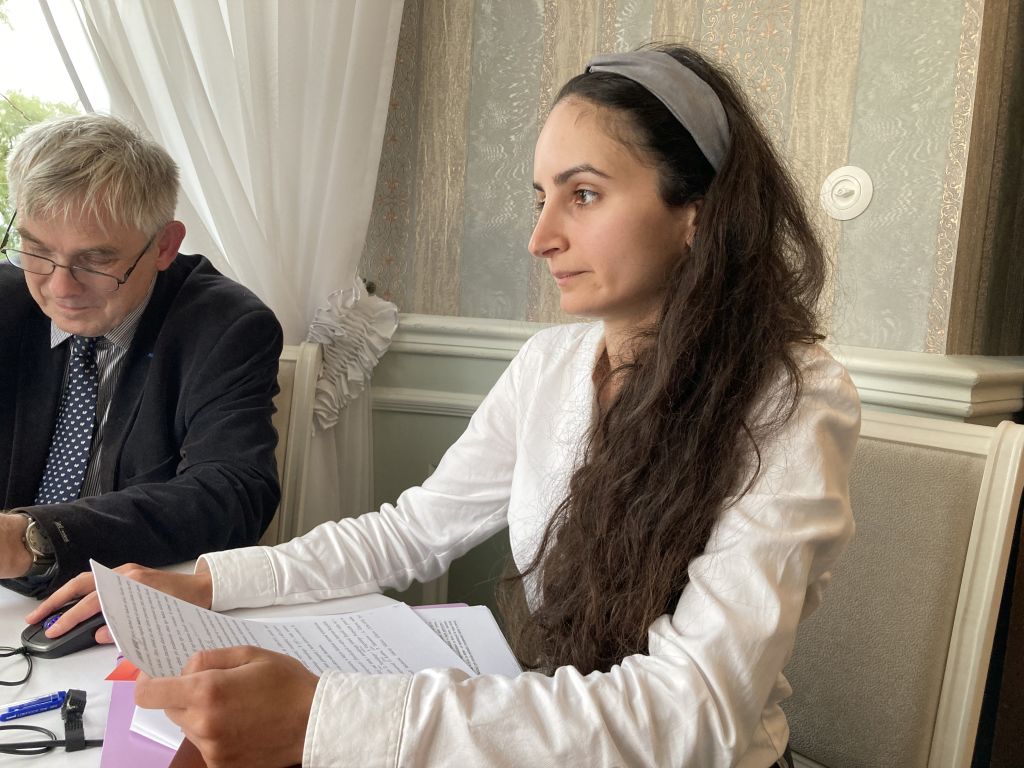
It was, however, only the second paper by an AΦR group member, which was devoted to the reception of ancient philosophy. It was Mariam Sargsyan’s presentation on Henryk Jakubanis, a Polish historian of Greek philosophy. The presentation’s title was Henryk Jakubanis (1879-1949) – a historian of Greek philosophy between Kyiv and Lublin.
The intellectual biography of this historian of philosophy is usually divided into two periods: Kyiv (1897-1922) and Lublin (1922-1949). The aim of Sargsyan’s paper was to present vita of Jakubanis considering both periods of his life and work. Lublin period is quite well known to Polish authors, but the significance of the Kyiv period remains unclear. In Lublin, Jakubanis headed the Department of Classical Philology and then the Department of Philosophy at the University of Lublin, which later became the Catholic University of Lublin.
It was, however, the Kyiv period which was the productive part of Jakubanis’ life, because in Kyiv he wrote his most important works: a book on Empedocles, consisting of a historical and philosophical study and a translation of the collected fragments of this thinker into Russian. Moreover, a series of articles on the significance of ancient philosophy, on the history of syllogism and on the relations between the ideas of Plato and Schiller, were composed by Jakubans in Kyiv. Sargsyan’s paper presented unknown facts from the biography of this historian of philosophy and discussed his works from the Kyiv period, which are usually barely mentioned.
Delivering their papers at the Congress was an important experience for both young researchers and it helped them develop their skills, not to mention social advantages of face to face scholarly meetings.
A Monograph Book on Stanisław Lisiecki (and his Plato)
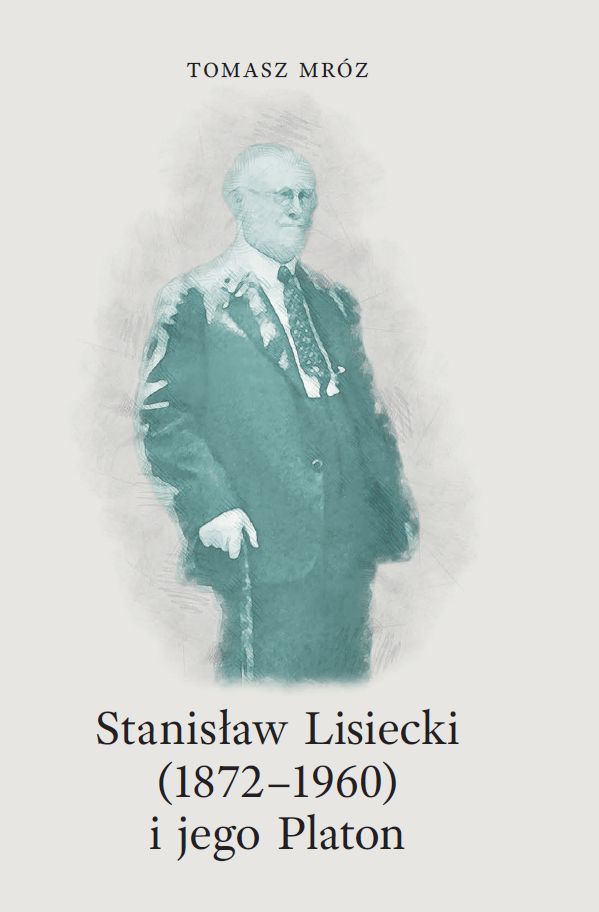
In a book series published by Marek Derewiecki a new volume has appeared. T. Mróz is the author and the title of the book is Stanisław Lisiecki (1872-1960) and His Plato (pp. 150). This book is a second one in the series and it complements volume one, which consisted mostly of unpublished materials produced by S. Lisiecki during his long and laborious life.
Apart from the foreword and concluding remarks, the book is divided into two main parts. The first part presents Lisiecki’s biography as fully as it has never been presented before. Numerous sources from the archival and manuscript collections from the libraries of Warsaw and Cracow were deployed to compose this chapter. Private, family materials were also used, including the photograph inside the book, an essential part of which was artistically remade to depict Lisiecki on the cover. His biography was divided into three chapters, which are separated from each other by two important facts in his life: leaving the clergy in 1921 and the outbreak of the World War II in 1939. The longest chapter is the middle one, between these two dates, because it was Lisiecki’s most productive period and it was possible to use numerous testimonies to document it.
Part two of the book discusses Lisiecki’s interpretation of Plato’s philosophy and its development. This part is divided into three parts as well. It presents Lisiecki’s views on the philosophical and spiritual evolution of Plato in three stages: Plato as a Socratic thinker, Plato in his mature works and Plato as an old sage. It was not possible to present Lisiecki’s views on all the important dialogues, for example on the Symposium or the Phaedrus, because his legacy is fragmentary and his comprehensive synthetic study on Plato had been destroyed during the war. Nevertheless, Plato in Lisiecki’s views is a half-religious thinker, an inspired poet and a visionary, whose creative personality was most fully expressed in his theory of the Good. The Good was sometimes identified by Lisiecki with God or with Providence and it transgressed dialectical formulation. Although Plato’s theory of reincarnation was assessed by Lisiecki as going too far, he found in it a consolation and an explanation of many phaenomena, for example, the inequality of talents among people.
Despite his admiration for Plato, Lisiecki did not avoid criticising him. Plato was for him a topical thinker and his dialogues – an intellectual challenge. We may say that Lisiecki, as many before him, was carried away by Plato’s enthusiasm, but he never lost sight of the deficiencies of Platonism.

This book is the final result of the research project on S. Lisiecki as a researcher of ancient Greek philosophy, sponsored by National Science Centre.
Plato Between Poland and Marburg
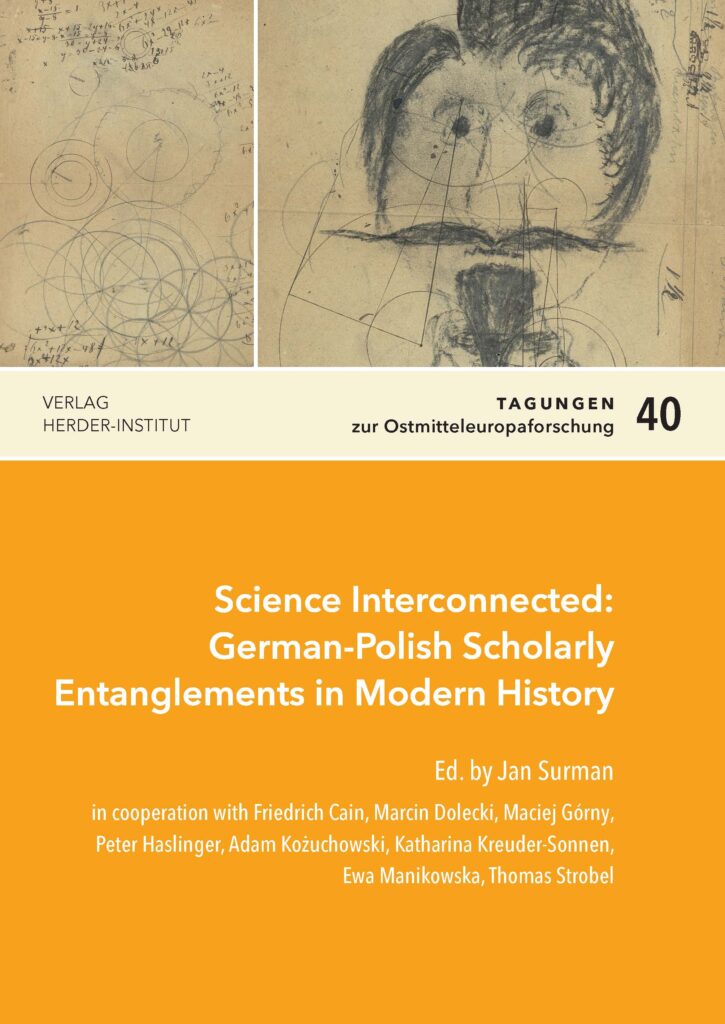
A paper by Tomasz Mróz, Studies on Plato at the Turn of the 20th Century: A Case of Polish-German Cooperation, was published in a collective volume titled Science Interconnected: German-Polish Scholarly Entanglements in Modern History (ed. Jan Surman et al., “Tagungen zur Ostmitteleuropaforschung” 40, Verlag Herder-Institut, Marburg 2022).
A fine and instructive episode of German-Polish cooperation, announced in the title of the paper, involved three philosophers and historians of philosophy: a German, Paul Natorp (1854-1924), and two Poles, Wincenty Lutosławski (1863-1954) and Władysław Tatarkiewicz (1886-1980).
For decades Marburg philosophers in general, and P. Natorp in particular, had a vivid interest in Plato. Natorp’s book, Platos Ideenlehre. Eine Einführung in den Idealismus (1903), is an important point in the history of interpretations of Plato and is still referred to by contemporary Plato scholars. At the time of publishing of Natorp’s book, W. Lutosławski already had an established reputation of Plato scholar, for his book, Origin and Growth of Plato’s Logic with an Account of Plato’s Style and of the Chronology of his Writings (1897), had incited international debate on the chronological order of Plato’s dialogues anew. Both scholars exchanged letters and Natorp allowed Lutosławski to read chapters of his soon-to-be-published book, the conclusions of which were to some extent concurrent with Lutosławski’s interpretation of the theory of ideas. Both scholars rejected traditional, rooted in Aristotle, understanding of the ideas’ existence.
W. Tatarkiewicz was a generation younger than the two scholars. As a young student of philosophy he arrived in Marburg to write his dissertation, and though its topic was Aristotle, the Marburg Plato was an important part of his curriculum. His dissertation was supervised by Hermann Cohen (1842-1918) and Natorp. One of the first Polish papers of Tatarkiewicz, published after his Ph.D, was devoted to his Marburg teachers’ interpretation of Plato to which he adhered (1911). Two decades later, when his History of Philosophy appeared in print (1931), he still considered Natorp’s book on Plato to be one of the essential works for Plato scholars.
What should be remarked, relations between German and Polish Plato researchers were in this case devoid of national prejudices and it was also a rare example of an influence exerted by Polish philosopher on a German peer scholar, for it was thanks to Lutosławski that Natorp pursued research on the chronology of Plato’s dialogues and publihed a series of papers on this topic. Tatarkiewicz, in turn, as he himself declared, owed his lasting research interest in the history of philosophy to his Marburg teachers.
To receive a pdf copy of this paper, do not hesitate to email the author: T.Mroz@ifil.uz.zgora.pl
Recent commentaries