Home » Posts tagged '2023' (Page 2)
Tag Archives: 2023
A Presentation on H. Jakubanis in Halle
On April 26, 2023, Mariam Sargsyan gave a talk at the Colloquium of Aleksander-Brückner-Zentrum für Polenstudien & Professur für Osteuropäische Geschichte in the Martin Luther University Halle-Wittenberg. The title of her presentation was: From Student at the Russian Imperial University in Kyiv to Respected Professor at the Catholic University in Lublin: The Career of Henryk Jakubanis, 1879–1949.
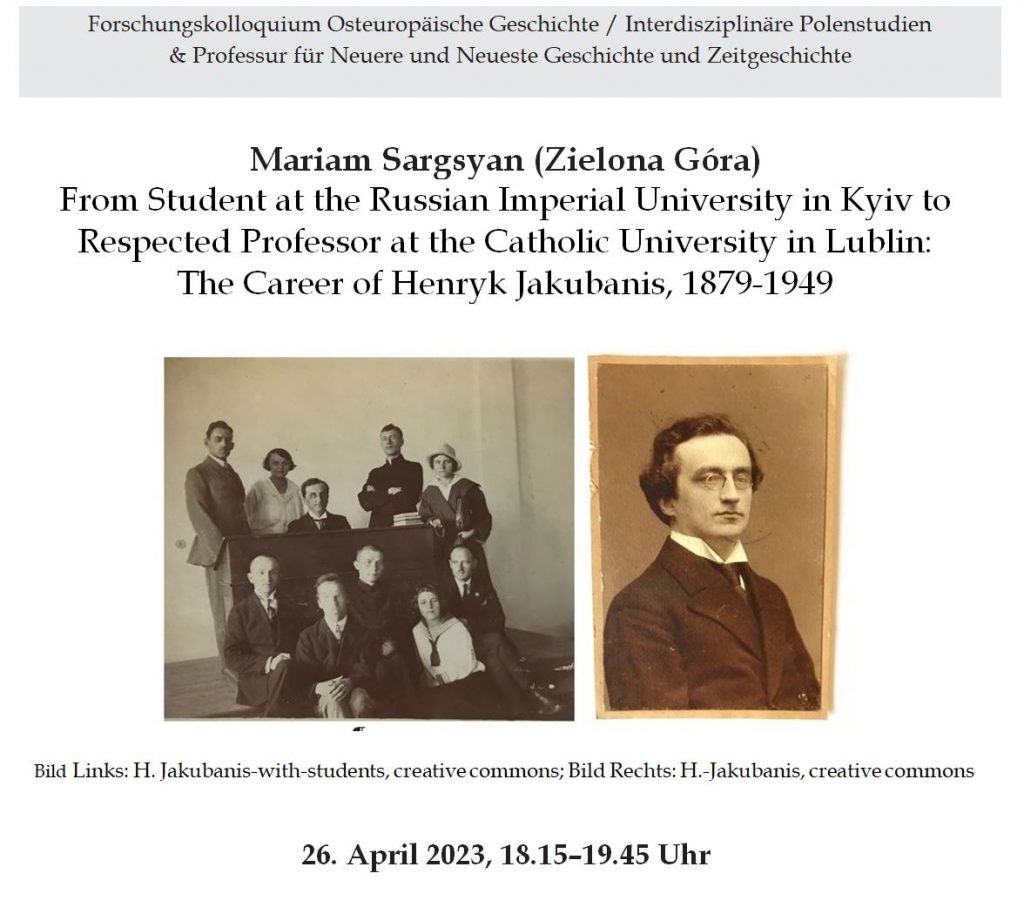
It was an important experience for M. Sargsyan to present a substantial part of her doctoral research, that is, the biography and major works of H. Jakubanis, to an audience consisting mostly of historians and not philosophers or historians of philosophy, and to receive their feedback and questions. The presentation, in addition to the highlights of Jakubanis’ life and career, included historical facts about Kyiv University, the 1st and 2nd World Wars, and peculiarities of academic life in pre-war Kyiv and post-war Lublin. The philosophical works of H. Jakubanis were also briefly discussed.
Results presented by M. Sargsyan, for example, approaching Jakubanis’ biography from the basically historical point of view, was in larger part an outcome of her NAWA scholarship at MLU Halle and her co-operation with the colleagues from Alexander-Brückner-Zentrum. It was an opportunity for her to take an attempt to compare life paths of Jakubanis with other imperial biographies, although at the moment it is impossible to research Kyiv archives.

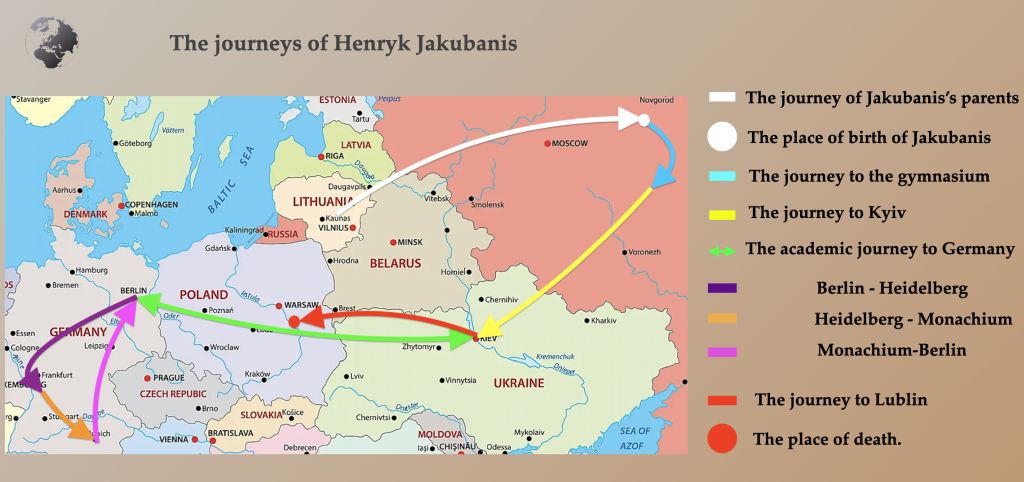
The audience at M. Sargsyan’s paper asked questiones on a variety of topics: the academic identity of H. Jakubanis, was he a classics scholar, a philosopher, a historian of philosophy, or an academic teacher. The question of the connection and relationship between H. Jakubanis and his supervisor, Alexei Gilarov (1856-1938), turned out to be interesting as well, for Gilarov had a significant influence on Jakubanis and his methods in historiography of philosophy, on his lecturing at the university, but at a certain moment, their paths diverged. Jakubanis’ relations with Tadeusz Zieliński (1859-1944), who had not spared benevolent gestures to his younger colleague, turned out to be particularly interesting for the audience. Methodological questions appeared as well and they concerned a possible reconstruction of Jakubanis’ academic contacts in a form of a network. What proved to be attractive for the audience was the graphic depiction of Jakubanis’ journeys.
To sum up, M. Sargsyan’s presentation was informative for the public and beneficial for further development of her own research.
Erasmus Teaching Visit in Vilnius University
In April, 18th-22nd, 2023, Tomasz Mróz enjoyed his third Erasmus teaching visit in Faculty of Philosophy, Vilnius University.
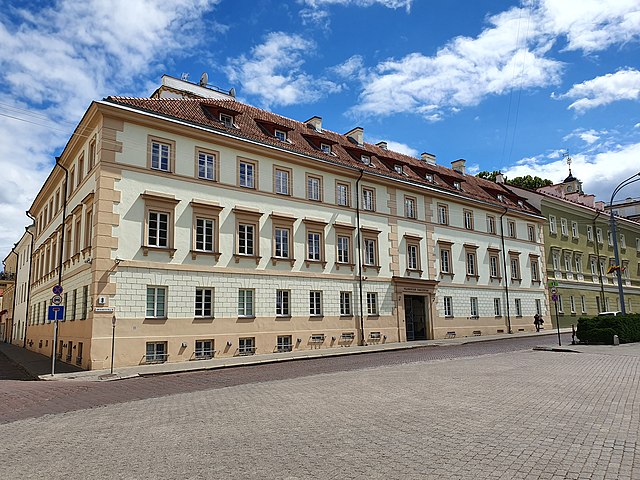
Vilnius University is a unique research and teaching institution in Central-Eastern Europe. It has a long and sometimes turbulent Polish-Lithuanian history. Some of the lectures delivered by T. Mróz to philosophy students in Vilnius concerned a part of this history and, naturally, reception of ancient philosophy.
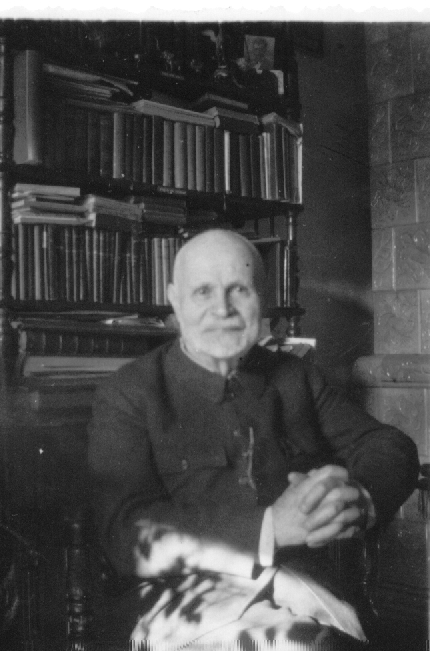
One of the lectures discussing the issues of ancient philosophy reception had Wincenty Lutosławski (1863-1954) as its topic. The focus was on his Vilnius period and his vision of a philosophical development of Plato from idealism to spiritualism. Since Lutosławski considered Polish Romantic Messianism to be founded on spiritualism, consequently he could consider this unique tradition to be rooted in Plato, who was presented by Lutosławski as an ancient philosophical predecessor of Polish 19th century literary and philosophical tendency.
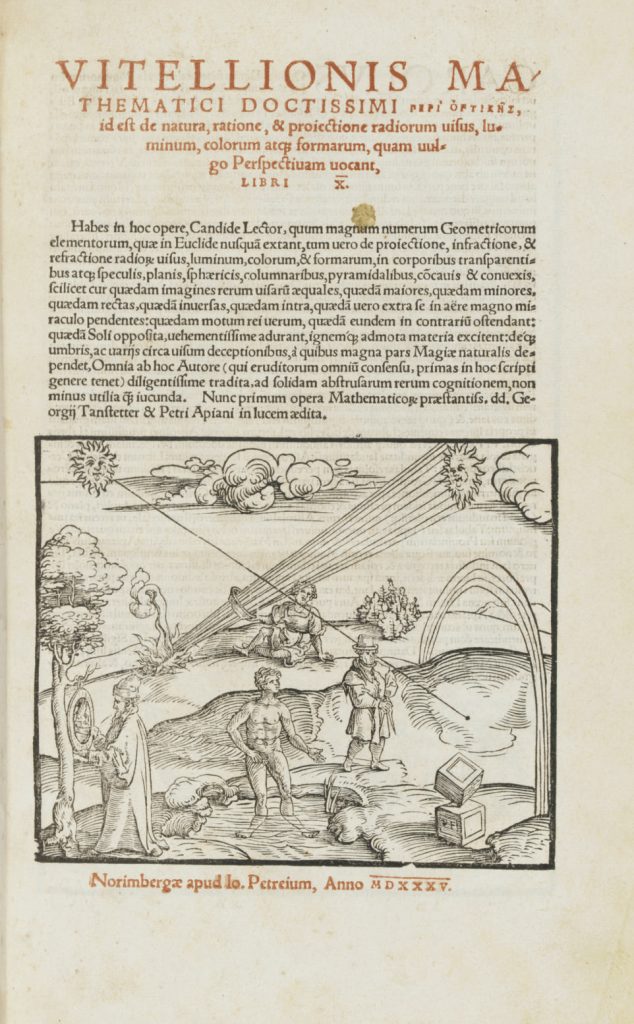
Another lecture in which ancient philosophy reception appeared was devoted to Vitello (ca. 1230-1300?) and his theoretical reflection on the nature of the daemons. Vitello’s demonology stemmed from his research in natural sciences and it employed neo-Platonic and Aristotelian elements, such as a belief in a mathematical structure of the universe and the theory of four elements. Vitello’s philosophical investigations were presented against the background of the 13th century developments in philosophy.
Teaching duties were supplemented with meetings with the Faculty members and discussions on the plans of a future co-operation activities between philosophers of Vilnius University and University of Zielona Góra.
A Member of AΦR Received a NAWA Scholarship
Mariam Sargsyan, already a member of the AΦR research group and a grantee in National Science Centre (NCN) project on Henryk Jakubanis (Генрих Якубанис: 1879–1949) and his works on ancient Greek philosophy, has recently received a scholarship from NAWA (Polish National Agency for Academic Exchange). The programme’s name is NAWA Preludium Bis 2 and it is intended exclusively for doctoral students working under NCN projects in doctoral schools. The aim of NAWA Preludium Bis 2 programme is to support international mobility of doctoral students by enabling them to gain academic experience in international research centres.
Considering the topic of M. Sargsyan’s dissertation, H. Jakubanis, a scholar whose career started successfully in Saint Vladimir Imperial University of Kyiv, at first she intended to spend her internship in Kyiv, in Taras Shevchenko National University of Kyiv. After the Russian invasion on Ukraine, unfortunately, her research stay there turned out to be impossible.
In these circumstances the plans had to change and eventually M. Sargsyan’s scholarship will be spent in Germany, at the Martin Luther University in Halle, and to be more precise, at the Aleksander Brückner Centre for Polish Studies (ABZ), from April to July 2023. Scholars connected to ABZ research both historical and present-day developments in Polish politics, society, language, and culture in multidisciplinary perspective. Professor Yvonne Kleinmann, who is the Head of ABZ, agreed to be an academic supervisor of M. Sargsyan’s scholarship.
The main goal of M. Sargsyan’s internship is to research historical and cultural circumstances of Jakubanis’ life and to enrich her thesis with literature hardly available in Poland. It will significantly contribute to producing a comprehensive biographical, historical and philosophical study of this historian of philosophy.
The list of M. Sargsyan’s tasks in Halle includes: preparation and presentation of a paper at the Colloquium of East-European History (Interdisziplinäres Kolloquium Osteuropäische Geschichte / Polenstudien) and participation in the activities of ABZ.

Recent commentaries