Home » Posts tagged 'S. Lisiecki' (Page 2)
Tag Archives: S. Lisiecki
History of Philosophy in Poland in Martin-Luther-Universität Halle
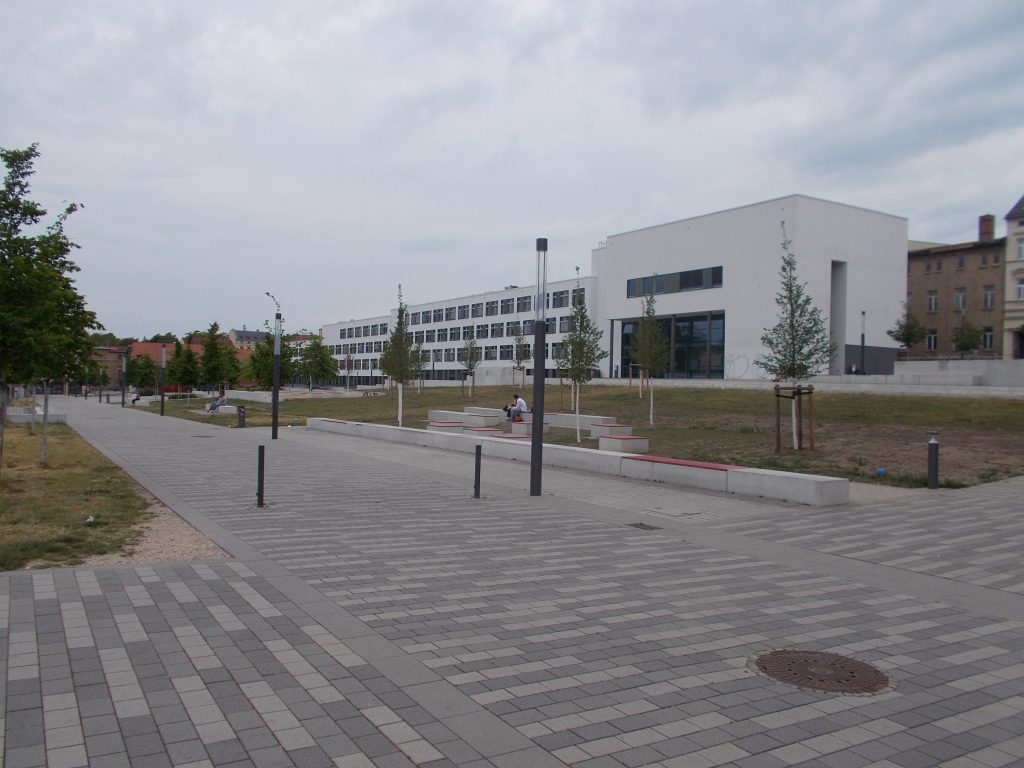
Selected Topics in the History of Philosophy in Poland was the title of the course, which was delivered in May and June 2022 by Tomasz Mróz for the students of Martin-Luther-Universität (MLU) Halle in the building of the Steintor Campus (on the left). T. Mróz was appointed at MLU as Gastprofessor (funded by Deutscher Akademischer Austauschdienst DAAD) for a month at the Aleksander-Brückner-Zentrum für Polenstudien (Institut für Geschichte).
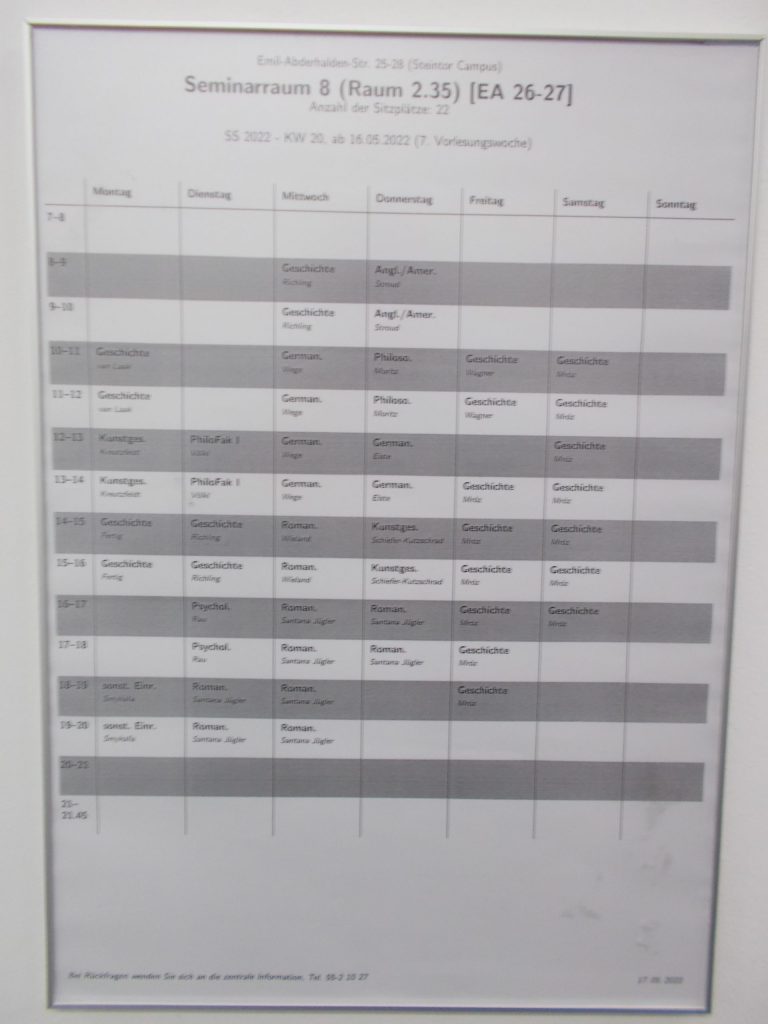
The course had a form of “Blockseminar” meetings and consisted of lectures, seminars and students’ presentations, focusing on various ideas, currents and problems in the history of philosophy in Poland. A course like this could not, obviously, do without a closer insight into some issues of ancient philosophy reception. For example, reception of Aristotle’s philosophy of nature in Vitello’s theory of demons and Pythagorean and Platonic inspirations in Copernicus were discussed. During one of the final lectures the problems of Plato reception in Poland were presented, as they were previosuly structured in the book Plato in Poland 1800-1950. The works of the following authors were briefly examined: A.I. Zabellewicz, F.A. Kozłowski, W. Tatarkiewicz, P. Semenenko, B. Limanowski, W. Dzieduszycki, E. Jarra, S. Pawlicki, W. Lutosławski, S. Lisiecki and W. Witwicki.
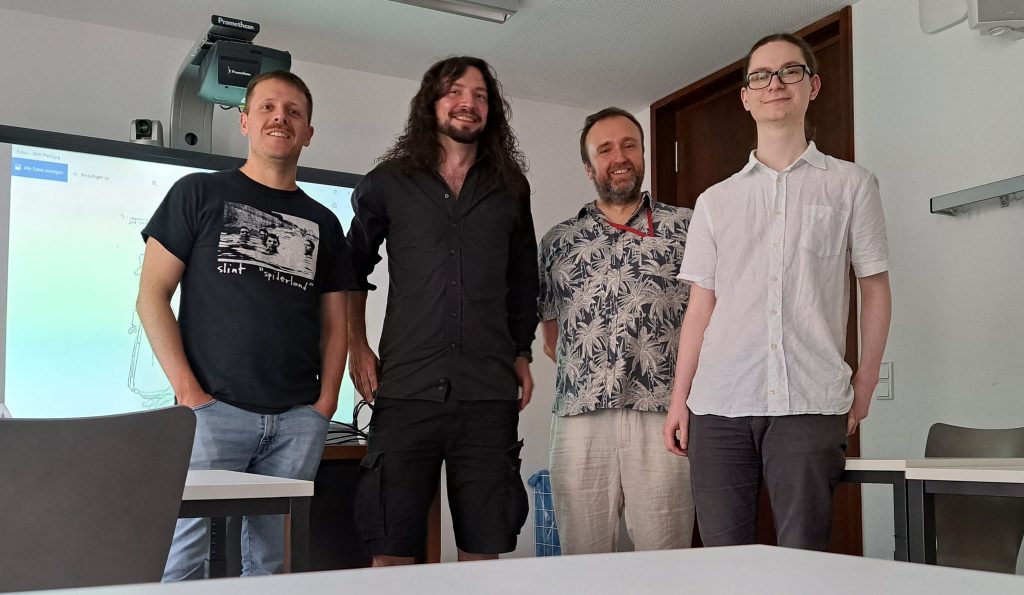
All the students attending the course in Polish philosophy should be thanked for their dilligence, co-operation and their presentations. The lectures, however, wouldn’t have taken place without the granting decision of professor Yvonne Kleinmann, who holds a chair in the East-European history at MLU and is the head of the Aleksander-Brückner-Zentrum für Polenstudien, and without co-ordinating work of doctor Paulina Gulińska-Jurgiel, to both of whom the lecturer is extremely grateful.
Plato’s Adventures with Censorship in Poland
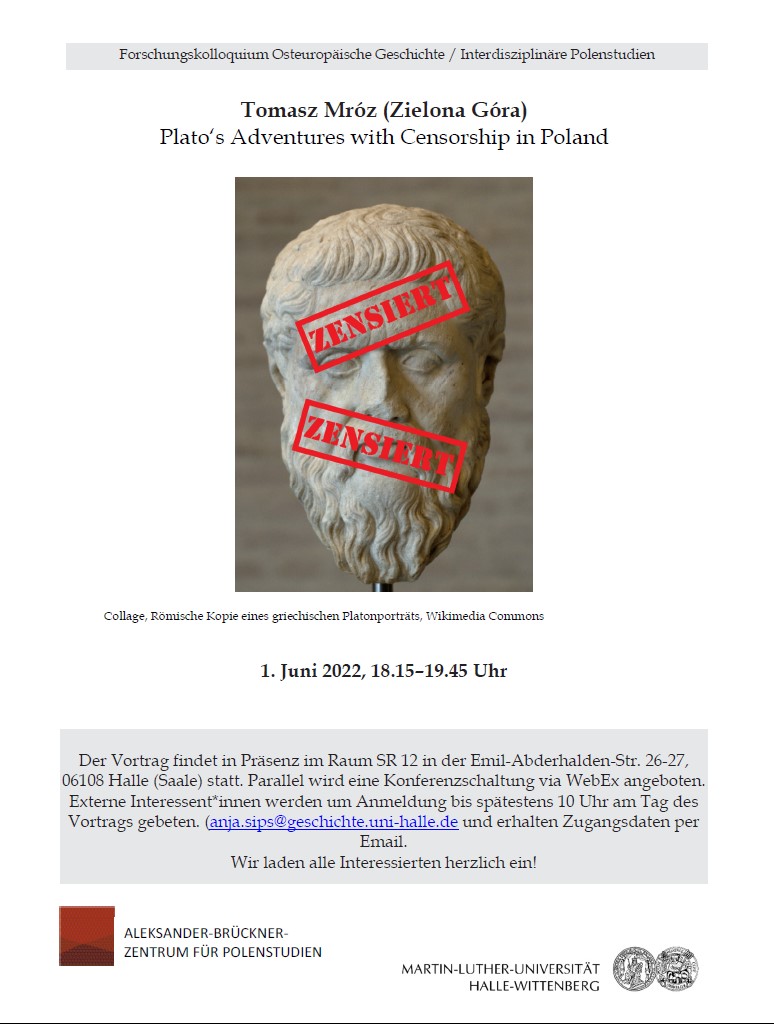
On June, 1st, a talk by Tomasz Mróz was delivered at the Interdisziplinäre Kolloquium Osteuropäische Geschichte / Polenstudien (Martin-Luther-Universität Halle). The topic of the presentation was the interference of various types of (broadly understood) censorship with Plato scholars and research on Plato in Poland. T. Mróz discussed three (and a half) cases of such interference. The talk was a supplemented and developed version of one of Mróz’s previous papers.
The first case of censorship was relatively harmless, for only one word, namely: socialism, was removed from the title of Wincenty Lutosławski’s book, Plato as a Creator of Idealism [and Socialism], (Warsaw 1899). Imperial Russian authorities in Warsaw removed the word “socialism” from the title and from the table of contents, without even looking into the text of his book on Plato, for “socialism” occurs on many pages, being – in Lutosławski’s view, a natural consequence of idealism.
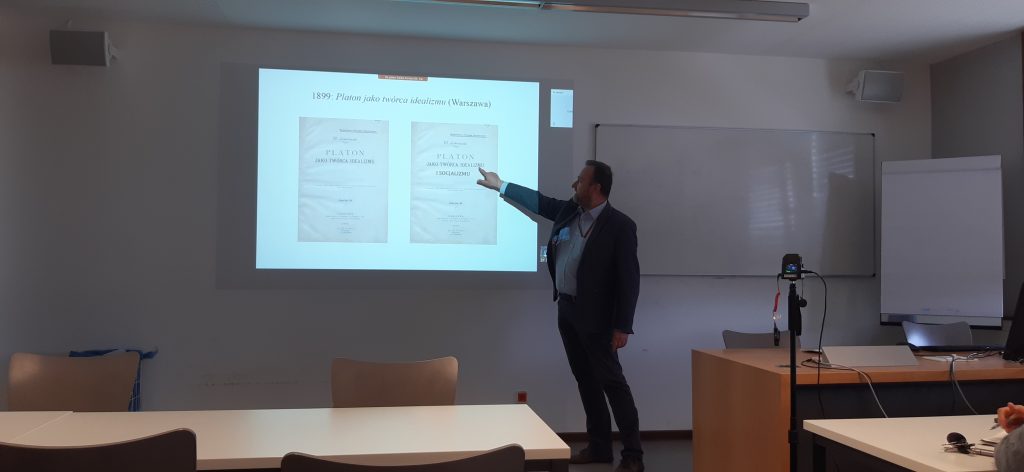
Stanisław Lisiecki represented another case of broadly understood censorship. He was an enthusiast of Plato and a translator of his dialogues, but only his Republic saw the light of day in the interwar period, while all the remaining dialogues were left unpublished in the manuscripts. His leaving the clergy and Roman Catholic church was the most probable the reason of his difficult situation in Polish academia, for some scholars were unable to accept him as a colleague and assess his works without religious prejudice. As a result, his works were not published, but some justice in this regard has been recently done by the members of the AΦR research group.
Władysław Witwicki was more succesful in his translations of Plato’s works. Soon after the Word War II he managed to publish a small book on Plato (Plato as an Educationalist, 1947) and a translation of Plato’s Republic (1948). In the book and in his commentaries to Plato’s text, he compared the post-war reality of Poland and Plato’s political project to a concentration camp, great monastery, or a totalitarian state. Some of his remarks were censored and the second edition of the Republic (1958) appeared in print in an ideologically “corrected” version.
As the additional “half” of the censorship cases, Witwicki’s struggle with his sister, who was a Catholic nun, were presented. She tried to convince him not to criticize Catholicism in his commentaries, but he replied to her with a short comic story depicting his and Plato’s imaginary meeting with her, and Plato’s escape from holy water.
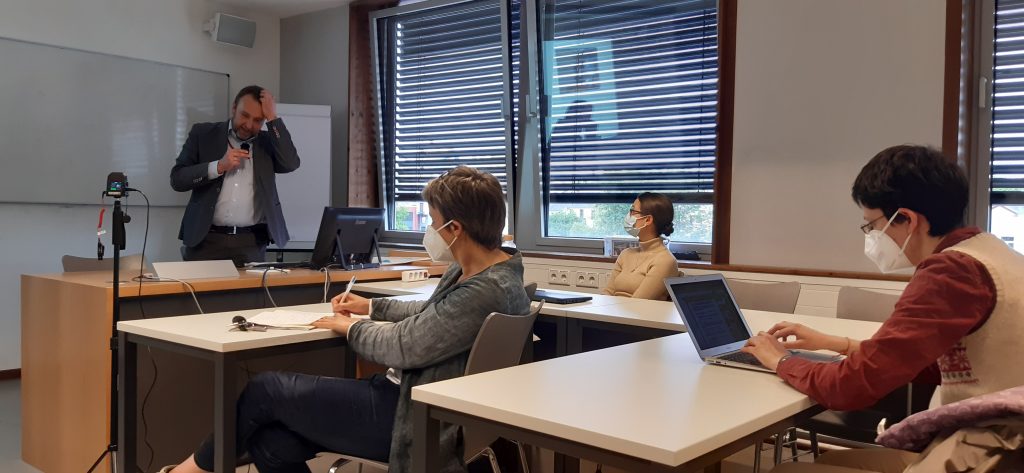
Thanks to the fact that the audience consisted of specialists in East-European history, in philosophy and in the historiography of philosophy, a wide spectrum of questions appeared and the author did his best to satisfy multi-oriented demands of the public.
T. Mróz’s stay in Halle was sponsored by Aleksander-Brückner-Zentrum für Polenstudien from the funds of Deutscher Akademischer Austauschdienst (DAAD).
A Biography of a Classics Scholar: Stanisław Lisiecki (1872-1960)
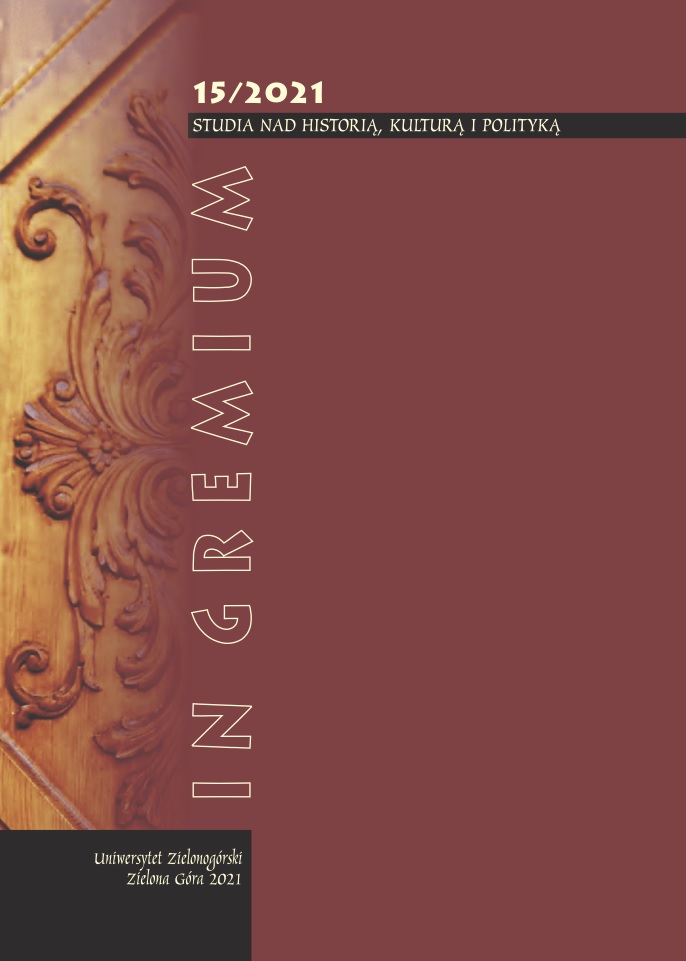
The latest issue of “In Gremium” annual journal (15/2021) includes a paper by Tomasz Mróz who took an attempt to compose a biographical sketch of Stanisław Lisiecki (1872-1960). The course of his life can be reconstructed from scraps of information in letters, official documents and only few printed materials.
This is the most extensive biography of Lisiecki so far and it was based on handwritten documents from the Archive of Polish Academy of Sciences, the Manuscript Section of the Jagiellonian Library, and from private collections. A turning point in his life was his decision to abandon his church career and start living as a layperson. In the interwar Poland his choice was not met with acceptance of the members of the then academia.
Although he cannot be counted among the top Polish historians of ancient philosophy or classics scholars, he was unjustly disregarded as a historical figure with a considerable, though unpublished legacy, coinsisting of translations of and commentaries to a number of Plato’s and Aristotle’s works.
The paper (in Polish) can be downloaded from the journal’s website here.
Unknown (hitherto) Studies on Plato and Aristotle Finally Published
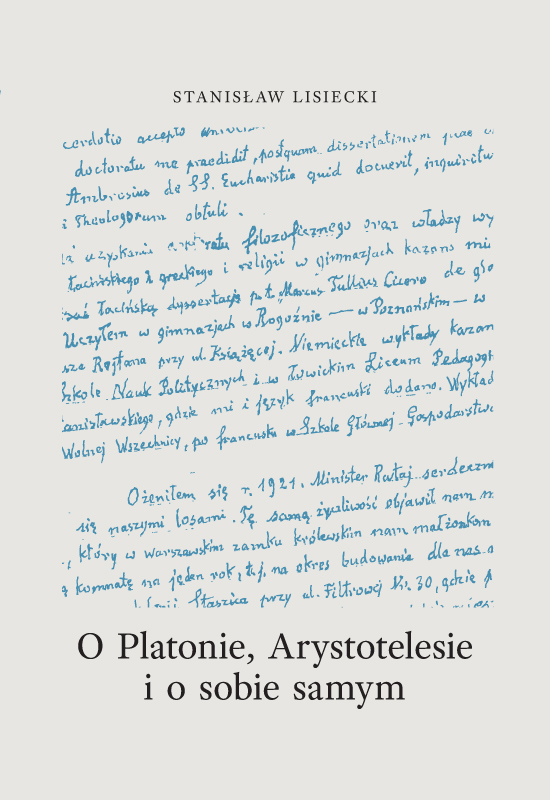
A new book series was initiated by Marek Derewiecki Publishing House. The series is devoted to publishing editions of source materials and studies related to the history of reception of ancient philosophy. Polish name of the series is “Studia i Teksty z Dziejów Recepcji Filozofii Starożytnej”.
Volume one of the series includes source materials retrieved from manuscripts of Stanisław Lisiecki (1872-1960). In addition, three of his Latin papers published in the interwar period were translated into Polish. Three sections constitute the whole volume. They are: Platonica, Aristotelica and Auto-Biographica, and hence the title of the collection: S. Lisiecki: On Plato, Aristotle and on Himself (O Platonie, Arystotelesie i o sobie samym). Platonica include twelve Lisiecki’s studies on individual dialogues and three papers devoted to specific issues in Plato. Aristotelica is much smaller and contains only four works, while the autobiographical section includes two Lisiecki’s autobiographical sketches (1910 and 1957) and four letters to university professors and family.
The materials collected in this volume shed light on the author’s biography and his relations to the most eminent scholars of his times. Moreover, he can finally speak in his own words to the wider public. Only now we can examine his ideas and arguments and compare them to the works of other Polish experts in ancient philosophy of the interwar period. Even if his texts can be sometimes assessed as secondary or not meeting academic standards, they provide us with an opportunity to supplement our view on the history of Polish research on Greek philosophy with works by original author.
The whole volume is a collective production. The source material was obviously written by the author, Lisiecki. His manuscripts were examined and re-typed by Adrian Habura and T. Mróz. Latin texts were translated by Adriana Bolibok (University of Life Sciences in Lublin) and T. Mróz, and their translations were looked through and refined by Barbara Brzuska (University of Warsaw). Whole collection was edited and prefaced by T. Mróz. The volume is one of the results of the research project funded by the Polish National Science Centre.
The book is available at the publisher’s bookstore here.
A View of Plato’s Paths in Poland
A lengthy, 480 pages, monograph book by T. Mróz was published in Academia Verlag’s series “Academia Philosophical Studies” as vol. 75. The title of the book is Plato in Poland 1800-1950. Types of Reception – Authors – Problems.
Some material from the book, including table of contents, is available on publisher’s website. The book attempts to make Polish Plato reception available to non-Polish readers. The years 1800-1950 cover essential phaenomena in modern Polish philosophy, for they encompass periods of reception of Western philosophical trends and the development of the Lvov-Warsaw school, neo-Messianism and neo-Scholasticism. The book discusses how each of these phaenomena contributed to interpreting Plato. The material is divided into three main parts focused on various types of reception.
The book is a final outcome of a project sponsored by Polish government within the National Programme for the Development of Humanities funding scheme. An essential collaborator in this project was Una Maclean-Hańćkowiak, who patiently edited the author’s style.
Platonic Concept of Reincarnation in Polish Philosophy
The latest issue of “Studia z Historii Filozofii” (Studies in the History of Philosophy, vol. 12, iss. 1) includes a paper by Adrian Habura on an episode in Polish reception of Plato’s theory of reincarnation or transmigration of souls.
Habura aims to present Stanisław Lisieckiʼs interpretation and assessment of Plato’s concept of metempsychosis, and then position his work against the background of diverse results of W. Lutosławski and P. Siwek. Lisieckiʼs reflection on Plato, and especially on his theory of reincarnation, proves that he was an unfairly forgotten scholar, who had had knowledge, capabilities and diligence sufficient to grant him a well-deserved place in Polish historiography and reception of Greek philosophy. Due to an unfortunate set of circumstances, including Lisiecki’s abandonment of Catholic clergy and his uncertainty of the value of his own work, he worked on margins of Polish academic life in the interwar period. Yet, as far as it was possible, he attempted to reconcile Platonism and Christian thought and find consolation in a perspective of future incarnations.
Full paper, in Polish, can be downloaded from the journal’s website here.
Censorship against Plato Scholars and Plato Himself
A volume on various aspects of relations between censorship, politics and oppression was published in 2018 by Gdańsk University Press. The book was a result of an international conference which took place in Gdańsk in 2017.
A paper by T. Mróz, included in this collective volume, discusses three cases of censorship on works of Polish Plato scholars who were active in three various periods of Polish history. First, the title of W. Lutosławski’s book on Plato was shortened by Imperial Russian authorities in Warsaw, they removed the word “socialism” from the title of his book on Plato. Its final version was then reduced to “Plato as the Creator of Idealism”.
S. Lisiecki, in turn, translated dialogues and wrote extensive introductions to them, but only his Republic saw the light of day in the interwar period, while all the remaining dialogues were left unpublished (but some of them, fortunately, will be published this year!). His leaving the clergy and Roman Catholic church might have been one of the reasons of his difficult situation in Polish academia.
Finally, W. Witwicki’s translation of the Republic with his commentaries appeared in print in 1948. After his death, the second edition was published in 1958, but some of his ironic and critical remarks on totalitarian system were removed.
Paper by T. Mróz can be downloaded from the University’s repository here.
Recent commentaries