Home » Posts tagged 'In Polish' (Page 5)
Tag Archives: In Polish
Ancient Philosophy in Academic Curriculum of Władysław Tatarkiewicz
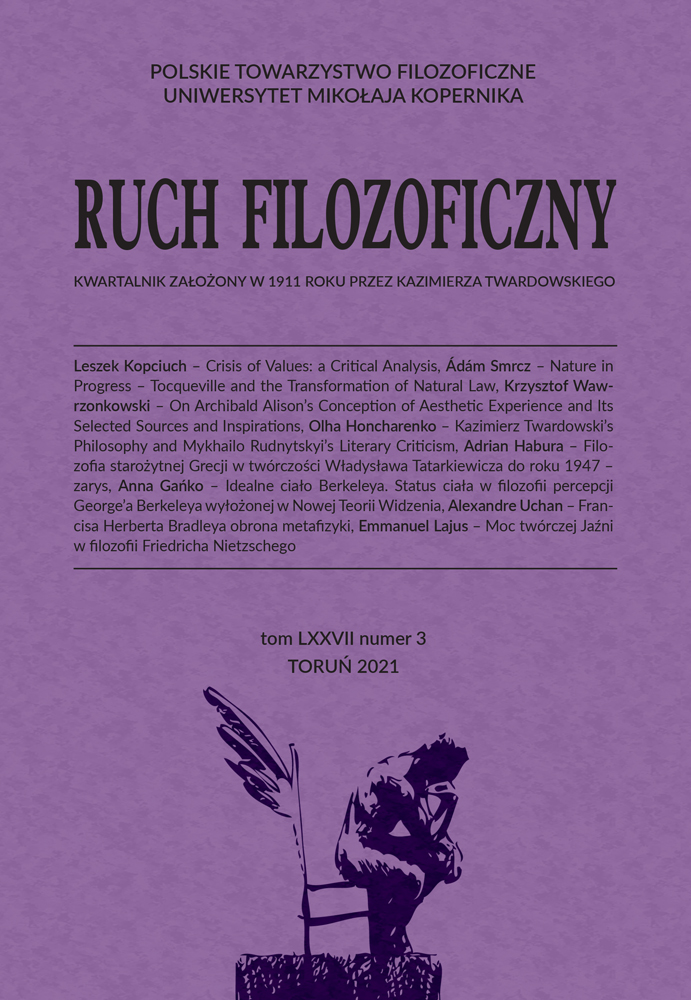
A paper by Adrian Habura, discussing Władysław Tatarkiewicz’s (1886-1980) works on ancient philosophy, which had been published by him by 1947, was published in “Ruch Filozoficzny” (vol. 77, 2021, iss. 3), the second oldest Polish philosophical journal. The paper is structured chronologically and presents results of careful sifting of all Tatarkiewicz’s works published before 1947.
Władysław Tatarkiewicz was a historian of philosophy and a philosopher, who studied ancient Greek philosophy throughout his entire research career. It is not surprising to say that he considered ancient philosophy to be the foundation of European philosophy. Furthermore, his original philosophical works indicate that the investigations of ancient Greeks were his major inspiration. The aim of this article is to provide an outline of those of Tatarkiewicz’s works in which Greek philosophy was explored by him as a topic of his historical research or used as the source of inspiration for his original philosophical reflection. The analysis of Tatarkiewicz’s works that were focused on Greek philosophy is related to Tatarkiewicz’s methodology. All this taken together allows to give a preliminary answer to the question of the significance of ancient Greek philosophy for his philosophical development and for philosophy in Poland in general.
Habura traces Tatarkiewicz’s academic biography back to his Ph.D. thesis from Marburg, which was devoted to Aristotle – and later reviewed by D. Ross – and Aristotelian inspirations in his subsequent paper on Weltansichten. One of the results of Tatarkiewicz’s stay in Marburg was his research on Plato, largely inspired by his Marburg teachers, Paul Natorp and Hermann Cohen. Later works by Tatarkiewicz in ethics, including his habilitation thesis, reveal his continuous direct and indirect references to Greek philosophers. In 1931 two volumes of his History of Philosophy saw the light of day, his opus magnum in historiography of philosophy, including, obviously, chapters on the Greeks, and in 1947 his treatise On Happiness appeared, with numerous references to ancient ethical systems.
This paper offers not only a mere report of Tatarkiewicz’s references to the ancients, but moreover, Habura succeeded in indicating connection between Tatarkiewicz’s historical interest in ancient philosophy and his own original research in philosophy and ethics.
Full paper in Polish is available on the journal’s website here.
Plato, Moses Mendelssohn, Jakub Tugendhold and Plato’s “Phaedo”
A paper on a metamorphosis of Plato’s Phaedo, from its original form through Moses Mendelssohn’s (1729-1786) Phädon to its Polish translation by Jakub Tugendhold (1794-1871), was published in a journal of Adam Mickiewicz University in Poznań, “Człowiek i Społeczeństwo”.
Tomasz Mróz in his paper discusses M. Mendelssohn’s work Phaedo and its Polish translation which was published in 1829 by J. Tugendhold. Although this book did not exert impact on Polish philosophy, Tugendhold, the translator, aimed to use Mendelssohn’s biography and his Phaedo as an instructive example for those representatives of Jewish community who wanted to free themselves from isolation and undergo social and economic, though not religious, assimilation into their Polish and Christian surrounding.
A brief comparison of Plato’s and Mendelssohn’s Phaedos was included in this paper. Polish translator’s aims were also discussed, for his target audience was Jewish community in Polish society. Tugendhold was the adherent of haskalah and he spared no effort to improve the existence of his compatriots and to inspire them to join in modern societies without losing their religious autonomy.
Philosophical content of the Phaedo, the arguments on the immortality of the soul, in both versions, Plato’s and Mendelssohn’s, reinforced Tugendhold’s views, as they were the example of the fact that Judaism and Christianity, not to mention Plato, are ultimately based on the same belief, on the immortality of the soul.
Full paper, in Polish, can be downloaded from the journal’s website.
A Biography of a Classics Scholar: Stanisław Lisiecki (1872-1960)
The latest issue of “In Gremium” annual journal (15/2021) includes a paper by Tomasz Mróz who took an attempt to compose a biographical sketch of Stanisław Lisiecki (1872-1960). The course of his life can be reconstructed from scraps of information in letters, official documents and only few printed materials.
This is the most extensive biography of Lisiecki so far and it was based on handwritten documents from the Archive of Polish Academy of Sciences, the Manuscript Section of the Jagiellonian Library, and from private collections. A turning point in his life was his decision to abandon his church career and start living as a layperson. In the interwar Poland his choice was not met with acceptance of the members of the then academia.
Although he cannot be counted among the top Polish historians of ancient philosophy or classics scholars, he was unjustly disregarded as a historical figure with a considerable, though unpublished legacy, coinsisting of translations of and commentaries to a number of Plato’s and Aristotle’s works.
The paper (in Polish) can be downloaded from the journal’s website here.
On W. Tatarkiewicz’s (Mis)fortunes
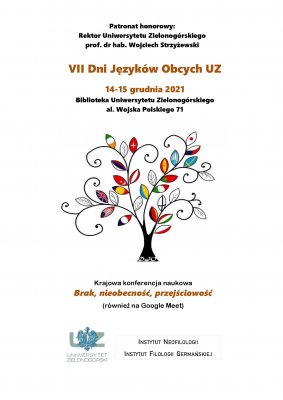
The Days of Foreign Languages took place again at the University of Zielona Góra, and it was their VIIth edition. Their general topic this year, that is, lack, absence, deficiency, violence, exclusion etc., did not come as a surprise in current circumstances.
Two members of AΦR group took part in this event. Mariam Sargsyan delivered a paper in Russian on various metaphors with which the notion of “consciousness” is described, but it was Adrian Habura whose presentation was devoted to the reception of ancient philosophy.
His paper discussed the problem of happiness and well-being in Władysław Tatarkiewicz’s (1886-1880) life and his autobiographical notes, esp. the chapter titled Beneficial misfortunes (Korzystne niepowodzenia). Habura confronted it with Tatarkiewicz’s treatise Analysis of Happiness and some other of his ethical writings. He attempted to demonstrate that Tatarkiewicz, almost like a Homeric hero, many times in his life turned his misfortunes into success, and how Aristotle’s philosophy and Tatarkiewicz’s own research on Aristotle – from his Ph.D. thesis in Marburg to mature works in Warsaw – helped him develop his attitude to the problems of human life in general, and how his theory of happiness was rooted in Greek philosophy, above all in Aristotle.
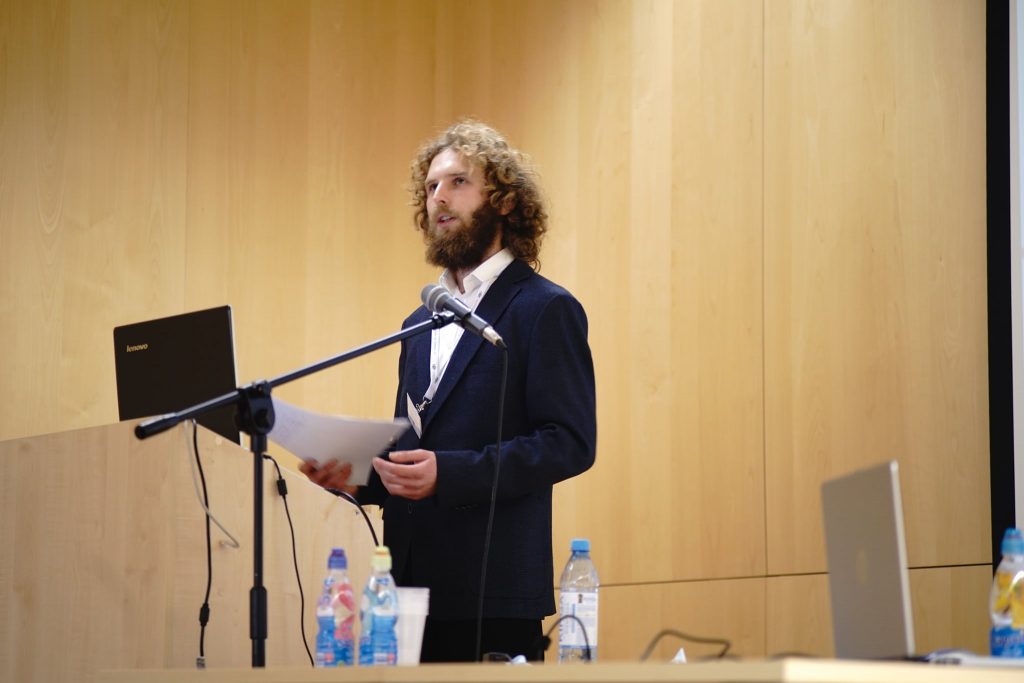
AΦR at Classical Studies Workshop in Greece
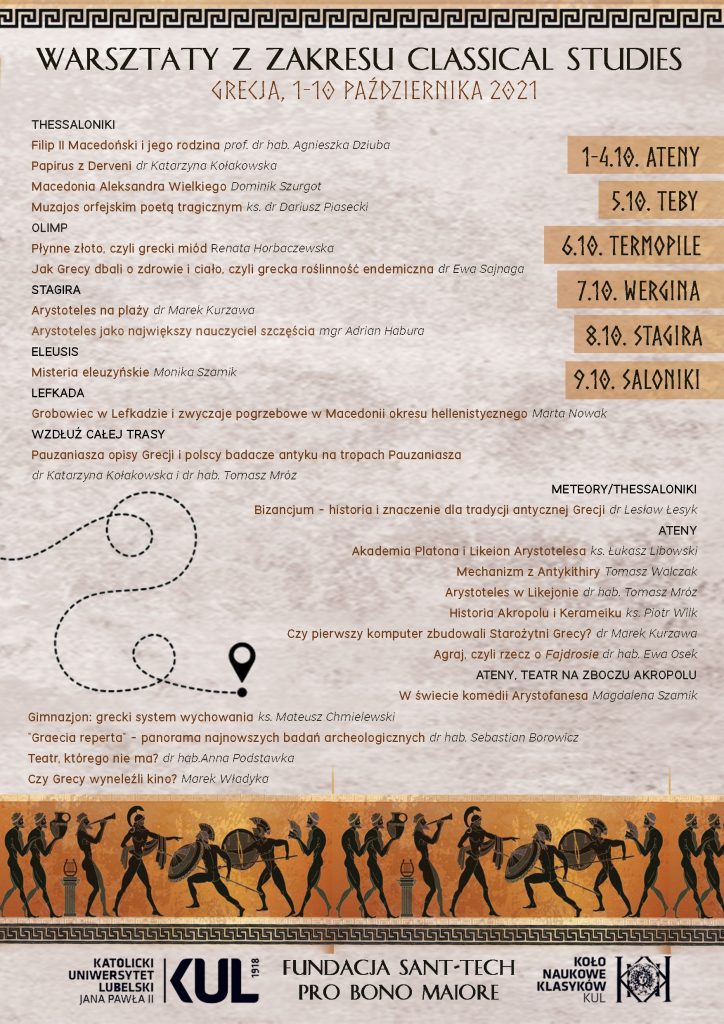
Two members of AΦR Group, together with an AΦR friend, took part in Classical Studies Workshop in Greece. This tour event took place in the first ten days of October and was organised by The Sant-Tech Foundation in co-operation with Catholic University of Lublin (KUL).
It was an unforgettable tour of Greece from Athens to Thessaloniki, including Delphi, Marathon, Meteora, Pella, Stageira and many more places of archeological interest, many of which being extremely important for philosophers and historians of philosophy, e.g. Plato’s Academy, Aristotle’s Lycaeum, ancient Stageira or Nymphaeum in Mieza. The whole stay and the journey were carefully planned by Katarzyna Kołakowska and Lesław Lesyk (both of KUL and Sant-Tech Foundation), who smoothly adapted the workshop’s schedule to unexpected conditions.
The chronological order of the papers delivered by participants from Zielona Góra is: 1) Was the First Computer Designed by the Greeks? (M. Kurzawa, at the footsteps of the National Archaeological Museum of Athens; third from the left in the photo below). The speaker focused on the history of research on the Antikythera mechanism, which is preserved in this Museum, and its unbelievable construction. 2) Aristotle in the Lycaeum (T. Mróz, in the archeological site of… Aristotle’s Lycaeum; first on the right) discussed briefly the excavations in this location and presented the outlines of the history of the Philosopher’s school.
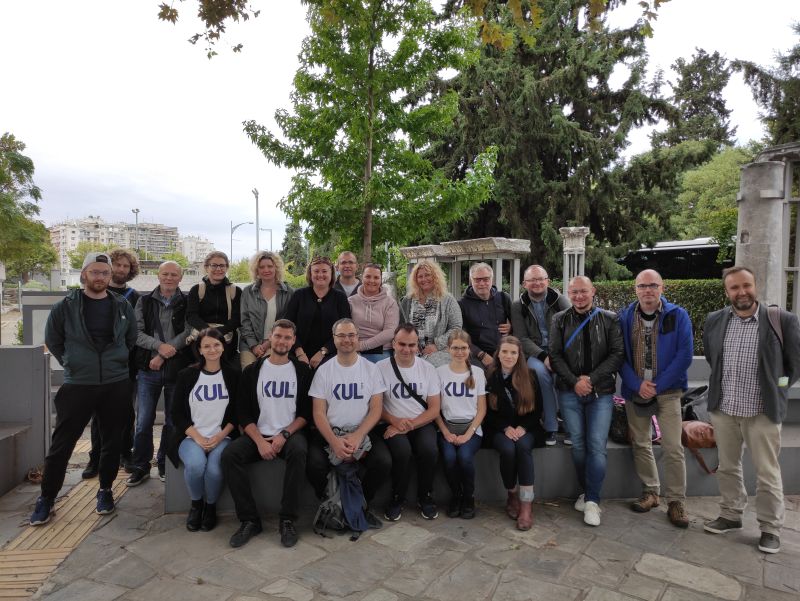
Due to unfavourable weather conditions the following presentations were delivered en route to Thessaloniki, that is, on the bus: 3) Aristotle on the Beach (M. Kurzawa) was a paper devoted to Aristotle’s works in natural sciences and focused on his anecdotal scientific curiosity which gave rise to his theories, which still amaze us to this day. 4) Aristotle as the Greatest Teacher of Happiness (A. Habura; second from the left in the photo). The speaker presented the most essential Aristotle’s instructions on achieving happiness from the Nicomachean Ethics and highlighted their universal character, which was additionally substantiated by the studies of W. Tatarkiewicz, a recognised Polish historian of philosophy and ethician, on the same subject. 5) Polish Historians of Philosophy and Classics Scholars on Their Journeys to Greece (T. Mróz). This was rather a loose speech than academic paper and it presented three Polish scholars (W. Dzieduszycki, T. Sinko, W. Witwicki) and their memories of visiting historical places, some of which at the times of their journeys looked differently then they do today, and their observations on modern Greeks, which in turn appear sometimes to tally with today’s impressions of Greece.
Lewis Campbell and His International Connections
Studia Historiae Scientiarum, an annual journal published by Polish Academy of Arts and Sciences, includes a section Science beyond Borders. In 2018 a paper by Tomasz Mróz was published there on Lewis Campbell’s (1830–1908) correspondence held in Peterhouse Library, Cambridge.
The paper presents L. Campbell, his research on Plato, and the collection of letters sent to this Scottish scholar by: James Martineau (1805–1900), William Hepworth Thompson (1810–1886), Paul Shorey (1857–1934), Wincenty Lutosławski (1863–1954), Eduard Gottlob Zeller (1814–1908), Franz Susemihl (1826–1901), and Theodor Gomperz (1832–1912). This collection supplements the knowledge of the research on Plato’s dialogues at the turn of the 20th century, since Plato scholars in their letters touched on the issues relating to the methods and results of the research on the chronology of Plato’s dialogues. They made judgements concerning the works of other academics, they sent to each other their own publications, and reported on the progress of their studies. They also did not shy away from making personal remarks and communicating personal reflections.
Publishing this paper was preceded by a research stay in Cambridge in June and July 2016, which was sponsored by Lanckoroński Foundation. Additionally, archival materials from St Andrews University Library (Special Collections) supplemented the whole work.
The paper in Polish is available on the journal’s website here.
Unknown (hitherto) Studies on Plato and Aristotle Finally Published
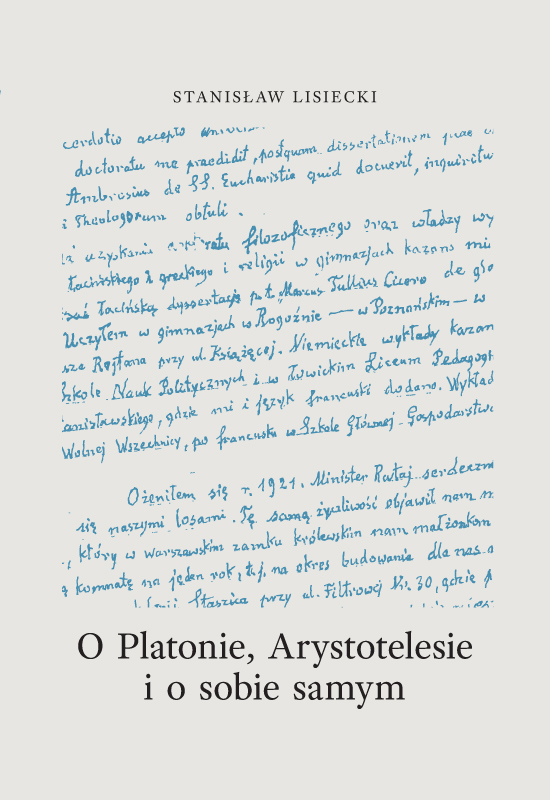
A new book series was initiated by Marek Derewiecki Publishing House. The series is devoted to publishing editions of source materials and studies related to the history of reception of ancient philosophy. Polish name of the series is “Studia i Teksty z Dziejów Recepcji Filozofii Starożytnej”.
Volume one of the series includes source materials retrieved from manuscripts of Stanisław Lisiecki (1872-1960). In addition, three of his Latin papers published in the interwar period were translated into Polish. Three sections constitute the whole volume. They are: Platonica, Aristotelica and Auto-Biographica, and hence the title of the collection: S. Lisiecki: On Plato, Aristotle and on Himself (O Platonie, Arystotelesie i o sobie samym). Platonica include twelve Lisiecki’s studies on individual dialogues and three papers devoted to specific issues in Plato. Aristotelica is much smaller and contains only four works, while the autobiographical section includes two Lisiecki’s autobiographical sketches (1910 and 1957) and four letters to university professors and family.
The materials collected in this volume shed light on the author’s biography and his relations to the most eminent scholars of his times. Moreover, he can finally speak in his own words to the wider public. Only now we can examine his ideas and arguments and compare them to the works of other Polish experts in ancient philosophy of the interwar period. Even if his texts can be sometimes assessed as secondary or not meeting academic standards, they provide us with an opportunity to supplement our view on the history of Polish research on Greek philosophy with works by original author.
The whole volume is a collective production. The source material was obviously written by the author, Lisiecki. His manuscripts were examined and re-typed by Adrian Habura and T. Mróz. Latin texts were translated by Adriana Bolibok (University of Life Sciences in Lublin) and T. Mróz, and their translations were looked through and refined by Barbara Brzuska (University of Warsaw). Whole collection was edited and prefaced by T. Mróz. The volume is one of the results of the research project funded by the Polish National Science Centre.
The book is available at the publisher’s bookstore here.
Recent commentaries