Home » Posts tagged '13th century'
Tag Archives: 13th century
Demons, Calcidius and Vitello at ISNS Symposium

On June 3rd-6th in Leuven, Belgium, the 23rd annual symposium of the International Society for Neoplatonic Studies (ISNS) took place. The programme of the whole event can be downloaded here. AΦR was certainly present there.
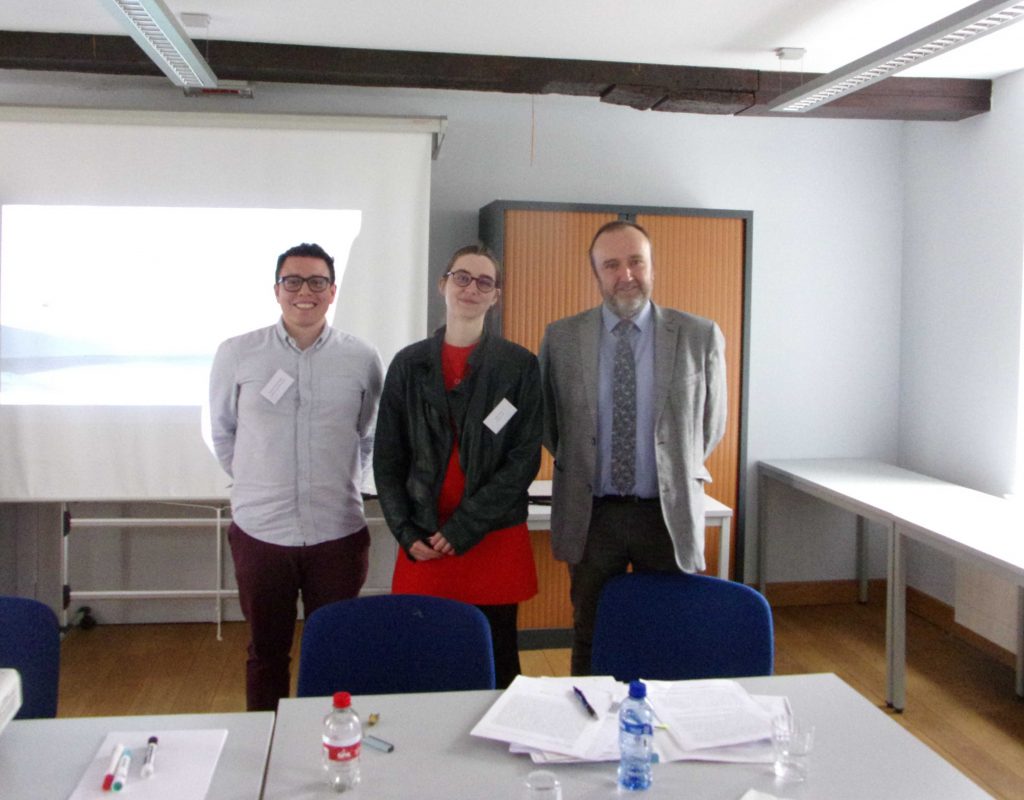
Together with two other panelists, Tomasz Mróz presented his paper in the panel: Medieval Platonism. These panelists were Heide König (LMU Munich) and Ernesto Fuentes Padgett (Notre Dame). Mróz’s paper was titled Vitello’s Theory of Daemons. Platonic Inspirations in a Naturalistic Treatment.

Vitello was a philosopher and a natural scientist of the second half of the 13th century, best known for his treatise in optics. To obtain degrees he travelled to the universities in Paris and Padua, but he also visited Viterbo. Although he gained recognition as the author of Perspectiva, dedicated to Wilhelm of Moerbecke, his interests went beyond optical issues and in a letter titled De causa primaria paenitentiae in hominibus et de natura daemonum he differentiated between the real demons as animals and apparent demons, as the effects of optical illusions or malfunctions of human cognition. He developed a theory of demons, their nature, their position among natural creatures, and investigated a number of detailed issues connected to the life of demons and their various interactions with human beings.
Mróz took an attempt to demonstrate how Vitello started with Plato, Calcidius’ commentary to the Timaeus, mathematical considerations and the Averroists’ theory of double truth to prove the existence of demons as animals and how, subsequently, he took advantage of his experience as a natural scientist and a confessor to supplement the theory with a number of observations and the then common opinions that eventually, in his eyes, reinforced the theory.
The conference in Leuven was, as all ISNS events, a successful meeting, gathering specialist in history of philosophy from antiquity to modern times. It was also an opportunity to see and listen to papers of scholars from all the continents. It was also a pleasure to see there our collaborator from Vilnius University, Jonas Čiurlionis, who delivered a paper Mathematics of Music in Timaeus’ creation of the World Soul.
How to Scare International Students with Vitello’s Theory of Demons

In March (23rd-27th) 2026, an Erasmus+ Blended Intensive Programme meeting was held at the University of Zielona Góra. About fifty students representing partner universities from Bulgaria, Croatia, Czechia, Lithuania, Portugal, Romania, Turkey and Vietnam took part in this event. Ancient Φilosophy Reception research group was present there and it was Tomasz Mróz whose presentation inaugurated on-site and offline part of the whole event.
The general topic of this BIP meeting was: Interference Patterns – Science and Culture in Dialogue. Mróz’s lecture – The Philosopher Vitello of Legnica and His Scholarly Theory of Demons – aimed to demonstrate how this 13th century scientist and philosopher, man of the world and a locally engaged scholar, used ancient thinkers (Calcidius and Aristotle) and combined mathematical calculations, natural sciences, philosophy and his own life experience to develop a theory of demons as animals composed mainly of air, the subtle element. He rejected theological concept of demons as a fallen angels and took an attempt to explain various “demonic” phaenomena secundum viam naturalem et possibilem.
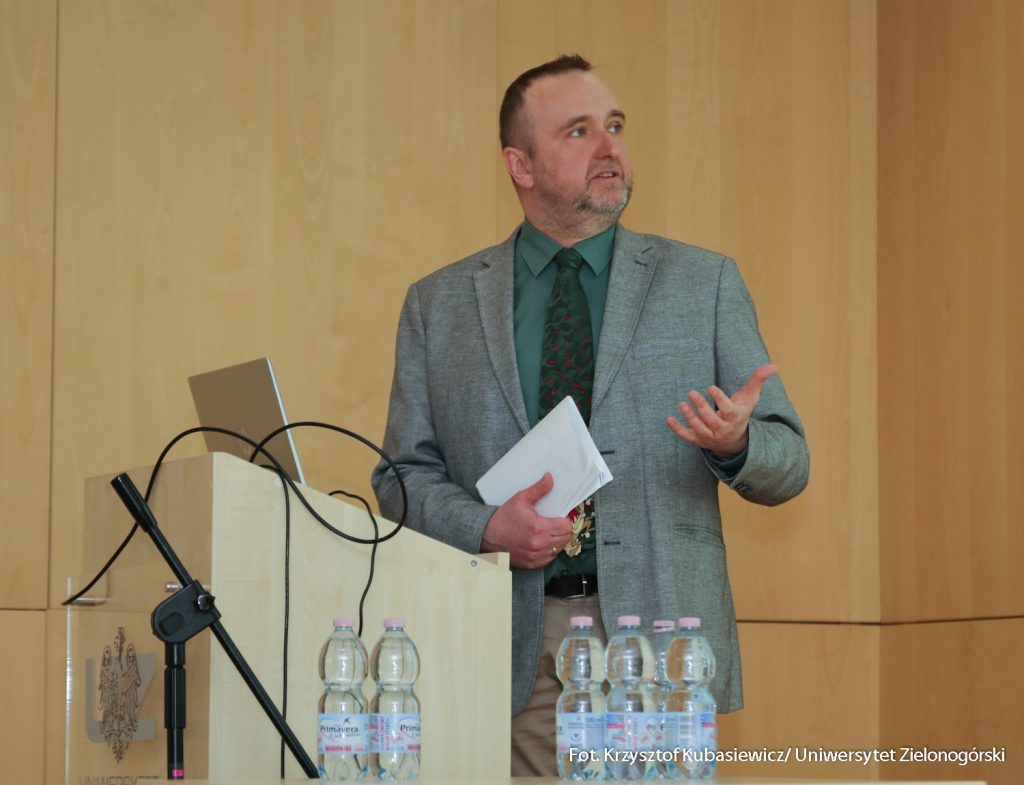
The questions from the audience concerned the problem of Vitello’s method as he departed from theological discourse. The discussion that followed emphasised the convergence of methods of Latin Averroists and Vitello, whose intention may have also been the defence of the autonomous character of philosophy and sciences. Feedback from students was also invaluable as they were surprised that such intriguing topics can be found in (otherwise dull?) history of medieval philosophy. Thank you Moldovan students in Romania!
As a digression in the course of the lecture, Woody Allen’s Everything You Always Wanted to Know About Sex* (*But Were Afraid to Ask appeared. However, since the episode with Daisy, the sheep, is definitely not suitable for all audiences, it will not be developed here 😉
Of course, no one would probably argue today for topicality of Vitello’s theory of demons, but at least some of his considerations should be taken as a serious piece of advice even in the 21st century: if you see demons or angels or hear them talking to you or making sounds, you should immediately consult a doctor!

Thanks to Sylwia Kondej and Magdalena Pokrzyńska
for organising such a great event!
Vitello’s Anthropology and Its Aristotelian Roots
On May 28th-29th 2024 a conference titled Polish Philosophical Anthropology took place in Częstochowa. This event was organised by the Department of Philosophy, Jan Dlugosz University. It was another conference held in Częstochowa that aimed at shedding some new light on selected aspects of the history of philosophy in Poland.
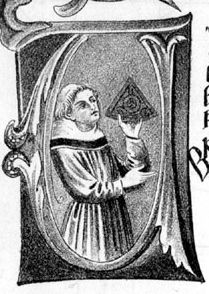
AΦR member, Tomasz Mróz, has participated in this conference with a paper devoted to the philosopher with whom all the histories of philosophy in Poland usually begin. It was Vitello, a 13th century scholar, who is well-known from his theory of demons as animals built from the four elements with air as a dominant factor. Vitello argued that the demons were superior physically and intellectually to all the other animals, including human beings. Human beings, consequently, could only be considered as an intermediary species between apes and demons. In this way Vitello, with the aid of Aristotle, demonstrated that human being can’t be regarded as a crowning creature in the terrestrial world. Let us add on the margin that Vitello took advantage of his expertise in philosophy, natural sciences, medicine and life’s experience to depict vividly various interactions between humans and demons, not all of which can be presented to the minors 😉
Erasmus Teaching Visit in Vilnius University
In April, 18th-22nd, 2023, Tomasz Mróz enjoyed his third Erasmus teaching visit in Faculty of Philosophy, Vilnius University.
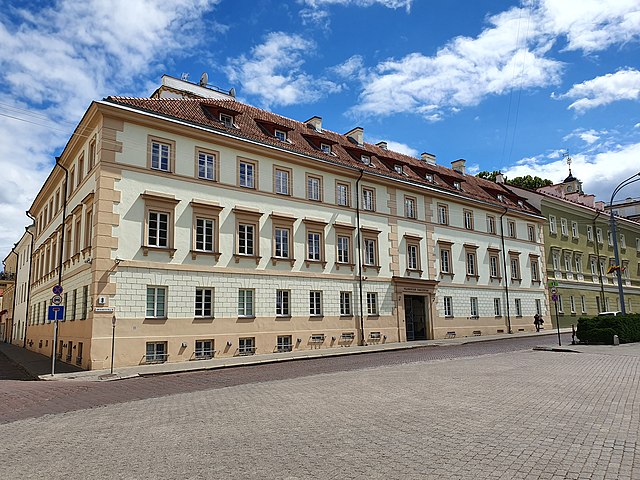
Vilnius University is a unique research and teaching institution in Central-Eastern Europe. It has a long and sometimes turbulent Polish-Lithuanian history. Some of the lectures delivered by T. Mróz to philosophy students in Vilnius concerned a part of this history and, naturally, reception of ancient philosophy.
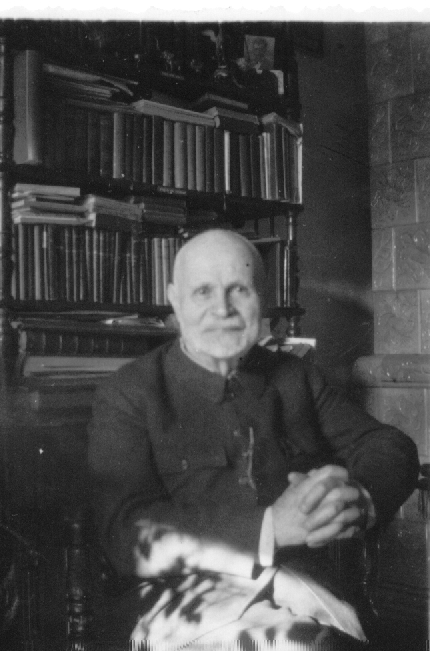
One of the lectures discussing the issues of ancient philosophy reception had Wincenty Lutosławski (1863-1954) as its topic. The focus was on his Vilnius period and his vision of a philosophical development of Plato from idealism to spiritualism. Since Lutosławski considered Polish Romantic Messianism to be founded on spiritualism, consequently he could consider this unique tradition to be rooted in Plato, who was presented by Lutosławski as an ancient philosophical predecessor of Polish 19th century literary and philosophical tendency.
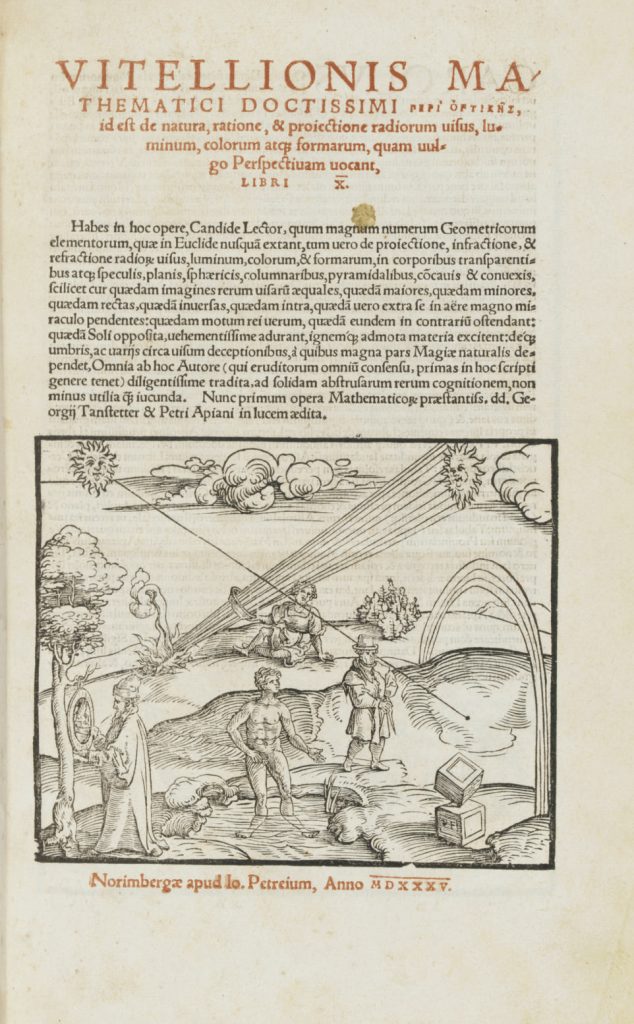
Another lecture in which ancient philosophy reception appeared was devoted to Vitello (ca. 1230-1300?) and his theoretical reflection on the nature of the daemons. Vitello’s demonology stemmed from his research in natural sciences and it employed neo-Platonic and Aristotelian elements, such as a belief in a mathematical structure of the universe and the theory of four elements. Vitello’s philosophical investigations were presented against the background of the 13th century developments in philosophy.
Teaching duties were supplemented with meetings with the Faculty members and discussions on the plans of a future co-operation activities between philosophers of Vilnius University and University of Zielona Góra.
Recent commentaries