Home » Posts tagged 'Częstochowa'
Tag Archives: Częstochowa
A Conference in Częstochowa: Polish Studies on Plato
Ancient Φilosophy Reception research group couldn’t have been absent at the conference on Polish Studies on Plato, which was held in Jan Długosz University (UJD) in Częstochowa on May 18-19th, 2026.
The conference was organised by the Chair of Philosophy of UJD, and prof. Wiesława Sajdek was the head of the whole event. Tomasz Mróz delivered his paper in the opening panel, after the introductory talk by prof. Marian Wesoły. Reports from the first day of the conference (in Polish) were published on the websites of UJD and a local radio station. It should be emphasised that both professors, Sajdek and Wesoły, have already collaborated in various activities of AΦR.
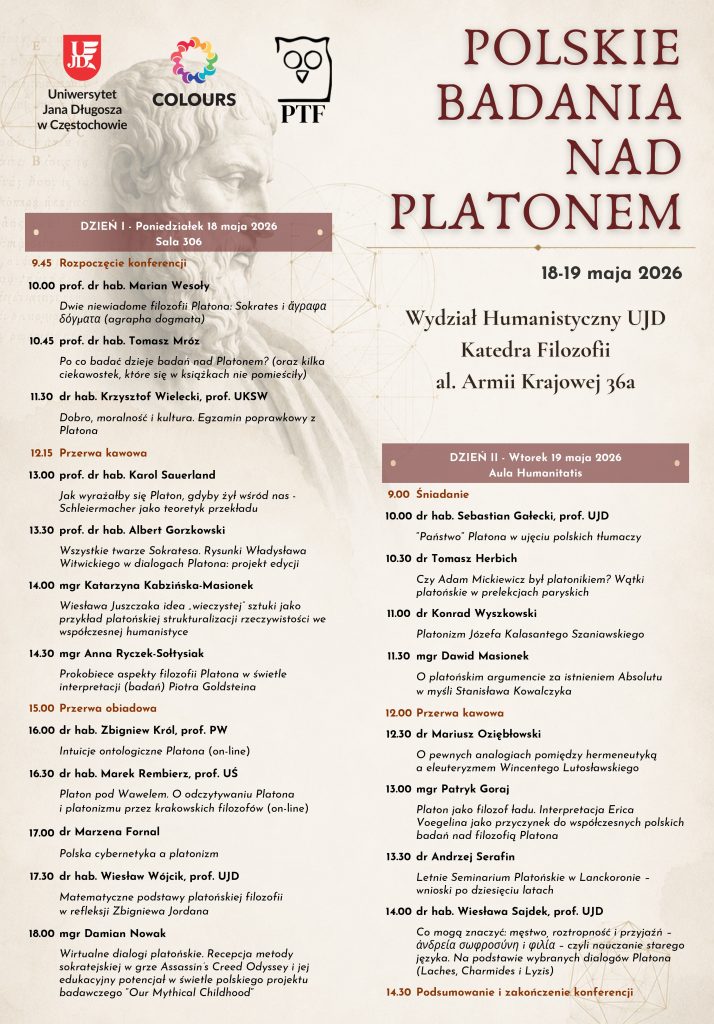
The paper by Mróz had a long title: Why study the history of studies on Plato? (and a couple of interesting pieces that were not included in the books). He argued, certainly, for the positive answer to the question in the title, since – for example – discussions about Plato’s legacy and various interpretations of his philosophy reflect philosophical trends of their times and commenting on Plato’s dialogues provides a convenient opportunity to express one’s own views. Moreover, Mróz discussed peculiar history of the texts that had “Plato” and “Poland” in their titles, starting with an English report, published by Lewis Campbell (1830-1908), Plato in Poland (1893), on the then recent studies on Plato’s logic by Wincenty Lutosławski (1863-1954). Then, the history of Polish texts by Irena Pannenkowa (1879-1969), Izydora Dąmbska (1904-1983), Zbigniew Nerczuk (another collaborator of AΦR), and Mróz himself followed.
Mróz discussed briefly some issues related to his decades long studies on Polish traditions in researching and translating Plato that were unsuitable for publishing in scholarly works. They were e.g. his reminiscences from his meetings with Lutosławski’s daughter, Janina Lutosławska (1922-2006), and the archival discoveries he had made in the legacies of Lutosławski, Stefan Pawlicki (1839-1916), Stanisław Lisiecki (1872-1960), and Henryk Jakubanis (1879-1949), many of which he was able to edit and publish.
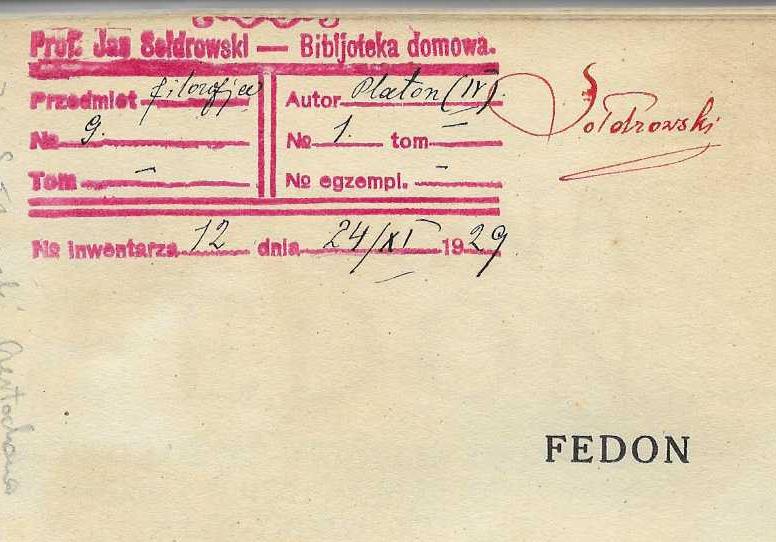
In the final parts of his talk, Mróz presented a small detail related to the location of the conference, the city of Częstochowa. Once in his research he came across a copy of the Phaedo in Władysław Witwicki’s (1878-1948) translation (Warsaw 1925) which had been owned by Jan Sołdrowski (1889-1970), a teacher of various subjects (including classics) and a Catholic activist from Częstochowa. His notes on the margins of the book revealed his thoughts and impressions from reading the dialogue.
Vitello’s Anthropology and Its Aristotelian Roots
On May 28th-29th 2024 a conference titled Polish Philosophical Anthropology took place in Częstochowa. This event was organised by the Department of Philosophy, Jan Dlugosz University. It was another conference held in Częstochowa that aimed at shedding some new light on selected aspects of the history of philosophy in Poland.
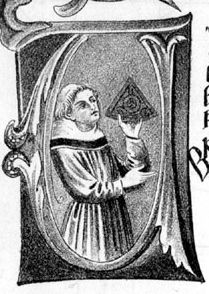
AΦR member, Tomasz Mróz, has participated in this conference with a paper devoted to the philosopher with whom all the histories of philosophy in Poland usually begin. It was Vitello, a 13th century scholar, who is well-known from his theory of demons as animals built from the four elements with air as a dominant factor. Vitello argued that the demons were superior physically and intellectually to all the other animals, including human beings. Human beings, consequently, could only be considered as an intermediary species between apes and demons. In this way Vitello, with the aid of Aristotle, demonstrated that human being can’t be regarded as a crowning creature in the terrestrial world. Let us add on the margin that Vitello took advantage of his expertise in philosophy, natural sciences, medicine and life’s experience to depict vividly various interactions between humans and demons, not all of which can be presented to the minors 😉
AΦR at the 11th Seminar of the Historians of Polish Philosophy in Częstochowa
Seminar of the Historians of Polish Philosophy is a cyclic academic meeting which gathers philosophers and historians of philosophy who focus on the history of philosophy in Poland. 11th edition of this seminar was held in Częstochowa at Philosophy Department of Jan Długosz University on May 15th-16th, 2023, and it was focused, not surprisingly, on the topics of war and peace.
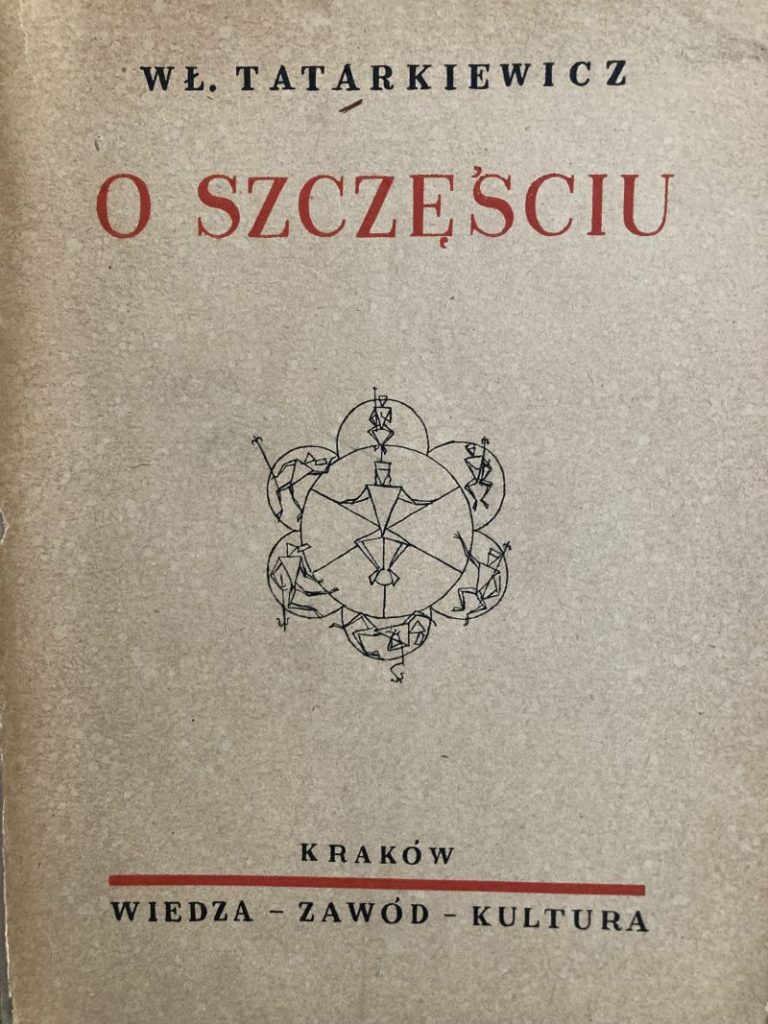
Two AΦR members delivered their papers there. Adrian Habura’s paper was not directly devoted to the reception of ancient philosophy, for he focused on the first edition of Władysław Tatarkiewicz’s (1886-1980) work O szczęściu [Analysis of Happiness] (1947), and took an attempt to analyse the content of the book and search for the topics related to war issues to determine possible origin of each chapter, that is, to divide the chapers into two groups: those composed by Tatarkiewicz before the outbreak of the World War II and those compose after it.
Tomasz Mróz, in turn, presented a largely unknown biography of a 20th century Polish researcher of Florentine neo-Platonism. His presentation had a long title: Bohdan Kieszkowski (1904-1997): a Researcher of Renaissance neo-Platonism and His Career Destroyed by the War (with the materials collected by Professor Czesław Głombik).
Kieszkowski published his works in Polish, Italian and French, and edited Conclusiones by Giovanni Pico della Mirandola (Geneve 1973). His opus vitae was the book Platonizm renesansowy [Renaissance Platonism] (Warszawa 1935), subsequently published in Italian as Studi sul platonismo del rinascimento in Italia (Firenze 1936). His studies were discussed mostly in Poland, Italy, France and Spain, but existing sources allowed only to reconstruct his biography to the first years after the World War II.
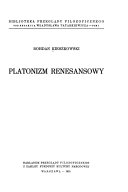
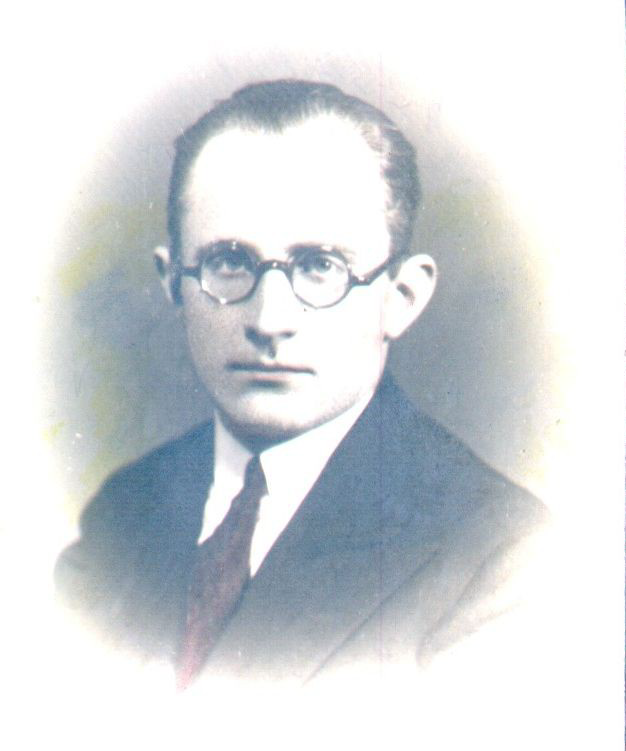
Materials collected by prof. C. Głombik (1935-2022) from family archives shed some light on Kieszkowski’s life on an exile in France. He was meeting there his former supervisor from the University of Warsaw, W. Tatarkiewicz, who was able to visit Paris several times in the sixties and considered Kieszkowski to be his best student. The letters from Tatarkiewicz to Kieszkowski’s sister, Wanda, reveal the facts concerning the details of a difficult life of a scholar on the exile. To Tatarkiewicz’s disappointed Kieszkowski was considering a turn in his focus from Renaissance studies to military history, yet he was very compassionate about his former student because he was aware of Kieszkowski’s physical and psychological limitations, resulting from his war and after war experiences. His legs, for example, were severely injured by German air raids already in 1939, he narrowly avoided amputation and throughout his life he experienced the negative effects of this until the end of his life. Communication between Tatarkiewicz and Kieszkowski was also affected by the fact that the former’s hearing was impaired and the latter spoke very quietly, as if he was afraid that someone could overhear them. Nevertheless, Kieszkowski’s works on Renaissance Platonism won recognition in the academic world and it is an interesting task to research their reception and impact.
Recent commentaries